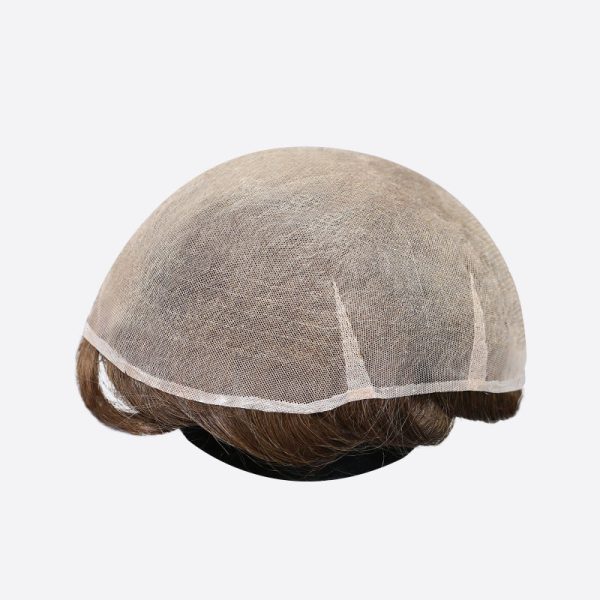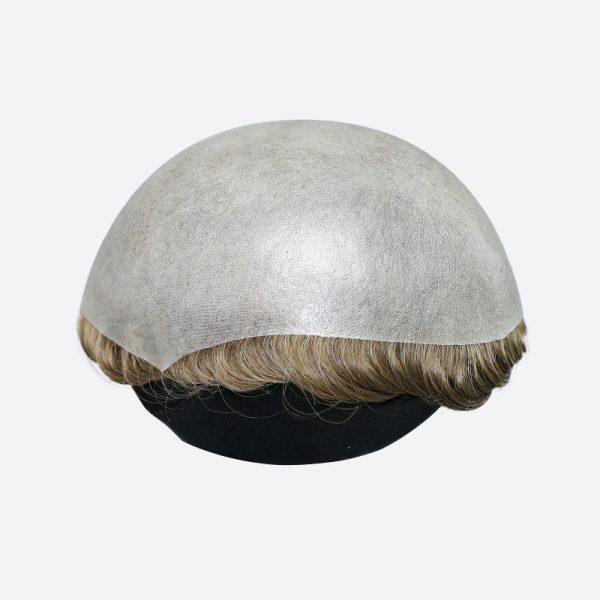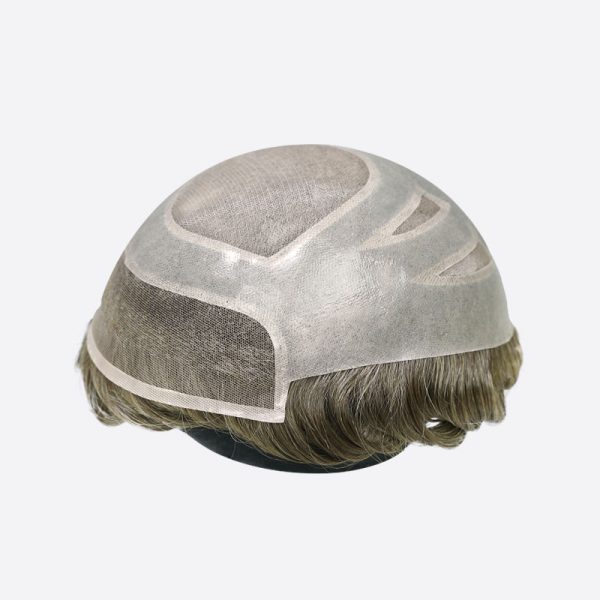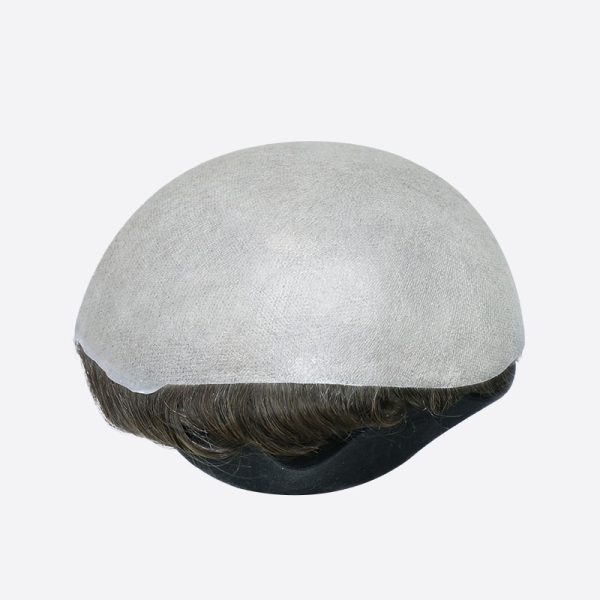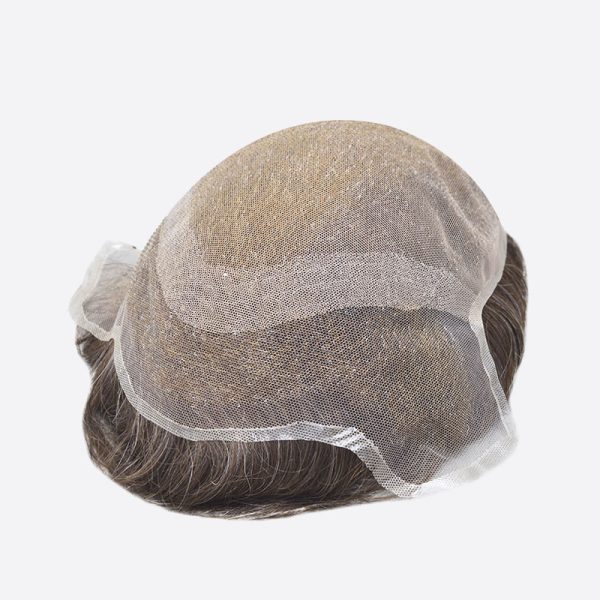




















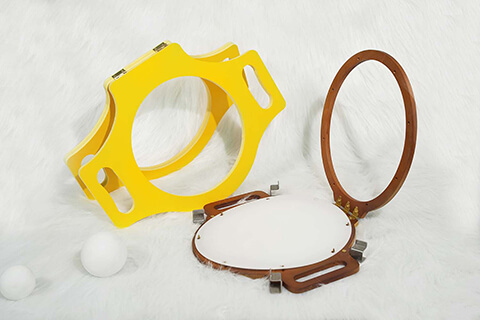

Now, you’ve found several suppliers that seem to fit your business. Their websites look reasonable, their product ranges overlap, and their quotes may not be far apart.
So which one should you actually work with?
Before you place your first order, you won’t be able to know everything about a supplier. You haven’t seen how consistently they produce your systems or how they handle a real order yet. But you can still make a much better first choice by looking at the right information and asking the right questions.
Where this article fits in the supplier sourcing process:
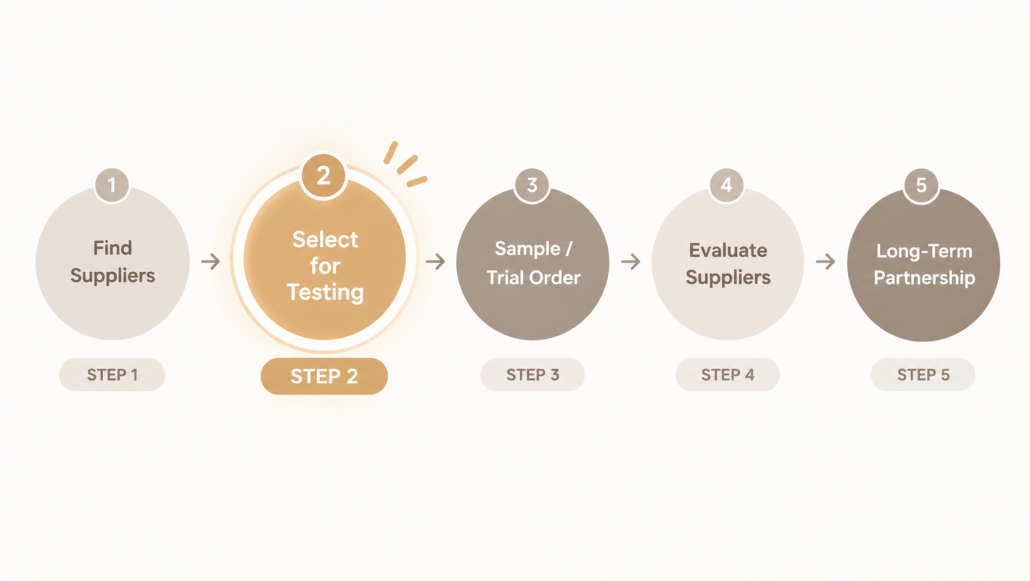
This article focuses on the SELECT FOR TESTING stage: deciding which supplier is worth testing before you place your first order.
-
Start With the Supplier, Not Just the Products
It’s easy to compare suppliers by opening their catalogs and looking at prices. But a supplier is more than the products listed on its website.
A. Start by finding out who you’re actually dealing with.
Start by finding out who you’re actually dealing with.
We broke this down in How to Find Wholesale Men’s Hair System Suppliers, but as a quick recap, you need to know if you are dealing with:
-
A direct hair system manufacturer (best for consistent custom specifications)
-
A hair system distributor (best for broad selections)
-
A hair system trading company (best for hands-off sourcing)
B. Then look at the supplier’s background.
Useful information includes:
-
How long the company has been operating
-
What products it specializes in
-
Where its products are produced and who controls the production
-
What types of businesses it normally supplies
-
Whether it has clear business and contact information
Tip: You can use AI to speed up your background research, but always verify the information.
C. Check third-party feedback.
Don’t rely only on what a supplier says about itself. Look for reviews, customer feedback, and discussions about the supplier on platforms like Reddit or Trustpilot.
Pay attention to repeated comments about product quality, lead times, communication, order accuracy, or how the supplier handles problems. One negative review doesn’t necessarily mean a supplier is unreliable, but repeated complaints about the same issue are worth looking into.
Also keep in mind that online reviews are not always complete or reliable. Use them as another source of information, and verify important claims before making a decision.
-
Check Stock and Production Capacity
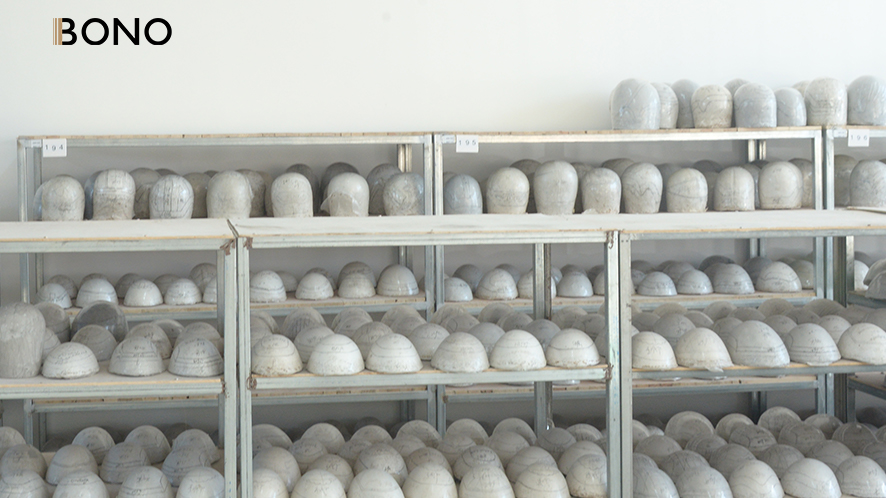
A supplier may have exactly the products you want and still be a poor fit if it can’t supply them when you need them.
Start by finding out what is normally available from stock and what has to be produced to order.
For ready-to-ship systems, ask:
-
Which products and specifications are normally in stock?
-
How many units are typically kept in stock?
-
How quickly can popular items be replenished?
-
What is the typical shipping time for in-stock orders?
For made-to-order systems, ask:
-
What is the typical lead time from order confirmation to shipment?
-
What is its production capacity for made-to-order systems?
-
Can it consistently handle repeat orders with the same specifications?
-
How much can production volume increase when order quantities grow?
This last point—whether production can scale with your orders—is easy to overlook.
A supplier that can comfortably handle your current order of 10 systems every month may struggle when you start ordering 50 or 100. If you’re looking for a long-term supplier, it’s worth considering whether its production capacity can keep up with your business as it grows.
Also pay attention to the difference between having a large catalog and having real production capacity. A supplier can list hundreds of products without keeping all of them in stock or producing all of them in-house.
Tip: Be careful with product photos. Some websites use product photos taken from other suppliers’ websites or catalogs, which can make their product range look much larger than it actually is. If you’re unsure, ask for current photos or videos of the actual products.
-
Look at Customization Capabilities
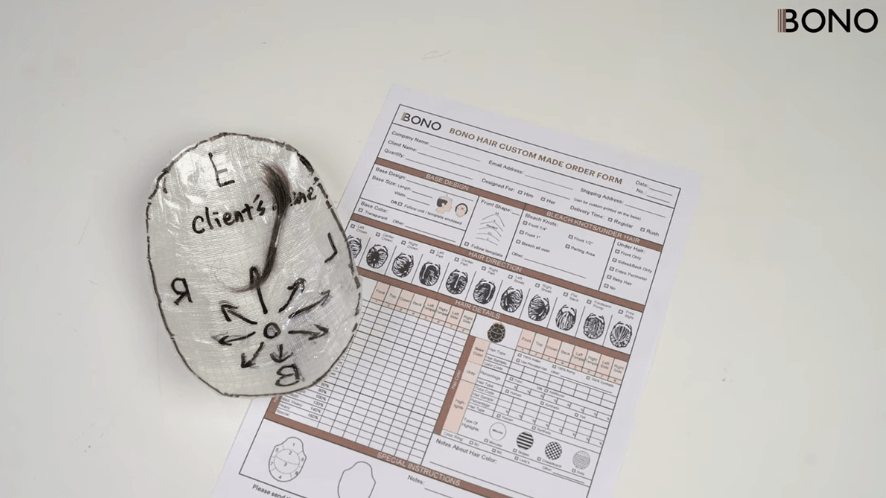
Customization is one of the areas where a supplier’s actual capabilities become easier to see.
Almost any supplier can say, “Custom orders are available.” That statement by itself doesn’t tell you much.
The better question is:
How much detail can the supplier actually customize?
Depending on your business and clients’ needs, you may need to adjust:
-
Base size and shape
-
Base material
-
Base design
-
Hair type
-
Hair density
-
Hair color
-
Gray percentage
-
Hair length
-
Hair curl
-
Hair direction
-
Ventilation method
-
Knot bleaching
-
Front contour shape
A salon may need a system that matches a particular client’s density mapping and gray percentage distribution. A hair system brand may need a consistent base specification across a product line. A distributor may need several standard configurations that can be reordered repeatedly.
-
Ask How Quality Is Controlled

Manufacturers with established production processes usually have a documented QC process. They may not share the full process with you, but you can still ask about specific checks to see how they manage quality.
For example, instead of simply asking, “Do you have QC?”, ask how they check something specific, such as the quality of bleached knots. A supplier that knows its production process should be able to explain what they check and what they look for.
For B2B buyers, two questions are especially important:
No.1 How are custom specifications checked against the order?
For a custom men’s hair system, ask how the supplier checks details such as base design, density, hair length, color, and other specifications before shipment. This helps reduce mistakes between what you ordered and what is actually produced.
No.2 How does the supplier maintain consistency across repeat orders?
A good first order is not enough if the next order comes out differently. Ask how the supplier records your specifications and makes sure the same requirements are followed on repeat orders.
You don’t need to review the supplier’s entire QC system before placing your first order. The goal is simply to find out whether the supplier has a clear process for checking quality and keeping your specifications consistent.
-
Compare MOQ, Pricing, and Order Flexibility
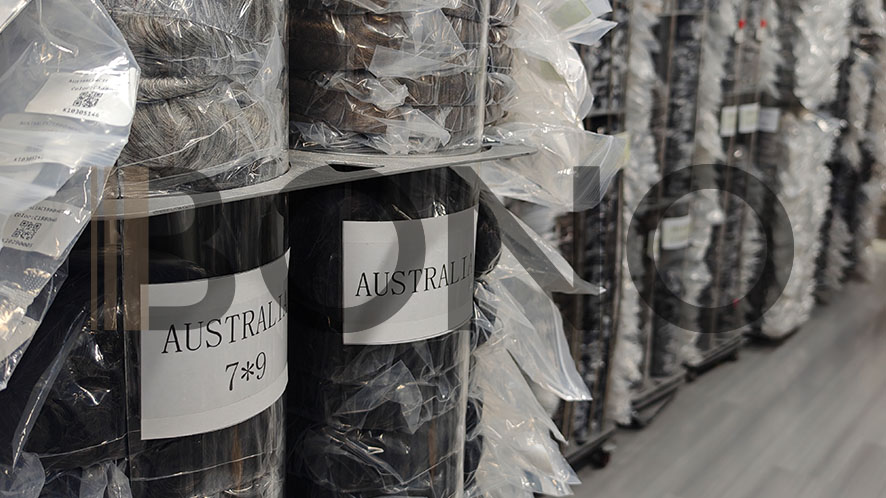
Start by looking at MOQ.
A low MOQ can be valuable if you’re a smaller salon, testing a new product line, or still figuring out which systems sell. It lets you test the supplier without committing too much inventory.
A higher MOQ may make more sense when you’re already ordering at scale and the lower unit price justifies the larger commitment.
Then look at the pricing structure.
Don’t compare only the quoted price per system. Check how the price changes with order volume and what other costs are involved:
-
Unit price
-
Tiered pricing at different order volumes
-
Customization charges
-
Sample costs
-
Packaging
-
Shipping and import costs
-
Payment terms
-
Replacement or defect handling
-
Any other recurring charges
A supplier with a slightly higher unit price may still be cheaper to work with if it has lower customization fees, more flexible MOQs, or fewer problems with repeat orders.
You’re trying to understand the total cost of working with the supplier, not just the number on the quotation.
Order flexibility matters too.
Consider what happens if your purchasing needs change. Can you mix products or specifications within an order? Can you increase or reduce order quantities as your business changes? Are smaller repeat orders possible, or does the supplier expect you to maintain a certain order volume?
The supplier that offers the lowest price today isn’t necessarily the supplier that makes the most sense for your purchasing model.
-
Pay Attention to How the Supplier Communicates

Once you have a shortlist, contact the suppliers and ask about the points that matter to your business. And pay attention to how they answer and communicate.
Does the person understand the specifications you’re asking about? Do they give clear and specific answers, or mostly general promises? When something isn’t possible, do they explain why and suggest an alternative?
For example, if you ask whether a supplier can make a specific base size, density, or hairline, a useful answer should tell you what they can do and what limitations you should know about.
If the supplier gives vague answers or doesn’t really address your question, it may be a sign that they don’t fully understand the specifications or the production process.
Poor communication doesn’t necessarily mean the supplier’s products are bad. But it can be a warning sign that communication may become a problem once you start working together, so it’s worth thinking carefully before you commit.
Choose a Supplier to Test, Not to Trust Yet
At this point, you can make an informed decision about which supplier is worth testing.
But that’s different from knowing whether the supplier is actually reliable because you still haven’t seen the actual product.
That’s why the next step should be a sample based on the specifications that matter to your business.
A generic sample can tell you something about the supplier’s workmanship. A sample made to your actual requirements can tell you much more: how well the supplier handles your customization requirements, whether the finished system matches your specifications, how smoothly the order process goes, and how long custom production takes.
This is where the process moves from choosing a supplier to verifying one.
The supplier you choose at this stage doesn’t have to be the supplier you eventually keep. Your first purchase should give you evidence for that next decision.
Final Takeaway
Choosing a wholesale men’s hair system supplier isn’t about finding the company with the lowest price, the largest catalog, or the most polished website.
You’re trying to answer a more practical question:
Which supplier has the right products, supply capabilities, and way of working for my business—and is worth testing first?
Start with the supplier itself. Check its production and stock capabilities, look closely at what it can customize, compare MOQ and total sourcing costs, and ask specific questions before you commit.
Then use a sample to see whether the supplier can actually deliver what it promised.
That’s when you start finding out what the supplier can actually do.