













Choosing a men’s non-surgical hair replacement system usually means balancing four things: a natural-looking hairline, durability, breathability, and how much work it takes to maintain. No base excels in every area, so the best choice depends on what matters most to you.
Skin hair systems are popular for good reason. The smooth base is easy to clean, and thin skin can sit close to the scalp, giving the hairline a natural look. Thicker skin bases are generally more durable, too. There are trade-offs, though. A skin base allows much less airflow than lace and mono, so heat and sweat can build up underneath. Thickness also changes the balance: go thinner for a more discreet edge, or thicker for more durable wear.
In this guide, we’ll look at the pros and cons of skin hair systems, who they’re best suited for, how to choose the right thickness and hair attachment method, and a few practical tips for handling and maintaining them.
Key Takeaways: Choosing a Skin Hair System
-
Choose thin skin if: You want easier adhesive cleanup, a smooth base against your scalp, or a natural-looking hairline without visible knots.
-
Consider thicker skin if: You want better durability and usually wear your hair forward to help conceal the front edge.
-
Think twice about skin base if: You sweat heavily, have an oily scalp, or live in a hot, humid climate where heat and moisture can build up under the base.
-
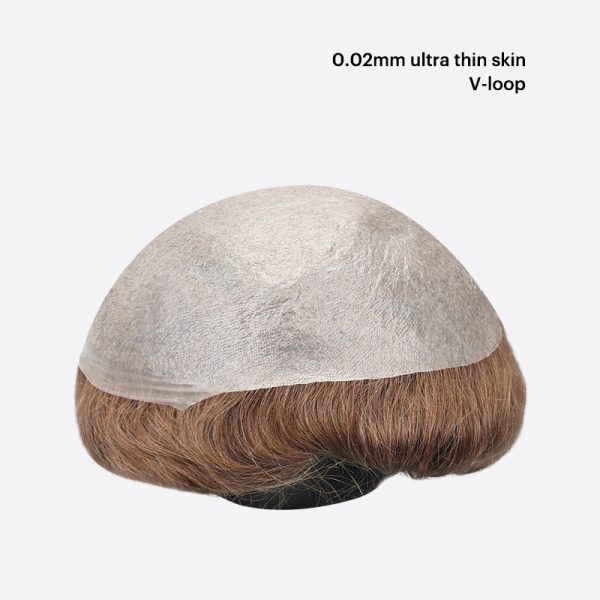
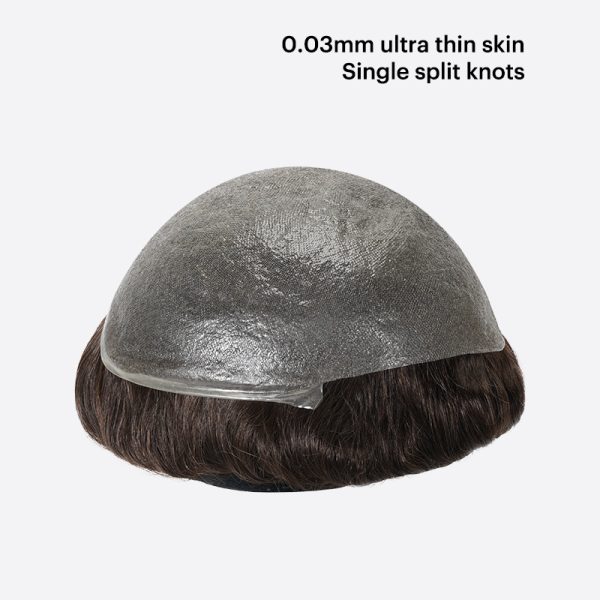
Choose ultra-thin skin carefully: A 0.02–0.03 mm base can create a nearly invisible hairline, but it’s delicate, requires careful handling, and may need more frequent replacement.
What a Skin/Poly/PU Hair System Actually Is
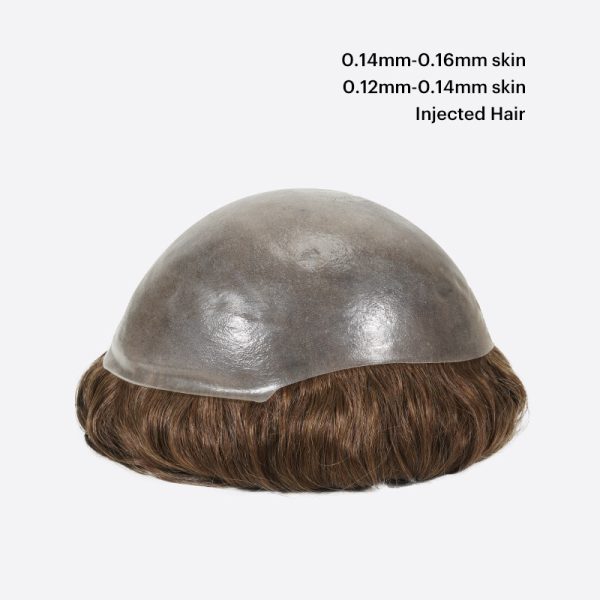
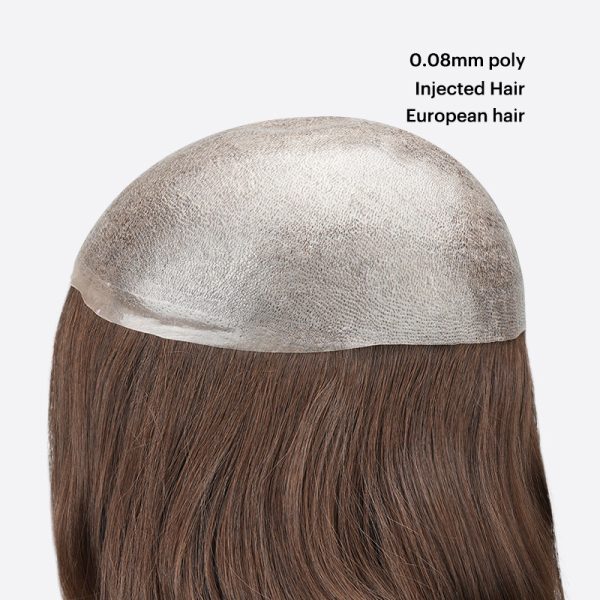
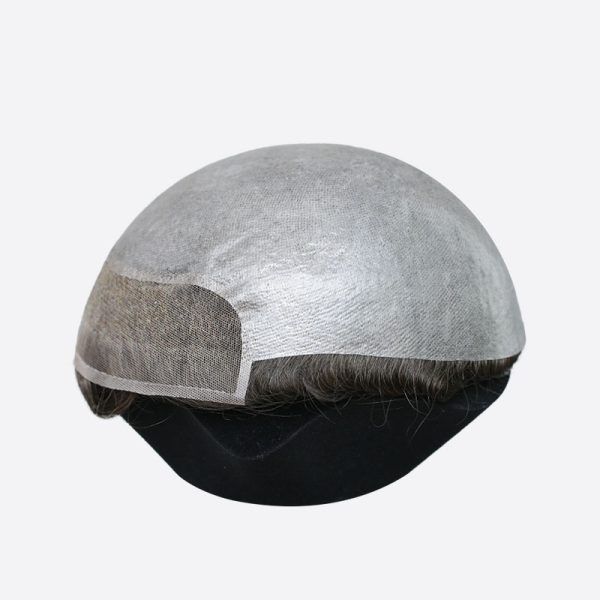
Poly, short for polyurethane (PU), is the material used to make a skin hair system’s base. The base is designed to mimic the look of real human skin, using a smooth, semi-transparent membrane that molds to the scalp. Its smooth surface also makes adhesive cleanup easier.
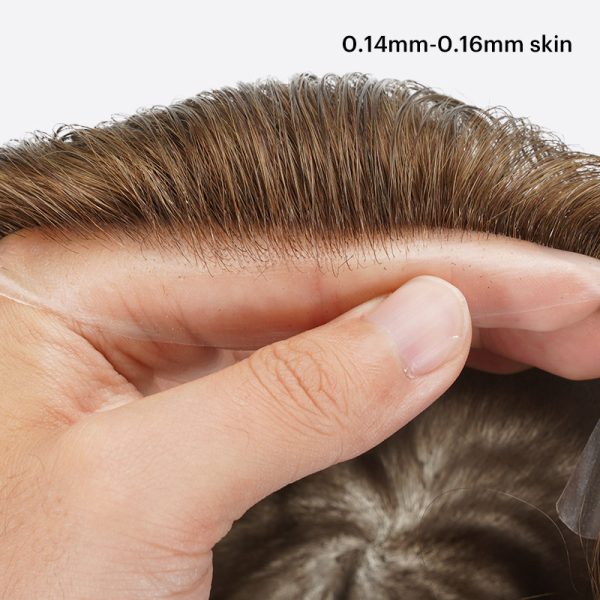
Base thickness affects both appearance and durability. Thinner skin tends to blend more naturally with the scalp but tears more easily. Thicker skin is generally more durable, though its edge can be harder to conceal. We’ll take a closer look at these trade-offs later in this guide.
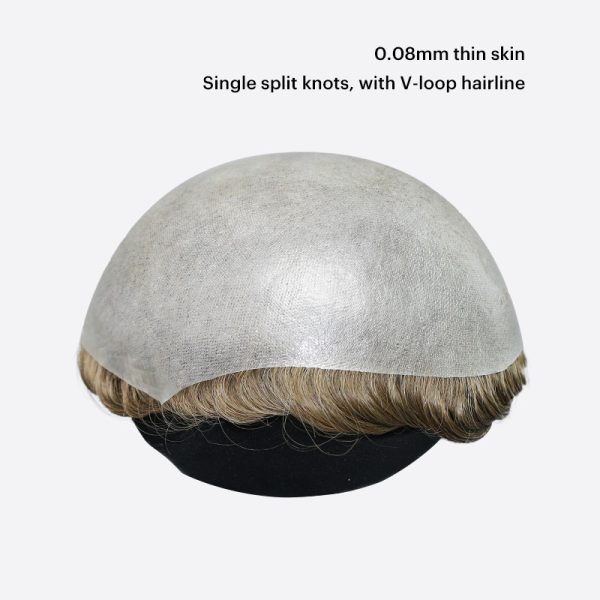
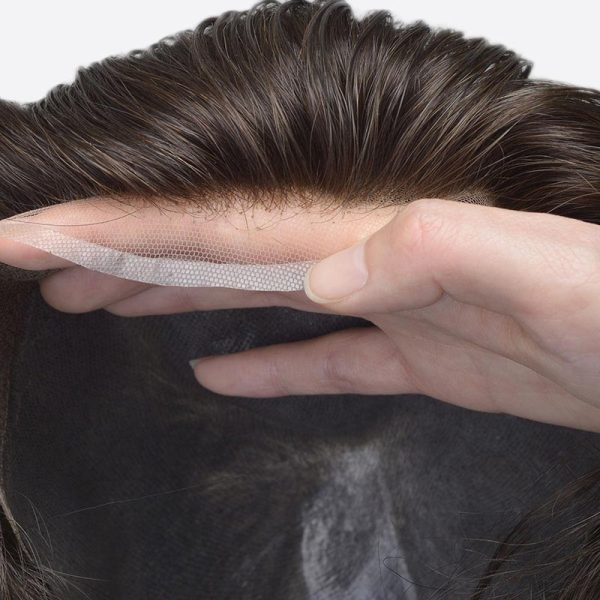
Skin bases also support different ventilation techniques, which are hair attachment methods. Alongside different kinds of knots used on lace and mono bases, such as single split knots and double split knots, skin bases can use knotless methods like V-looping and injection to mimic the look of hair growing directly from the scalp. We won’t go into the details here, but you can learn more in our Skin Hair System Ventilation Guide.
The Real Advantages of Skin Hair Systems
Skin hair systems have been around for years, and there’s a good reason they remain popular. Let’s take a look at what makes them worth considering.
Advantage 1. Adhesive Cleanup Is Usually Simpler
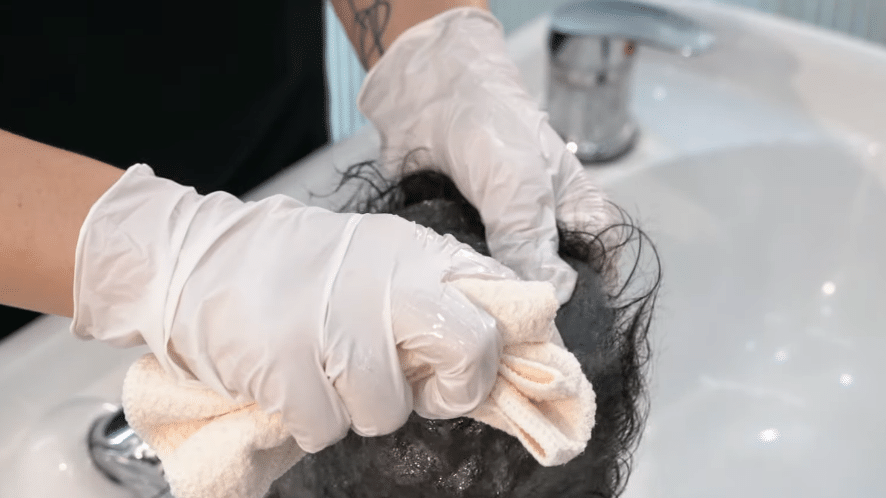
With a mesh base, sweat and scalp oil mix with adhesive residue, shampoo, and styling products, leaving buildup around the knots and hair roots. Getting it all out can be a headache, especially with lace, which is easy to damage if you pull too hard while cleaning.
Skin is more straightforward. Its surface is smooth. In most cases, you can focus on cleaning the base itself rather than picking residue out of a mesh. Some adhesive may still get onto the hair around the front edge, but it’s usually easier to deal with.
That said, easier maintenance doesn’t mean you can be rough with the base. Ultra-thin skin bases, particularly 0.02 mm systems, are still delicate and prone to tearing if handled too roughly.
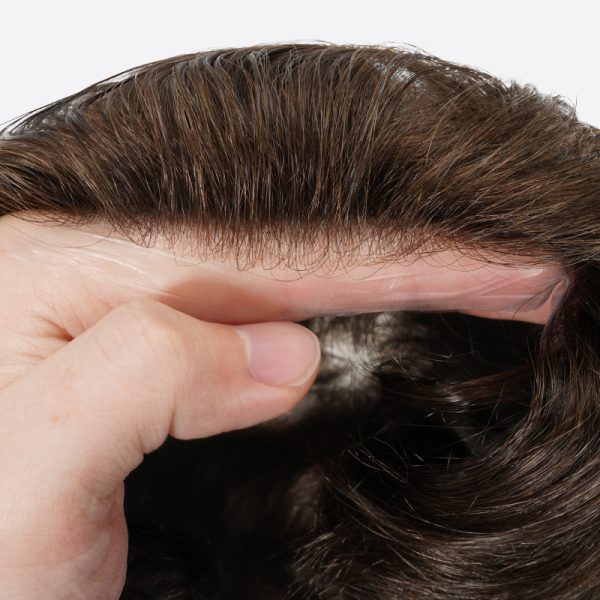
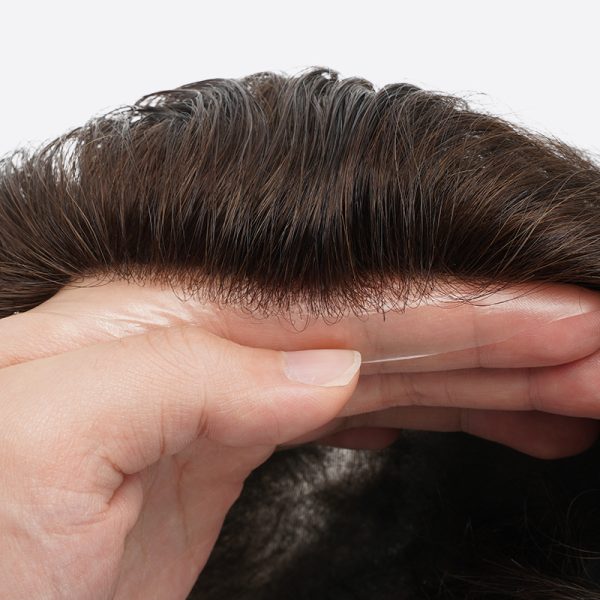
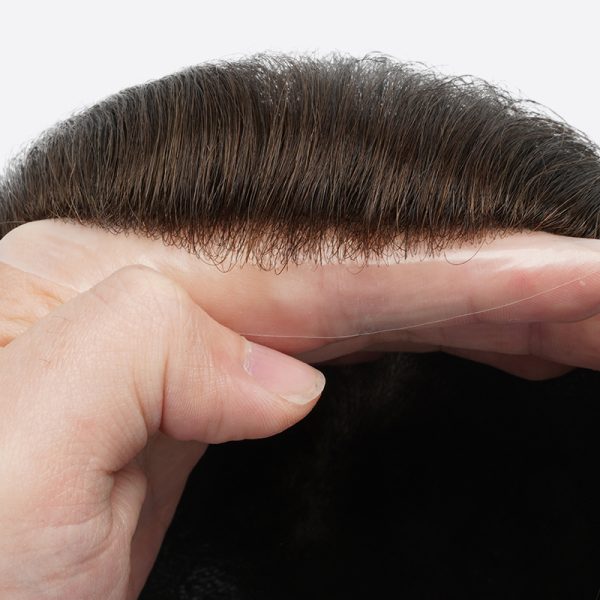
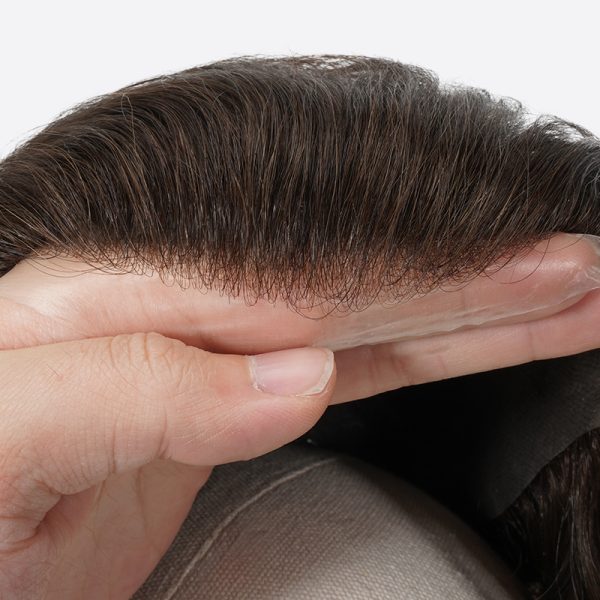
Advantage 2. Thin Skin Base Can Create a Natural-Looking Hairline
When people think of a natural-looking hairline, lace front bases are often the first thing that comes to mind. But many people don’t realize that ultra-thin skin can look just as natural.
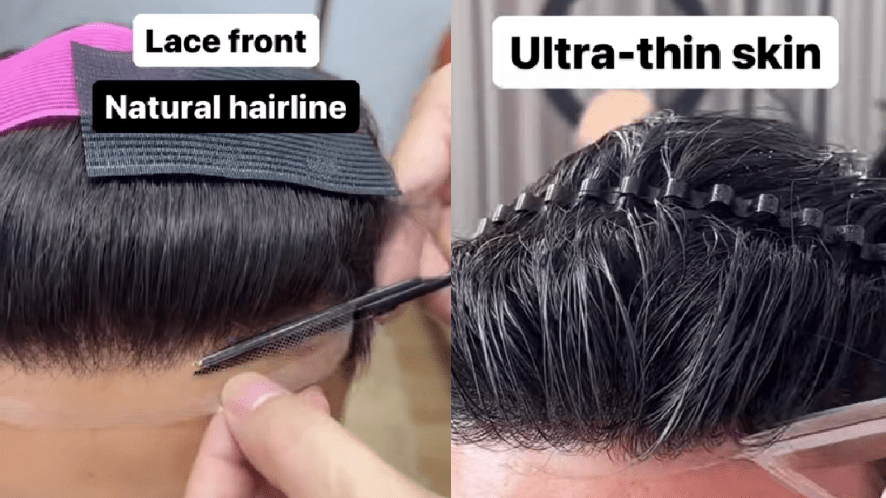
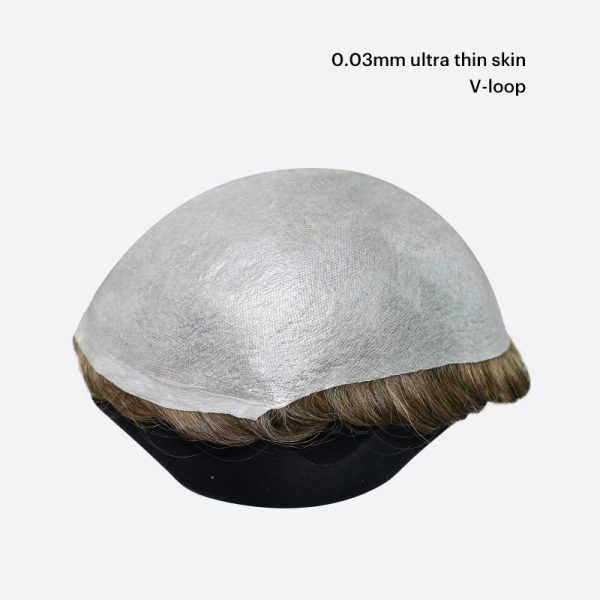
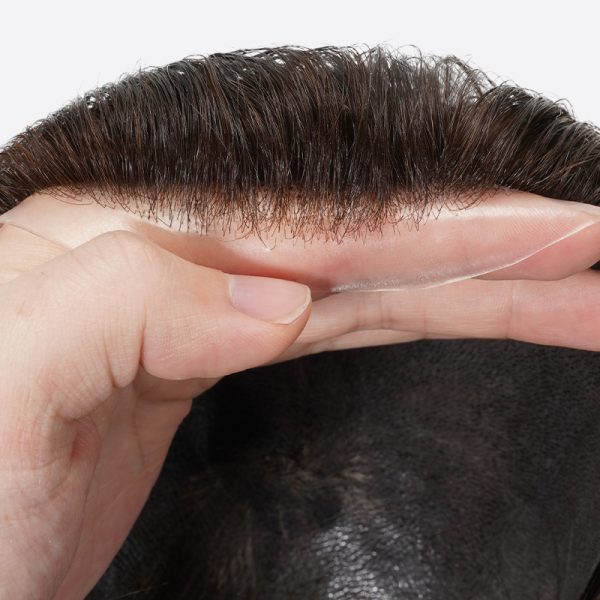
For 0.02–0.03 mm ultra thin skin, the base is highly transparent and can melt naturally into the scalp. Pair it with v-loop ventilation skill, and the hair can look as if it’s growing directly from the scalp.
Advantage 3. Skin Base Feels Smooth Against Your Scalp
A mesh base like lace can feel more like something attached to your head, while skin feels more like a thin layer sitting against the scalp. Some wearers prefer this close, snug fit because it gives them a greater sense of security when wearing their system outside.
Skin can also be a good option for people who find lace irritating. The mesh and knots may cause itching or friction for some wearers, especially those with sensitive scalps.
That said, skin isn’t necessarily less itchy for everyone. Unlike lace, a skin base allows much less airflow, so heat and sweat can build up underneath, especially in hot weather or during exercise. For some wearers, this can lead to irritation and itching of its own. It really comes down to what bothers your scalp more.
The Honest Drawbacks of Skin Hair Systems
The same smooth, solid surface that makes skin easy to clean also limits airflow and comes with a few trade-offs.
Drawback 1. Heat and Sweat Can Build Up Underneath
Skin bases allow much less airflow than lace, so heat, sweat, and scalp oil can build up underneath. If you have an oily scalp or sweat a lot, you’ll probably notice this more in hot weather. It can get uncomfortable, and sweat may even start to loosen the adhesive.
There’s also a mess to deal with when you take the system off. Sweat, oil, and leftover adhesive can collect on the underside, sometimes leaving an unpleasant smell. That warm, damp environment can even leave your scalp itchy or cause small bumps if you leave it too long between cleanings.
So regular maintenance matters, especially if you wear your system every day or tend to sweat heavily.
Drawback 2. Ultra-Thin Skin Bases Can Tear Easily
Ultra-thin skin systems, especially those around 0.02–0.03 mm, are popular for their nearly invisible appearance. But the thinner the base, the more careful you need to be with it. The material can tear if you pull too hard while removing adhesive, cleaning the base, or handling the system.
This can make routine maintenance more stressful than it is with a thicker base. Ultra thin skin also tend to wear out sooner than lace or mono systems of a similar size, so you may find yourself replacing them more often.
Drawback 3. Shine Can Make the Base More Noticeable
A good skin system can look very natural, but sometimes the base catches the light and gives itself away. This is more likely with thicker skin, and oil, adhesive residue, or wear on the surface can make the shine more noticeable. Under bright lighting, it may have a plastic-like look that is harder to hide at certain angles.
The good news is that shine isn’t always unavoidable. The way the system is fitted and maintained can make a difference, and we’ll cover some ways to deal with it in a separate guide.
Skin Base Thickness: Naturalness vs. Durability
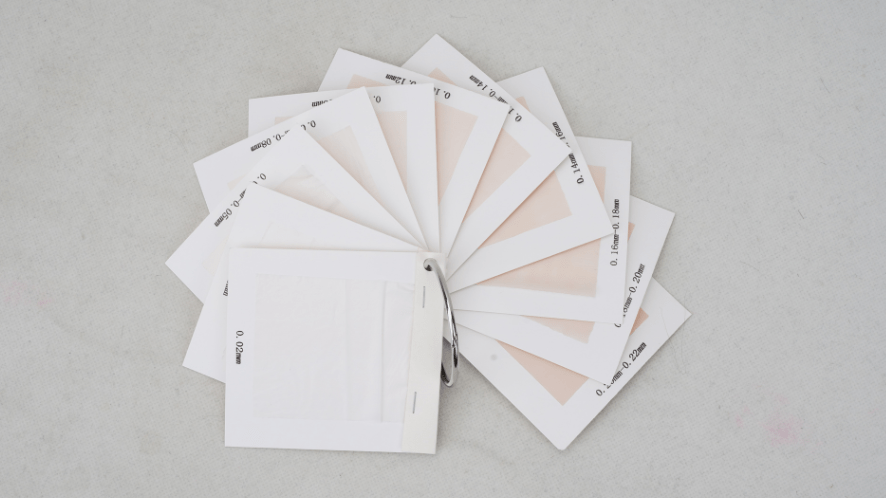
Skin bases come in different thicknesses, and the difference matters. A thinner poly base can create a less noticeable edge, but it generally sacrifices durability. A thicker base is usually more robust, although its edge may be harder to hide.
The ventilation method matters, too. Different methods work better with different base thicknesses, affecting the hairline, how the hair sits, and how well the system holds up over time. Here’s how the common options compare, based on Bono Hair’s product experience.
| Base Thickness | Typical Ventilation Method | Main Advantage | Main Trade-Off | Approximate Lifespan | Best For |
| 0.02–0.03 mm | Usually V-looped | Undetectable hairline, 100% knot-free across the base, natural hair movement, lightweight | Very delicate and prone to tearing | 3–4 weeks | Wearers who prioritize an undetectable hairline, and don’t mind frequent replacement |
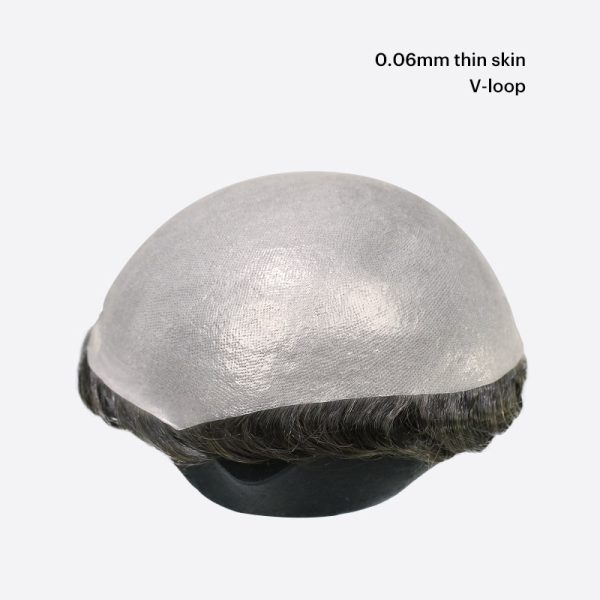
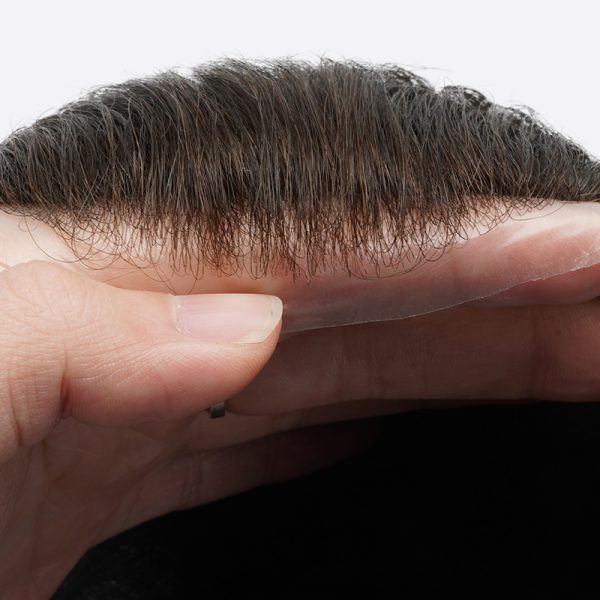
| 0.04–0.06 mm | Usually V-looped | The sweet spot of realism and durability: nearly undetectable hairline with improved base strength | Still delicate and requires careful handling | 1–3 months | Everyday wearers seeking a balance between realism and lifespan |
| 0.08–0.10 mm | Often knotted with a V-looped front hairline | Natural hairline combined with better durability | Knots may be visible under close inspection | 3–4 months | Wearers who prefer a more durable base and usually keep their hairline covered or softly styled |
| 0.12–0.16 mm | Knotted | Extra durability, greater tear resistance | Thicker edge, less natural hairline blending, visible small knots | 3–6 months | Wearers who prioritize maximum durability and easy maintenance and don’t expose their hairline |
| 0.12–0.16 mm | Injected | Realistic hair-growing-from-scalp appearance | Thicker edge; styling flexibility depends on the injection method Flat Injected: flat-lying & fixed direction Lift Injected: root lift & flexible flow |
2–3 months |
Wearers who want a hair-growing-from-scalp effect and don’t expose their hairline |
The lifespans in the table are estimates, not fixed limits. With proper care and maintenance, a hair system may last longer than you expected.
As you can see, the two 0.12–0.16 mm skin hair systems can have different lifespans even though they use the same base thickness.
-
In general, thicker skin offers greater durability but sacrifices some naturalness and lightness.
-
The hair attachment method matters as well. In our experience, durability generally increases from V-looped to injected to knotted hair.
Who Should (and Shouldn’t) Choose Skin Hair Systems?
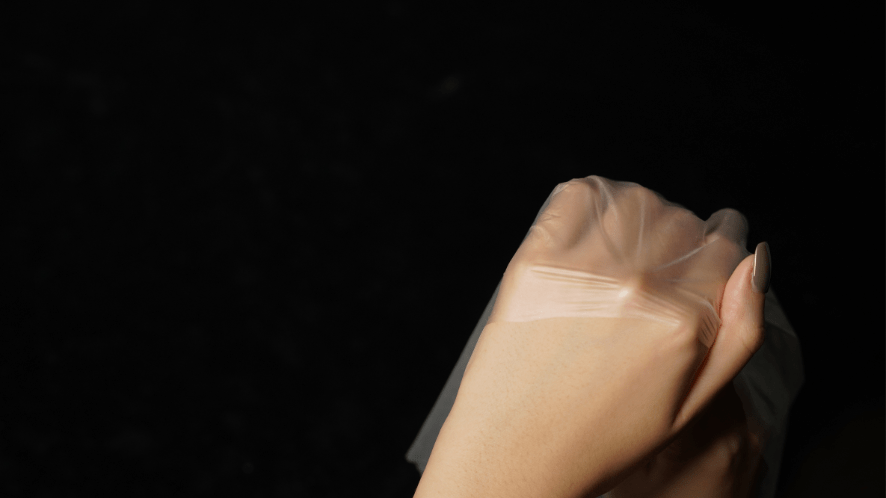
Skin may suit you if you prefer a smooth base that’s easy to clean and don’t mind the trade-off in breathability. The thickness you choose depends on your hairstyle, how long you want the system to last, and how much care you’re willing to put into it.
A Skin Base May Be Right for You If You:
-
Find lace adhesive cleanup frustrating and want a base that’s easier to clean.
-
Prefer a smooth surface against your scalp rather than an open mesh.
-
Want a knot-free, natural-looking hairline and are comfortable handling a delicate, ultra-thin base.
-
Not a fan of bleached knots along the hairline.
-
Want the hair to look as if it’s growing directly from your scalp.
You May Be Better Off with Lace, Mono, or a Hybrid Base If You:
-
Have an active lifestyle and sweat heavily on a regular basis.
-
Have an oily scalp.
-
Live in a hot, humid climate and find that heat and moisture build up under your hair system.
-
Want to expose your hairline but don’t want to worry about an ultra-thin base tearing.
Your hairstyle also matters when choosing a thicker skin base.
If you like to expose your hairline, ultra-thin skin is worth considering, as long as you’re prepared to handle it carefully and replace it more often. If you prefer a forward fringe and want a more durable base, a thicker skin system may be a better fit. And if breathability is a major concern, lace or a hybrid base may be worth a closer look.
A Few Tips for Maintaining Your Skin Hair System
Skin bases are easy to clean, but ultra-thin versions need a little extra care. Here are a few things worth keeping in mind:
-
Don’t pull the base straight off. If the adhesive is still holding, apply a suitable adhesive remover and give it time to work. Peel the system back gently rather than pulling it straight up, which can stretch or tear the base.
-
Remove adhesive before washing. Shampoo won’t remove adhesive residue effectively. Soften the residue with an adhesive remover first, then wipe it away gently without scraping or stretching the base.
-
Clean both sides of the base. Unlike lace, poly doesn’t allow shampoo to pass through. Make sure you clean the underside as well as the hair to remove accumulated oil and residue.
-
Skip unnecessary alcohol cleaning on ultra-thin skin. If you wear a 0.02–0.03 mm base, avoid wiping it with rubbing alcohol just to get it extra clean. Repeated exposure may affect the PU’s flexibility over time.
-
Let the base dry completely before reattaching. Even if the hair is still slightly damp, the base itself must be dry before you apply adhesive.
These small details matter most with ultra-thin skin systems, where rough handling can shorten the life of the base. If you want detailed guide, feel free to explore our skin hair system maintenance guide.
Conclusion: Choose the Base That Fits Your Routine
Skin hair systems are easy to clean and can create a natural-looking hairline, especially with an ultra-thin base. But thinner doesn’t always mean better. The best choice depends on your hairstyle, how often you’re willing to replace the system, and how well you tolerate heat and sweat.
This guide is brought to you by Bono Hair, a men’s hair system manufacturer based in Qingdao, China, with 20 years of manufacturing experience. We serve hair replacement centers, salons, hair system distributors, retailers, and private-label brands worldwide.
We offer a wide range of men’s hair systems for wholesale, including ready-to-ship stock and custom-made options to suit different business needs. If you’re looking for a manufacturing partner for your hair business, feel free to reach out to discuss how we can support your business with the right products and supply options.
Frequently Asked Questions
Can I shower, sleep, and swim with a poly skin hair system?
Yes. You can usually shower and sleep with a bonded skin hair system once the adhesive has fully cured. Follow your adhesive manufacturer’s instructions for water exposure and any recommended waiting period after attachment.
Does a poly skin base feel heavy on the scalp?
Not necessarily. Thin skin bases, around 0.02–0.06 mm, are lightweight and sit close to the scalp. Thicker bases may feel more noticeable, but comfort also depends on the fit, adhesive, and your personal preference.
Is poly skin easier to maintain than lace?
Generally, yes. Adhesive residue is easier to remove from a smooth skin base than from lace, where it can get caught in the mesh and around the knots. However, ultra-thin skin bases need gentle handling during removal and cleaning to avoid tearing.
Why does my poly skin hairline look shiny?
The polyurethane base can reflect light. Excess adhesive or an edge that hasn’t been laid flat can make the shine more noticeable. Gently remove any adhesive residue and check that the edge is sitting properly against your scalp. A compatible matte scalp sealer may also help reduce shine.