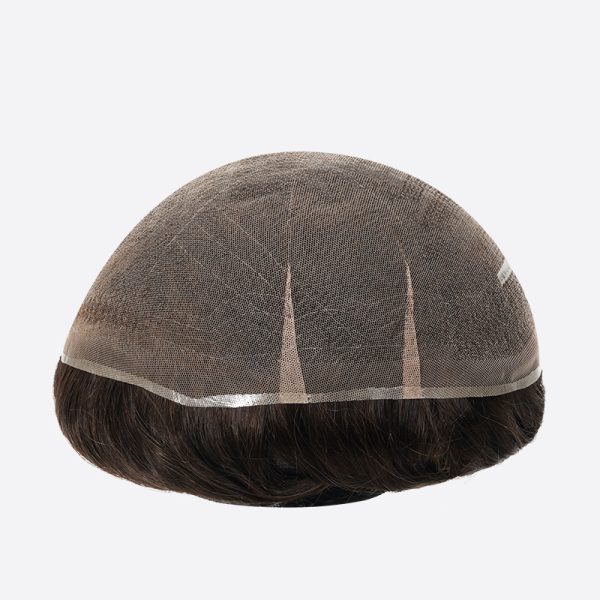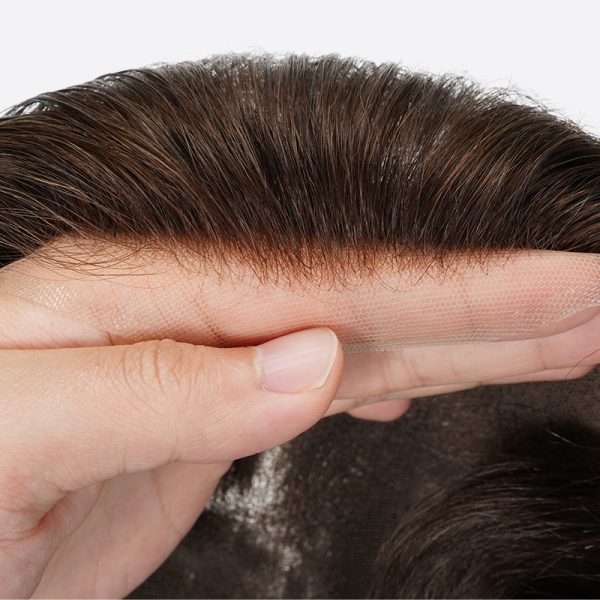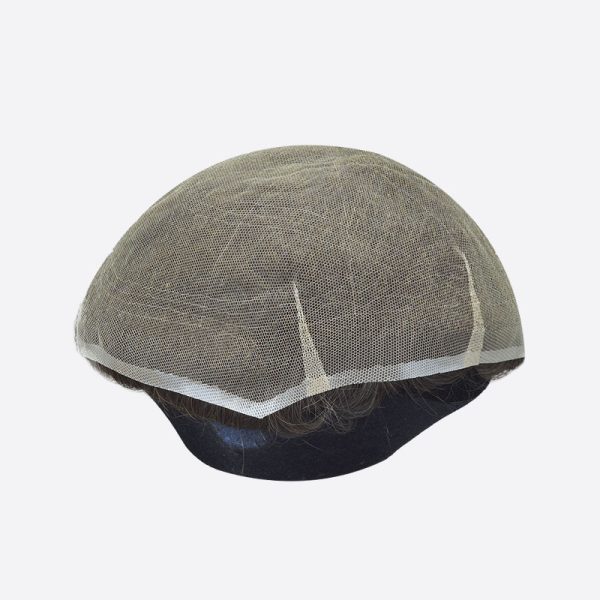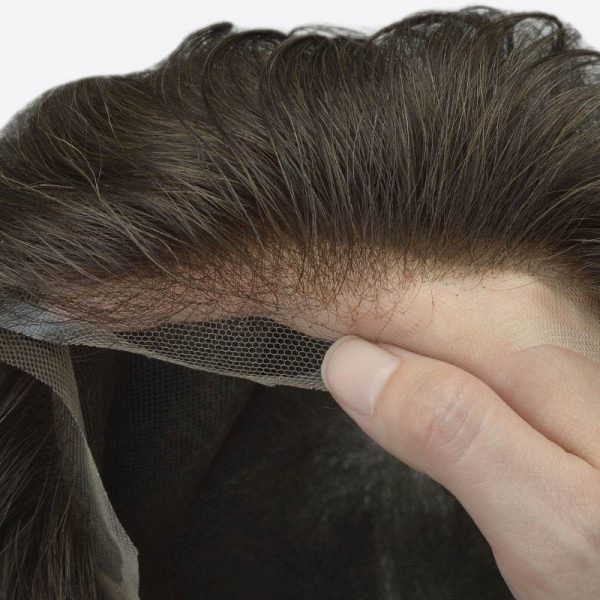













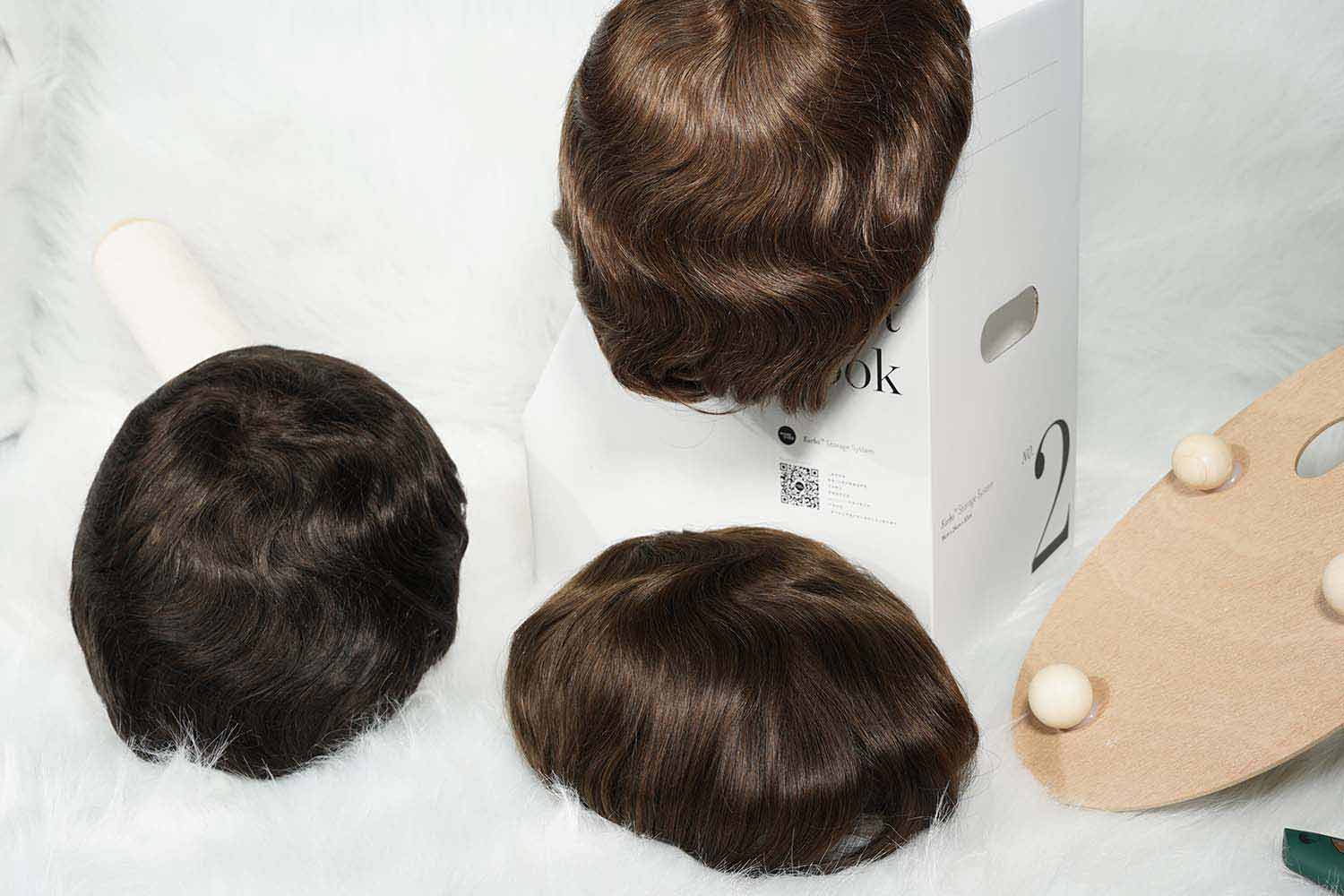


A natural-looking hairline depends on more than the thickness of a skin base. The way hair is attached to the PU material also affects how the roots look, how the hair sits, and how easily your client can style it. For hair replacement professionals, these differences are worth understanding before recommending a skin hair system for men.
In this article, we will look at the most common ventilation techniques used in skin hair systems, where each one fits, and what to consider when choosing a system for your clients.
Key Takeways
-
V-loop creates a natural-looking, knotless hairline and allows flexible styling, but is more prone to shedding than Flat Injection and Single Split Knots.
-
Flat Injection keeps the roots close to the base for a neat, flat finish and offers better hair retention than V-loop and Lift Injection, but with less styling flexibility.
-
Lift Injection provides more root lift and volume than Flat Injection, with greater styling flexibility but more shedding.
-
Single Split Knots cannot create a knotless look on their own, but are often combined with a V-loop front hairline to balance a natural appearance with better hair retention.
Knotless Ventilation Techniques for Skin Hair Systems
V-loop, Lift Injection, and Flat Injection can all create a knotless appearance, but they differ in how the hair is attached to the skin base, the base thicknesses commonly used with each method, the look they create, and the styling flexibility they offer.
V-Loop: Natural Hairlines and Flexible Styling
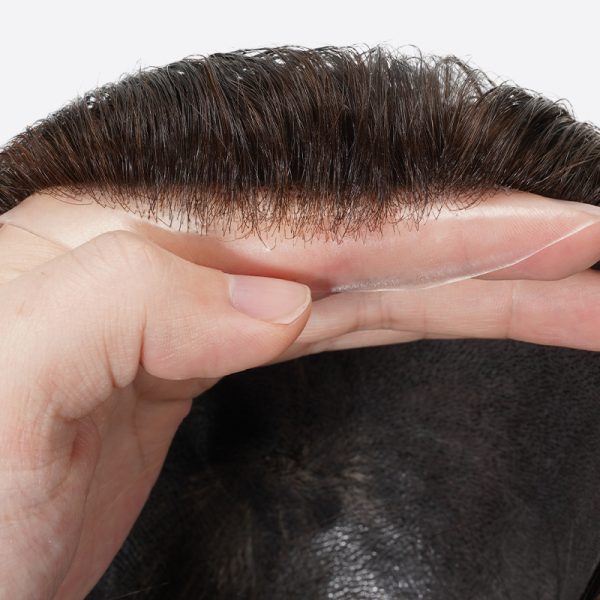
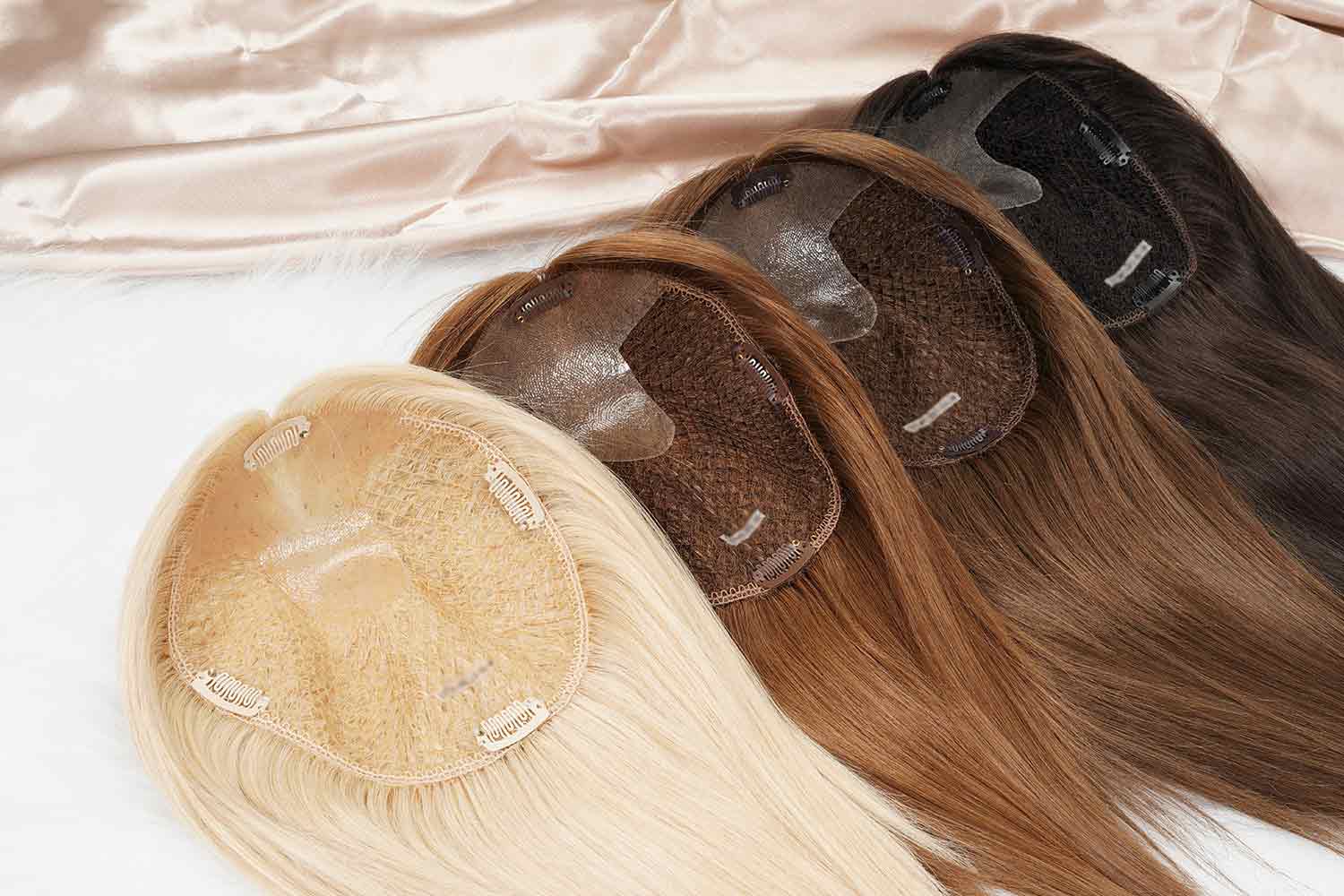
With V-loop ventilation, each strand is folded into a V shape and inserted through the PU base without a conventional knot. This creates a clean, knotless-looking hairline, even when your client wears the hair brushed back.
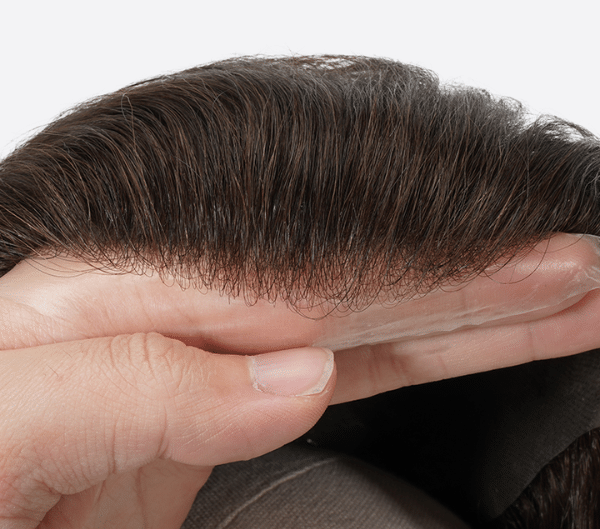
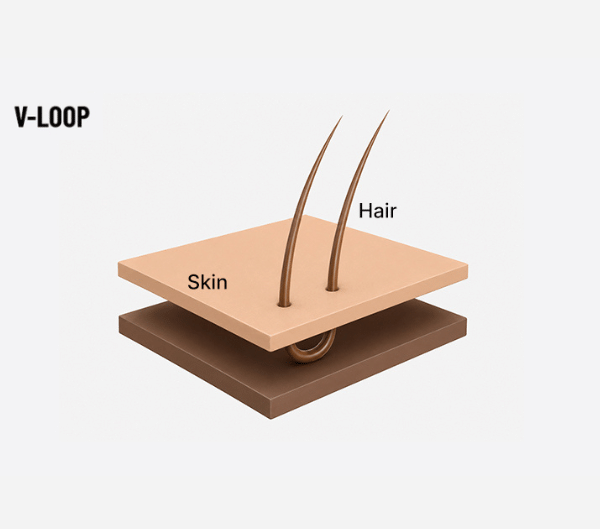
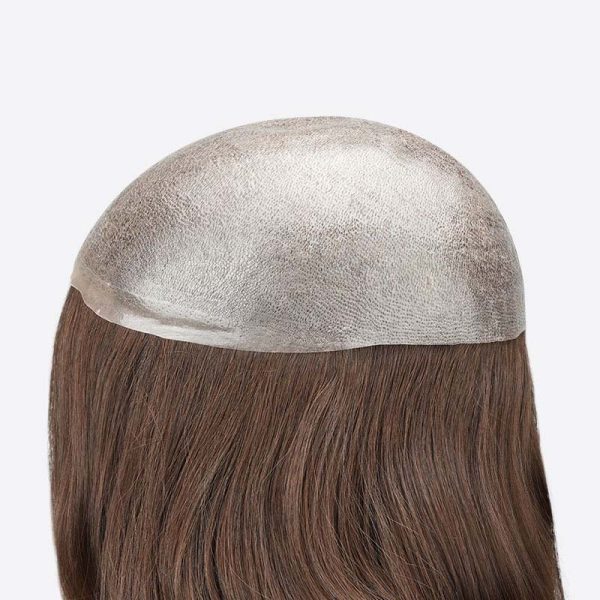
V-loop is commonly paired with thin skin bases around 0.02–0.08 mm. The thinner the base, the more seamless the transition against the scalp.
V-loop also offers greater styling flexibility, allowing your clients to change their parting and wear their hair in different directions.
The main trade-off with V-loop is that the hair is held in place solely by the knot sealer (a layer of PU sealing glue) after ventilation. This makes it less resistant to pulling and more prone to shedding. You’ll need to handle it carefully when washing and styling the system for your clients, and advise them to do the same at home.
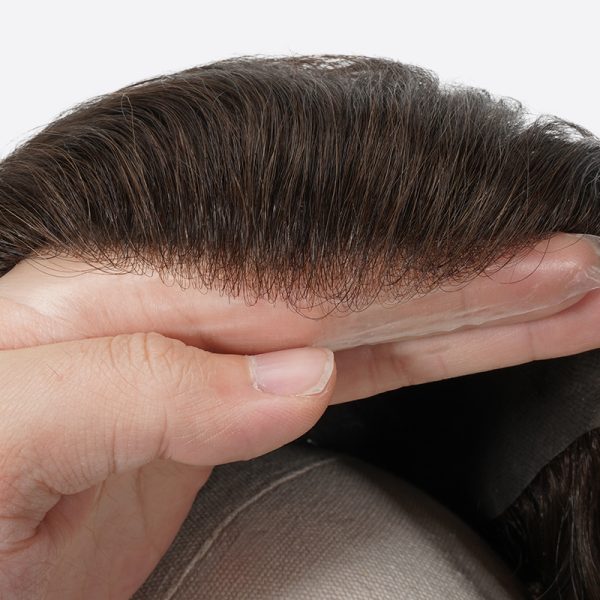
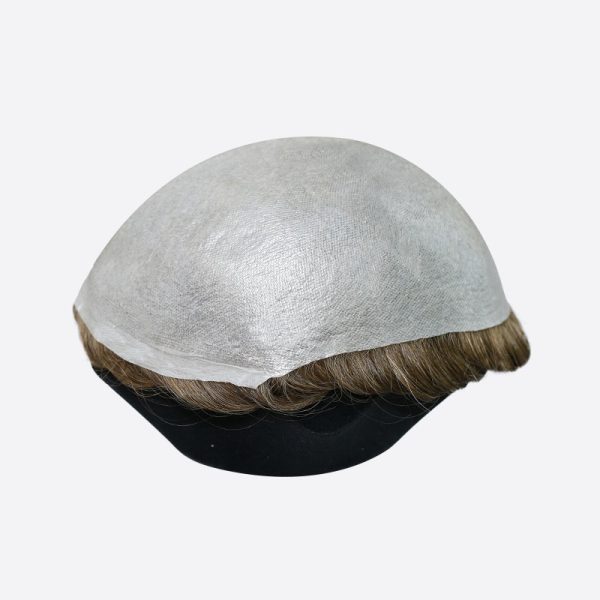
At Bono Hair, BH3 (0.03 mm) and BH4 (0.06 mm) are two examples of full V-loop systems, offering different base thicknesses to suit different client needs.
$30 OFF Every $399
$30 OFF Every $399
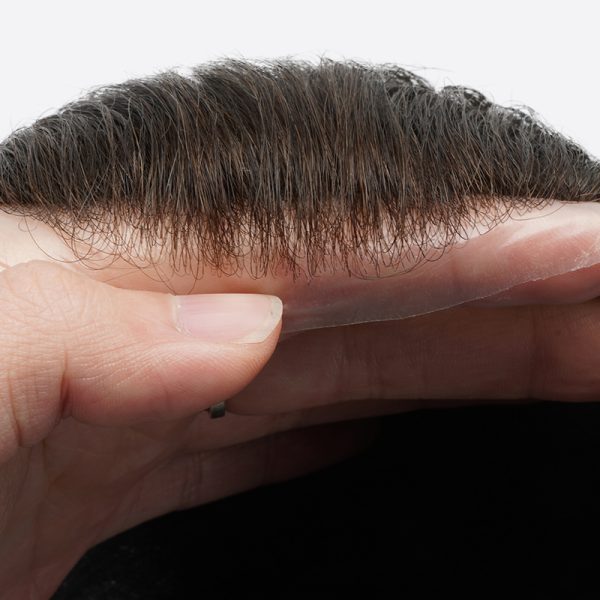
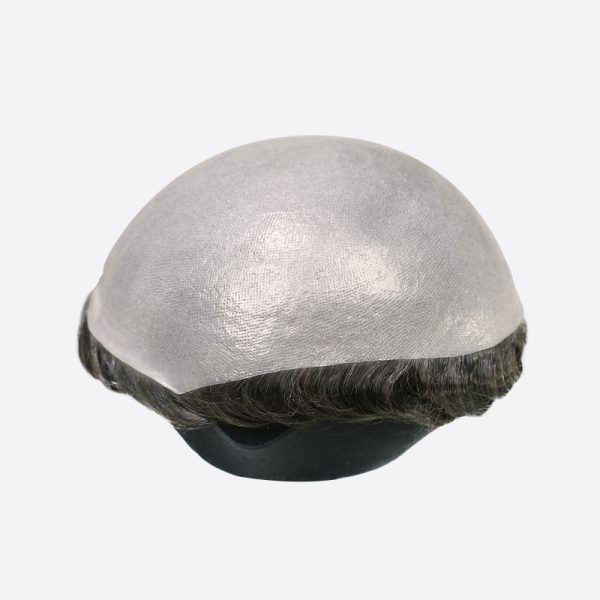
| Feature | BH3 | BH4 |
| Base Thickness | 0.03 mm | 0.06 mm |
| Ventilation | Full V-loop | Full V-loop |
| Naturalness | Very natural-looking | Natural-looking |
| Expected Lifespan | 3–4 weeks | 2–3 months |
| Maintenance | Requires extra care due to the ultra-thin base and V-loop attachment | Requires careful handling to minimize shedding |
Flat Injection: Flat Roots and a Natural, Neat Look
With Flat Injection, the hair is manually inserted into the PU base at a low angle and then pressed flat against the base. The production process involves four key steps:
-
Low-angle injection: Hair strands are manually injected into the PU base at a shallow angle, following the intended hair direction.
-
Root trimming: The technician trims the short roots sticking out from the underside of the base.
-
Heat ironing: Next, a heated tool is used to press the trimmed roots flat against the base, following the direction of the injected hair.
-
PU sealing: Finally, the technician applies liquid PU to seal the flattened roots and hold them securely in place.
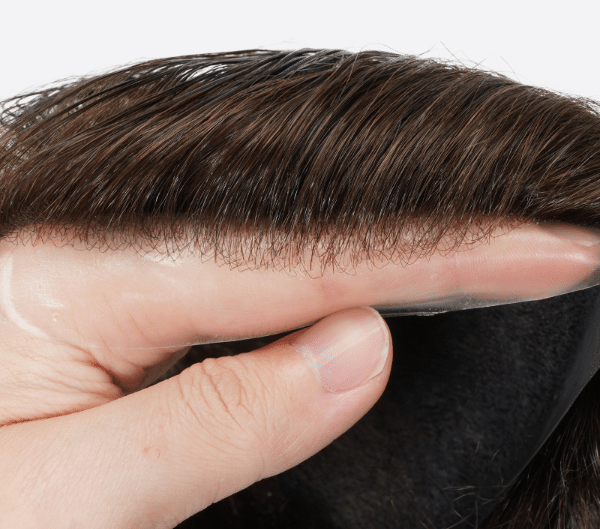

In Bono Hair’s product range, Flat Injection is often used on skin bases starting at 0.08 mm.
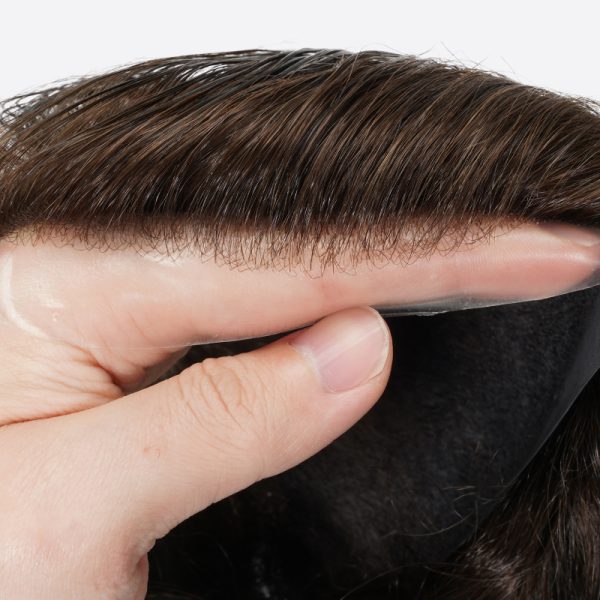
It gives the hair a natural, knotless look across the base, with roots that lie flat for a neat, smooth appearance. Heat pressing and PU sealing help keep the hair in place and reduce shedding. It works well for forward-combed styles, short fringes, and flat crops.
The downside is limited styling flexibility. If your clients want more volume at the roots or like to change their hair direction, Flat Injection may not be the best fit.
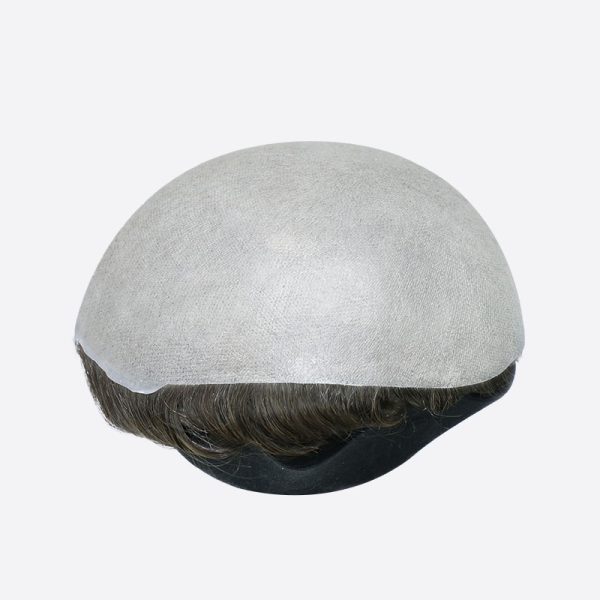
At Bono Hair, BH6 (0.08 mm) is an example of a flat-injected skin hair system.
$30 OFF Every $399
Lift Injection: More Root Lift and Styling Flexibility
Flat Injection keeps the hair roots close to the base, but some hairstyles need more lift and volume. That is where Lift Injection comes in.
The difference lies in how the roots are handled. With Lift Injection, the hair is inserted at a more upright angle, and the roots underneath the base are trimmed shorter than in Flat Injection. The roots are then secured with PU sealing glue, without being pressed flat with heat.
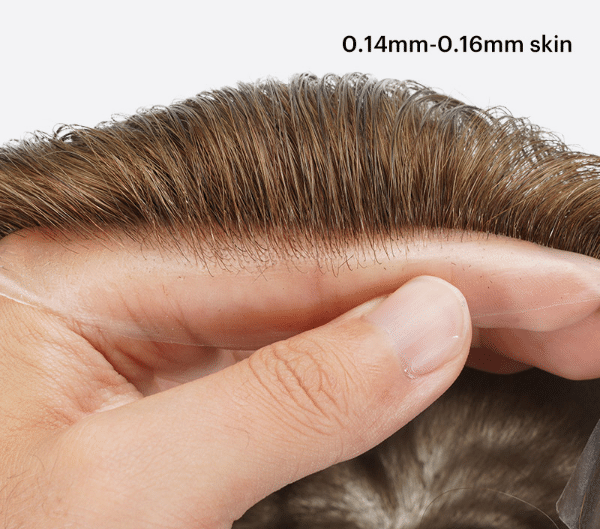

This allows the hair to stand higher and be brushed in different directions, giving wearers more freedom when styling their hair. However, because the roots rely on sealing glue alone for retention, Lift Injection is more prone to shedding than Flat Injection.
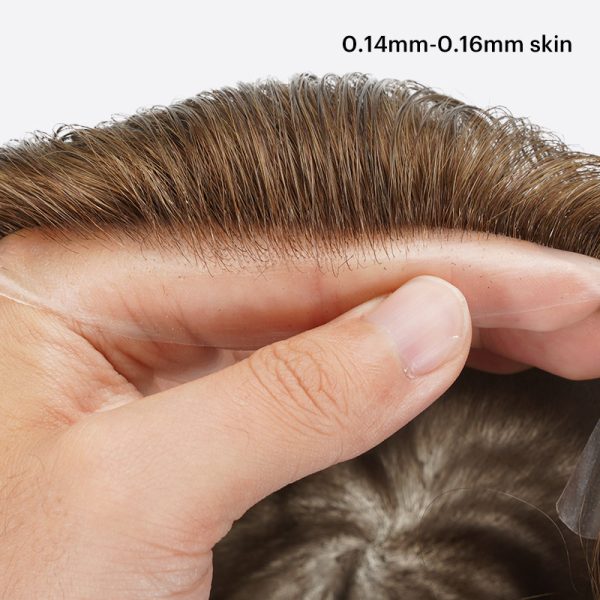
Lift Injection is typically used on skin bases 0.08 mm and above. At Bono Hair, the BH6T is one example, available in 0.12–0.14 mm and 0.14–0.16 mm thicknesses.
$30 OFF Every $399
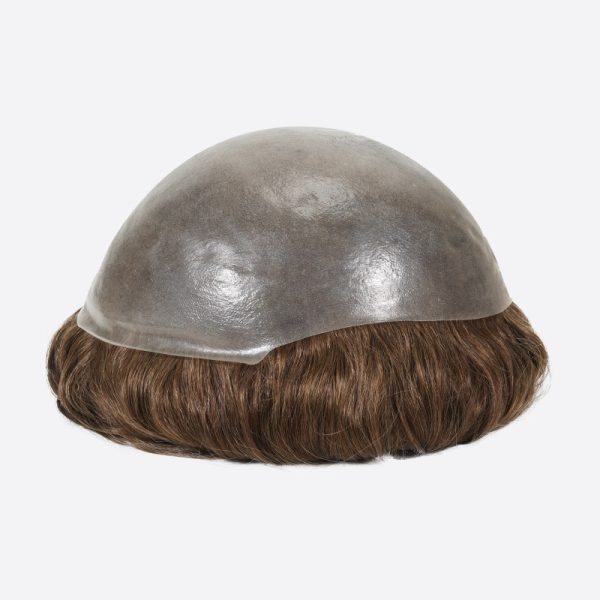
These are the three main knotless ventilation techniques used on skin bases. As you may have noticed, while V-loop and Lift Injection create a highly natural look, they are more prone to shedding. Flat Injection offers better hair retention, but it isn’t always the ideal fit for every hairstyle.
To balance a natural appearance with a secure hold, another widely popular option for skin hair systems is Single Split Knots.
Single Split Knots on Skin Bases: When Knotted Ventilation Makes Sense
With Single Split Knots, hair strands are looped through the base and tied into a single split knot. While this technique works across skin, lace, and mono bases, its application on PU skin comes with unique considerations.
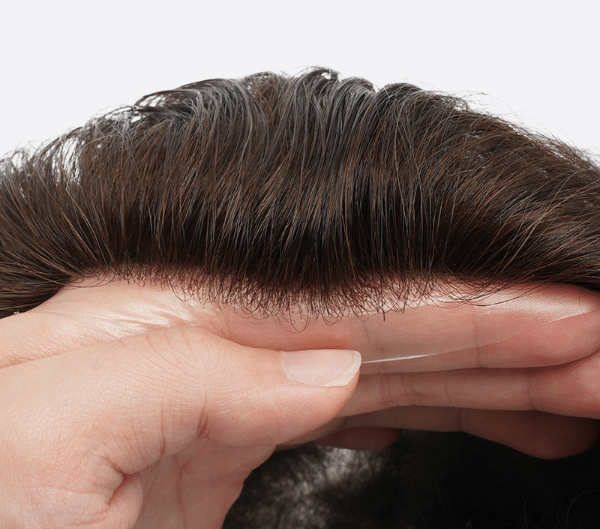
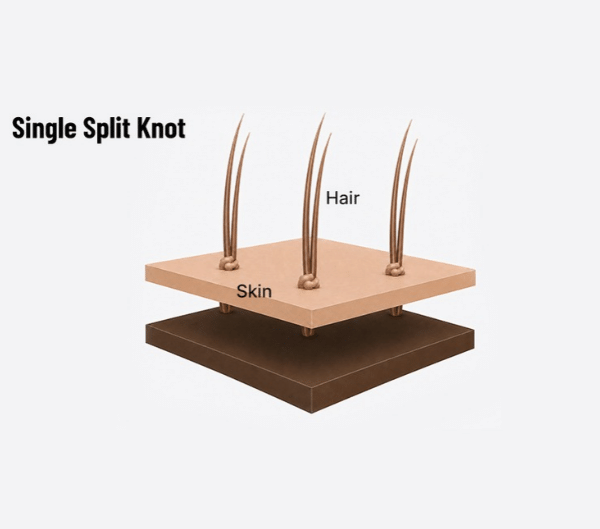
Knots hold the hair securely, but they leave tiny dark dots that can be visible up close. On lace and mono bases, these knots can be bleached to make them less noticeable. However, knot bleaching is generally not recommended for PU skin, so Single Split Knots are rarely used along the front hairline of a skin toupee.
Instead, they are often combined with a V-loop front hairline to keep the front looking natural while improving hair retention across the rest of the base.
Single Split Knots are typically used on skin bases 0.06 mm and thicker. Our best-selling men’s skin toupee, BH1, is a good example: the front 1/2 inch uses V-loop for a natural-looking hairline, while Single Split Knots cover the rest of the base to improve durability and help extend the system’s lifespan.
$30 OFF Every $399
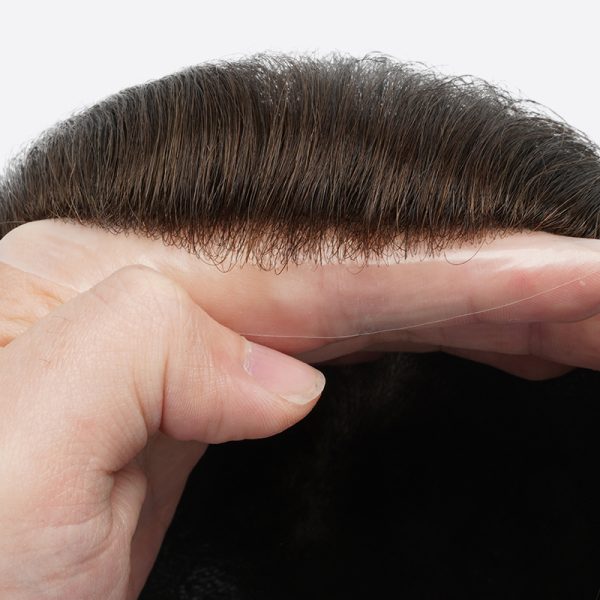
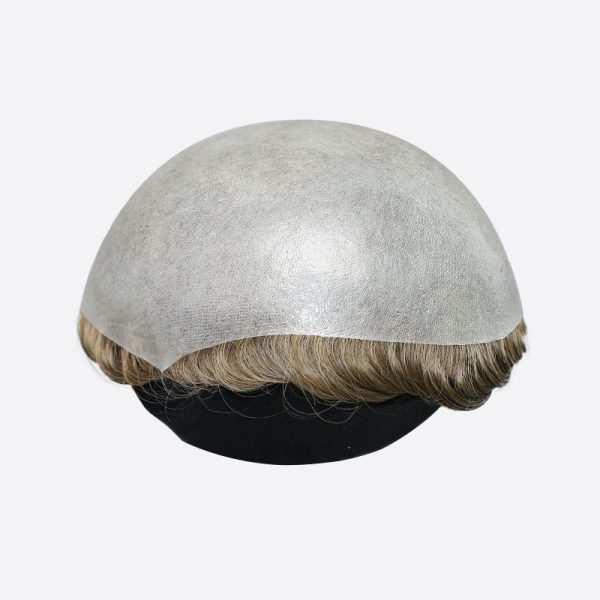
Technical Comparison: V-Loop vs. Flat Injection vs. Lift Injection vs. Single Split Knots
| Feature | V-Loop | Flat Injection | Lift Injection | Single Split Knots |
| Attachment Method | Hair is looped through the base in a V-shape without knots | Hair inserted at a low angle and heat-pressed flat | Hair inserted at an upright angle and sealed (no heat press) | Hair looped through the base and tied into a knot |
| Base Thickness Limit | 0.02 mm and above (ideal for ultra-thin skin) | 0.08 mm and above | 0.08 mm and above | 0.06 mm and above |
| Appearance | Knotless look; suitable for a natural-looking exposed hairline | Knotless look; roots lie flat against the base | Knotless look; more lift and volume at the roots | Tiny knots may be visible up close |
| Hair Retention | More prone to shedding | Better retention than V-Loop and Lift Injection | More prone to shedding than Flat Injection | Secure hold |
| Styling Considerations | Flexible styling and parting | Best for styles where the hair sits close to the base | Allows more freedom to brush the hair in different directions and create root lift | Less suitable for exposed skin hairlines due to visible knots |
| Bono Hair Example | BH3 (0.03 mm), BH4 (0.06 mm) | BH6 (0.08 mm) | BH6T (0.12–0.14 mm and 0.14–0.16 mm) | BH1 (Single Split Knots with a V-loop front hairline) |
A Little Tip: Ventilation method is only one factor in a hair system’s durability. Base thickness, overall construction, hair quality, and manufacturing also play a role. Even systems made with the same ventilation method can have different lifespans, so it is worth looking at the full product specifications before making a choice.
Maintenance Tips: How to Reduce Shedding by Ventilation Type
Knotless techniques like V-loop and Lift Injection create a natural-looking hairline, but hair secured with these methods can be more prone to shedding than hair secured with knots. Here are some daily maintenance tips you can share with your clients to help reduce unnecessary hair system shedding.
-
Reduce friction during sleep
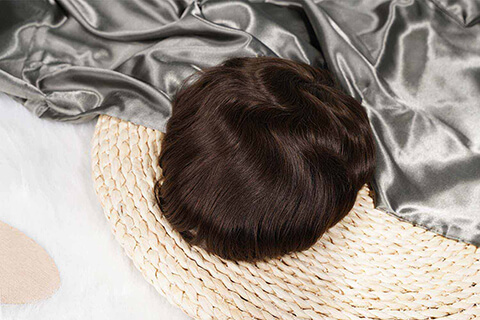
Sleep friction is an often-overlooked cause of shedding, especially for V-loop systems. Rubbing against a cotton pillowcase can pull on the hair roots overnight. A silk or satin pillowcase, or a silk bonnet or sleep cap, can help reduce friction.
-
Detangle gently
It sounds obvious, but it is easy to forget when dealing with tangles. Avoid pulling a brush through tangled hair, especially when it is wet. Use a wide-tooth comb or a gentle detangling brush, starting at the ends and working upward to avoid pulling on the roots.
-
Keep conditioners and styling products away from the base
Apply conditioners and styling products mainly to the mid-lengths and ends. Avoid coating the base or hair roots.
-
Avoid excessive heat
High heat can damage human hair and may affect the PU base. Use lukewarm water when washing and keep the hairdryer at a moderate temperature. Avoid directing high heat at the base.
-
Remove adhesive carefully
When removing a hair system, avoid pulling the base off or scrubbing adhesive residue aggressively, as this can put unnecessary tension on the hair.
Remember: These habits can help reduce avoidable shedding, but they cannot eliminate it. For a more detailed care routine, see Bono Hair’s Thin Skin Hair System Maintenance Guide.
Final Thoughts: Choosing the Right Skin Hair System for Your Business
When recommending a skin hair system, start with the hairstyle your client wants rather than choosing by base thickness alone.
Understand your client’s styling needs, desired look, and expectations for how long the system should last. These factors will help you narrow down the right ventilation method and base construction.
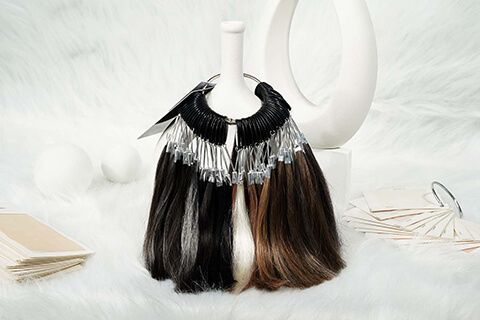
Then check the details that affect how the system looks and performs. These specifications help you compare products and recommend suitable options to your clients.
Bono Hair is a Qingdao-based manufacturer with over 20 years of experience in men’s hair systems, specializing in skin bases. We supply wholesale hair systems to hair businesses and hair replacement pros worldwide. If you’re interested, feel free to contact us to discuss your needs.
Frequently Asked Questions
What Is the Difference Between V-Loop and Injected Hair Systems?
In a V-loop system, hair is threaded in and out of the thin skin base to form a V-shape, meaning one hair strand creates two visible hairs on the unit. It is ideal for ultra-thin skin bases.
In an injected system, single hair strands are inserted into the base at an angle and sealed with glue underneath, so each strand remains a single hair on top. Due to the injection process and sealing layer, it requires a thicker skin base of 0.08 mm or above.
Can You Bleach Knots on a Skin Hair System?
Bleaching knots on a PU skin base is generally not recommended. If your client wants a discreet front hairline, consider a V-loop system with an ultra-thin skin base or a lace front with bleached knots.
Can You Change the Parting on a Flat-Injected Skin Hair System?
Changing the parting is difficult because the hair is inserted at a certain angle, then pressed flat and sealed underneath the base. This fixes the hair direction and limits styling flexibility.
If your client likes to change their parting while maintaining a natural, hair-growing-from-the-scalp look, V-loop and Lift Injection offer more styling flexibility.
Can Different Ventilation Methods Be Combined in One Skin Hair System?
Yes. Different ventilation methods can be used in separate areas of the same system. For example, Bono Hair’s BH1 uses V-loop at the front hairline and Single Split Knots across the rest of the base, balancing a natural-looking front with better durability.
If your client has specific requirements that are not met by our stock options, contact us to discuss a custom system.