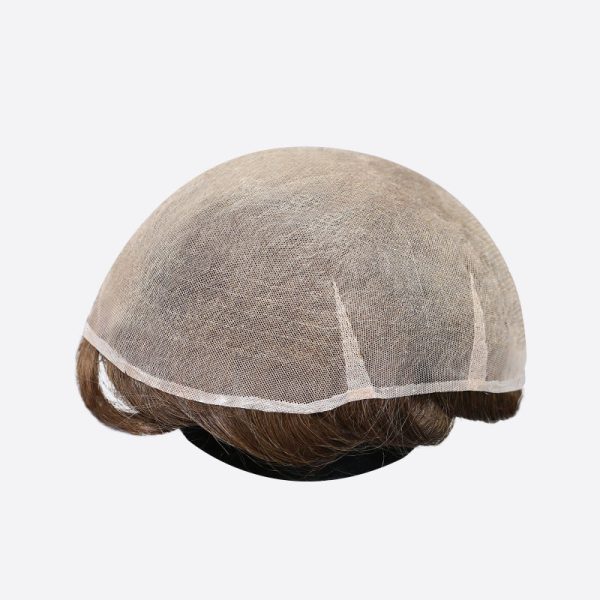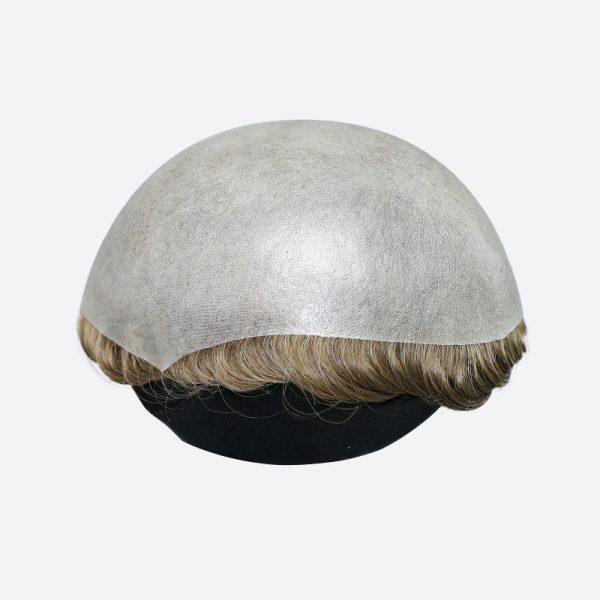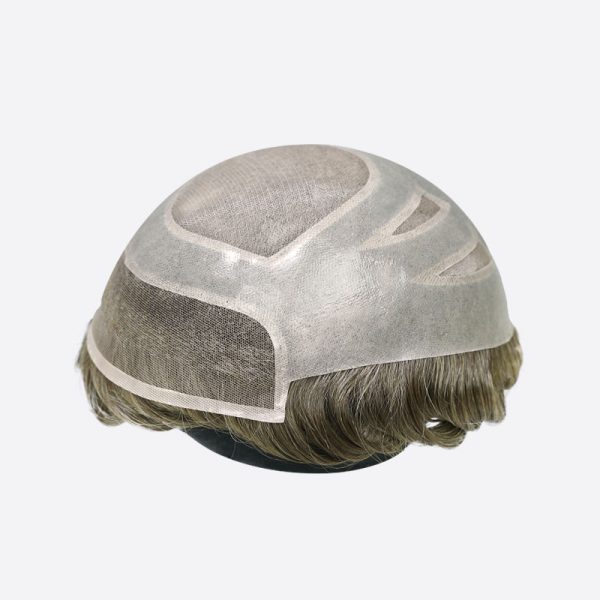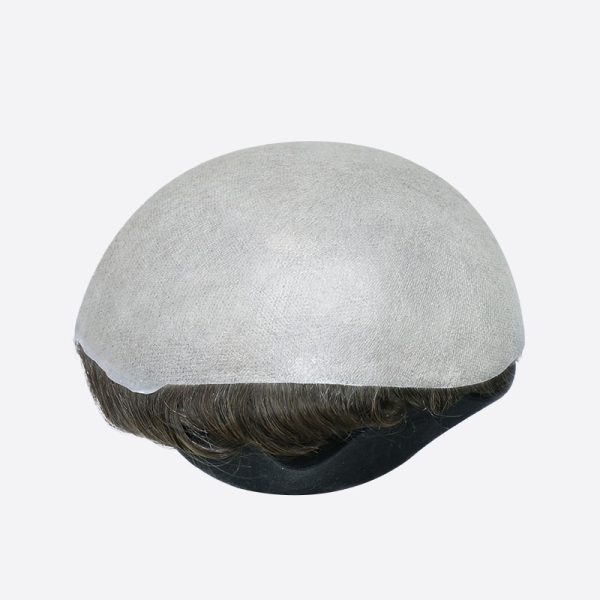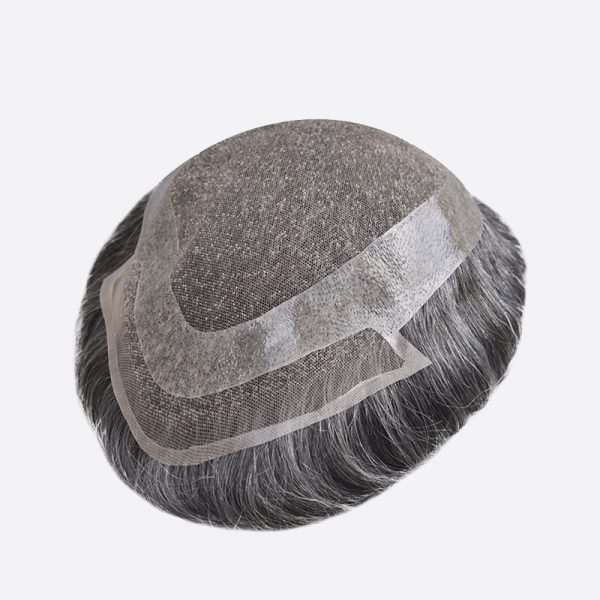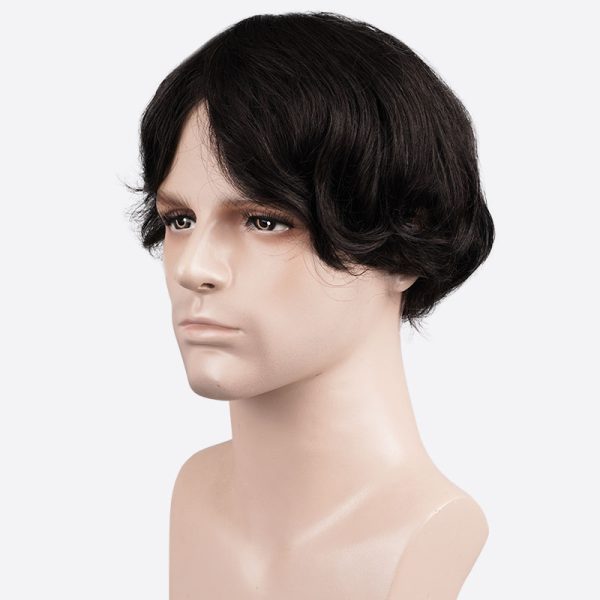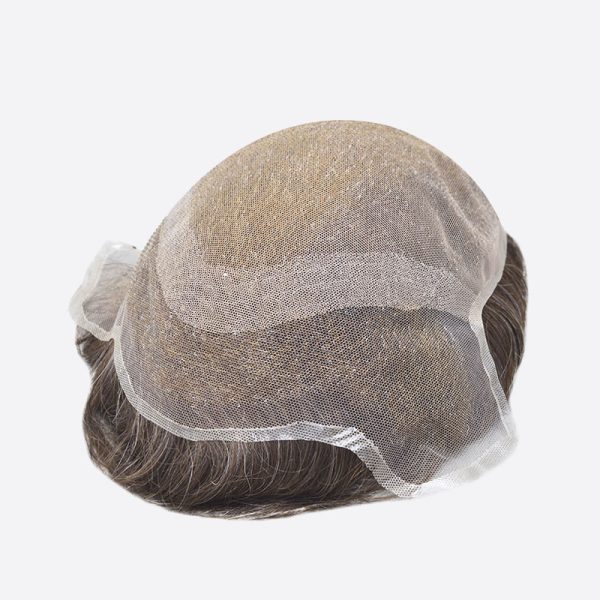



















If you run a hair system business, you probably don’t have much trouble finding suppliers.
Search Google for a few minutes and you’ll see dozens of supplier websites and marketplaces, and supplier directories.
The harder part is figuring out where to look first, which type of supplier makes sense for your business, and which companies are worth keeping on your list.
That’s what this guide is about.
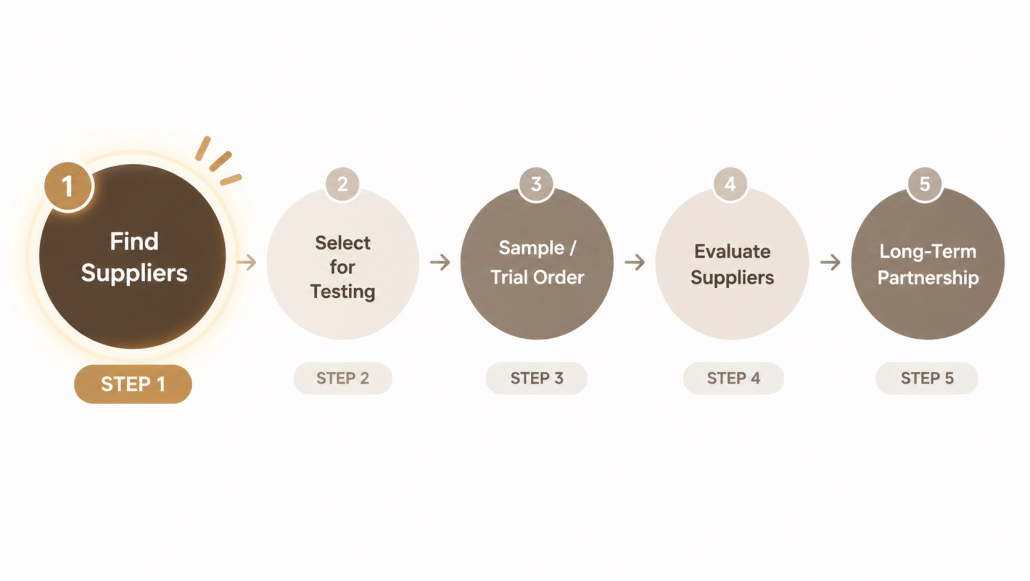
Where this fits in the supplier sourcing process:
This guide covers the Find Suppliers→ Build a Shortlist stage. The goal isn’t to choose a supplier yet. It’s to find enough relevant suppliers to make a good comparison later.
Key Takeaways
-
Start by defining what your business needs.
-
Search through several channels—not just Google. Use specific search terms, ask people in the industry, check communities, and use AI to expand your initial search when useful.
-
Then do a simple first-pass screening and keep the suppliers that are genuinely worth investigating.
At this stage, you don’t need to find every possible wholesale men’s hair system supplier.
You need to find enough relevant suppliers to make a useful comparison.
Start With Your Sourcing Requirements
Before you search, spend a few minutes deciding what you actually need from a supplier.
This sounds obvious, but it saves a lot of time later. If you search for “wholesale men’s hair system supplier” without knowing what you need, you’ll probably end up with a long list of companies that aren’t comparable in the first place.
Start with the basics:
-
What types of men’s hair systems do you need?
-
Do you need ready-to-ship stock, custom systems, or both?
-
Do you need a low MOQ?
-
Do you need private labeling or custom packaging?
-
How quickly do you need stock replenished?
Your business model matters here.
A hair system salon may care more about flexible customization and fast replenishment. An online seller may put more weight on product range, wholesale pricing, stable stock, and private-label options.
So before you start looking for suppliers, define what a suitable supplier means for YOUR BUSINESS.
What Types of Wholesale Hair Suppliers Can You Work With?
You’ll come across several types of suppliers during your search. They can all be useful, but they don’t offer the same kind of relationship.
Direct Manufacturers
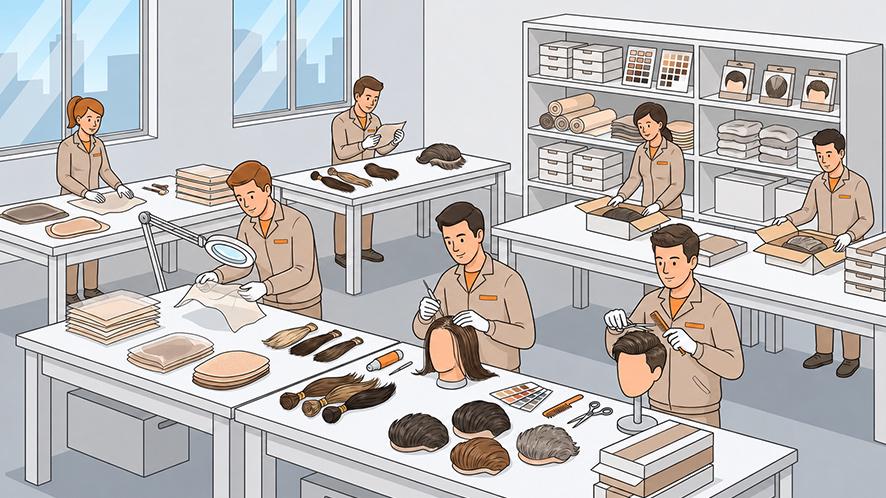
A direct manufacturer makes the hair systems in its own production facility.
This can be a good fit if you need custom systems, repeat orders, or direct communication about specifications and production—and of course, factory-direct pricing.
For example, if you need a specific base material, hair density, ventilation method, or color blend, working directly with a manufacturer can make it easier to discuss those details.
There is one thing worth keeping in mind, though: being a manufacturer doesn’t automatically make a company the right supplier for you. Some factories are very strong in production but have limited ready-to-ship stock. Others may not be set up for small orders or may have limited customer support. If your business needs fast, small-batch replenishment, that matters.
Wholesale Distributors
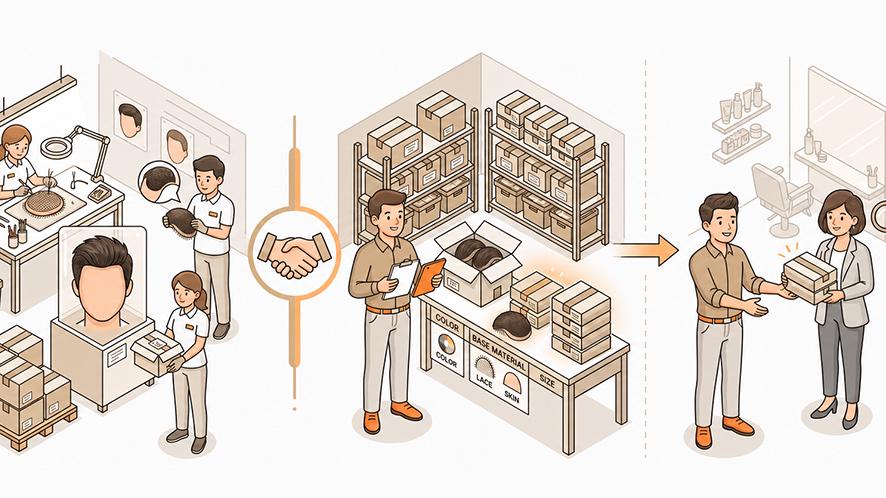
Distributors buy products from manufacturers and resell them to other businesses. They usually have established relationships with a few manufacturers and build their own product range around those suppliers, so you can source different products without dealing with each factory directly.
This can be useful if you want reliable access to the same products over time. Once you find a product that works for your business, you can usually reorder it through the same distributor. Wholesale distributors also tend to have established sales and after-sales support, which can make day-to-day ordering easier.
The trade-off is that you have less control over the production side. Customization options may be more limited, and you may have less direct access to the factory or visibility into how the products are made.
Trading or Sourcing Companies
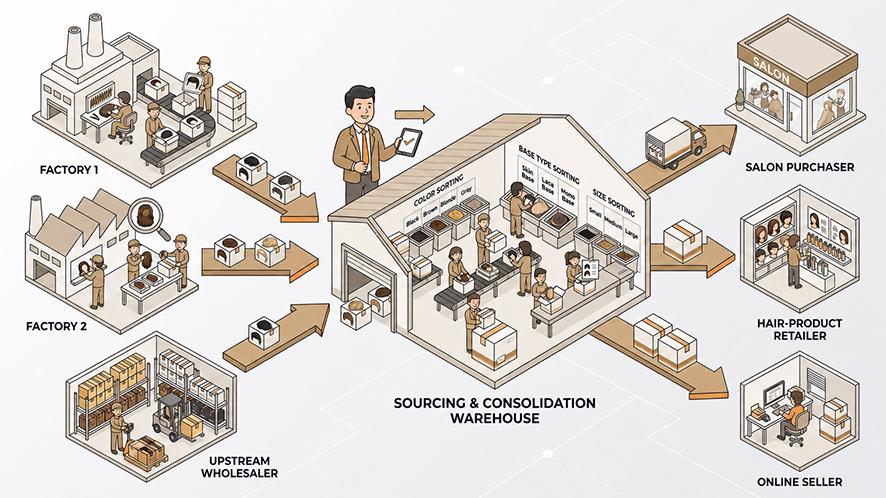
Trading or sourcing companies work more as intermediaries. Instead of selling only products from their own established product range, they can source products from different manufacturers or suppliers based on what you need.
This can be useful if you don’t want to spend time finding factories, comparing suppliers, and coordinating different orders yourself.
The trade-off is that the price is often higher because you are paying for the sourcing and coordination service. You may also become more dependent on the intermediary for supplier access, product information, and order coordination. If the relationship ends, finding and working with the original manufacturers yourself may take extra time.
Quick Comparison
| Supplier Type | Advantages | Disadvantages |
| Direct Manufacturer | More control over customization and production; direct communication with the factory; factory-direct pricing | May have limited ready-to-ship stock; may not support small orders; customer support can vary |
| Wholesale Distributor | Stable product range; easier repeat ordering; established sales and after-sales support | Less control over customization; less direct access to the factory; less visibility into production |
| Trading or Sourcing Company | Access to products from multiple suppliers; supplier sourcing and coordination handled for you; one point of contact | Often higher prices; greater dependence on the intermediary; less direct access to the original suppliers |
None of these supplier types is automatically better than the others. The right choice depends on what matters most to your business—and what you are least willing to compromise on.
Where to Find Wholesale Men’s Hair System Suppliers
Once you know what you need and what type of supplier you’re looking for, you have several ways to build your initial list.
1. Start With Google
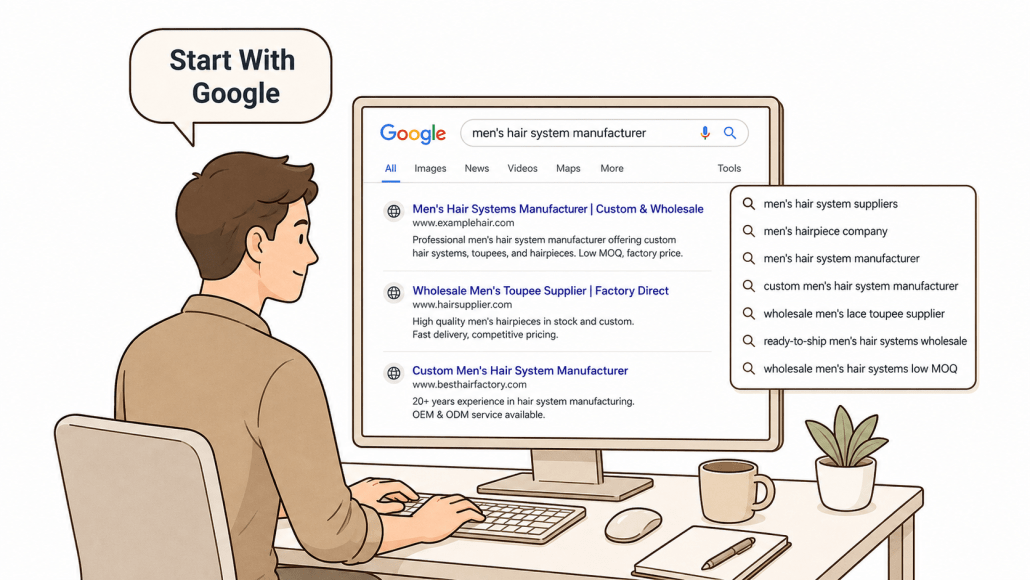
Google is still one of the easiest places to discover suppliers, especially when you know the product you’re looking for.
Start broad:
-
men’s hair system suppliers
-
wholesale men’s toupees
-
men’s hairpiece company
Then make the search more specific:
-
men’s hair system manufacturer
-
custom men’s hair system manufacturer
-
wholesale men’s lace toupee supplier
You can also combine your requirements:
- custom men’s hair system manufacturer
- wholesale men’s hair systems low MOQ
- ready-to-ship men’s hair pieces wholesale
The point isn’t to find one perfect search term. Try several variations and see which companies keep appearing.
And don’t assume the companies ranking highest are automatically the best suppliers.
Google ranking tells you that a company has built a strong online presence around certain searches. It doesn’t tell you how consistent its hair quality is, how well it handles custom orders, or whether its production capacity fits your business.
Some very capable factories simply aren’t particularly good at SEO (Search Engine Optimization) or brand marketing. They may have years of manufacturing experience and strong products without dominating Google.
That’s one reason supplier discovery shouldn’t stop at the first page of search results.
Tips: You may also come across listicles such as “Top # Men’s Toupee Suppliers.” Many of these articles are published by the companies themselves, so it’s common to see the author listed first. That doesn’t mean these lists are not useful. They can still help you discover companies you may not have found through your own searches. Just treat them as a starting point and do some research of your own before deciding which suppliers are worth contacting.
Google is a good place to build your initial list, not a shortcut to choosing your supplier.
2. Use AI for Supplier Discovery
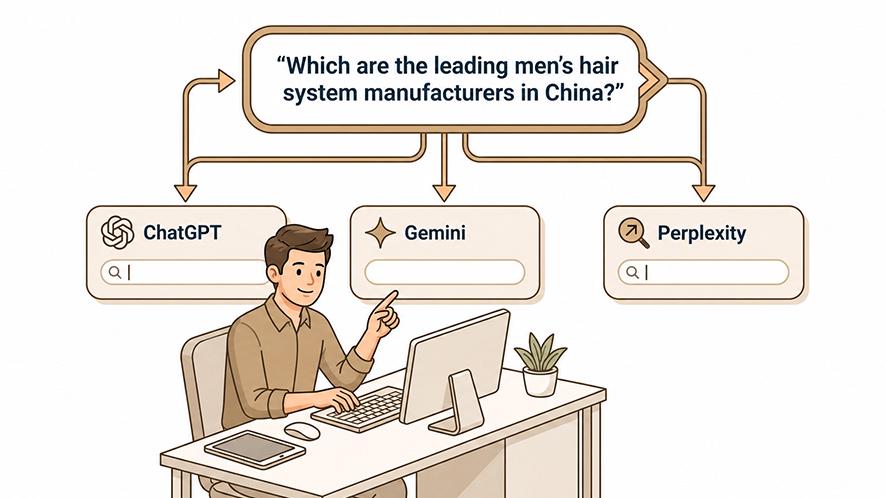
AIs like ChatGPT or Gemini can save time when you’re still building your list.
You can ask it to suggest men’s hair system manufacturers, find suppliers in a particular market, identify different supplier types, or give you search terms you hadn’t considered.
That’s useful for discovery.
But I would treat an AI-generated supplier list the same way I would treat a Google search result: it’s a starting point, not a recommendation.
3. Look at Industry Forums and Communities
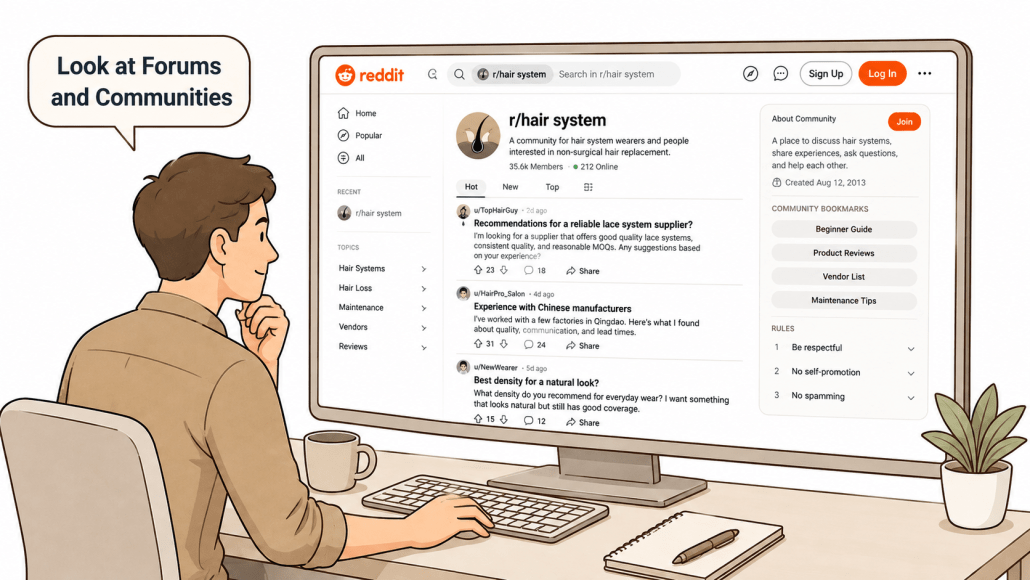
Forums and professional communities such as r/hairsystem on Reddit can show you which suppliers people are actually discussing.
You may find conversations about:
-
suppliers people have worked with
-
brands they regularly buy from
-
product quality
-
delivery problems
-
customer service
-
…
This can be especially useful when a supplier doesn’t have much information available on its own website.
Just remember that forum discussions are personal experiences. Use these discussions to find companies worth investigating, not to make the final decision for you.
4. Attend Trade Shows and Industry Events
If you have the opportunity to attend a relevant hair or beauty trade show, don’t overlook it as a sourcing channel.
You can see products in person, compare different suppliers side by side, and talk directly about the things that are difficult to judge from a website—base construction, hair feel, density, ventilation, customization, and production capabilities.
Trade shows are also useful for finding suppliers that have a strong manufacturing or distribution business but don’t put much effort into online marketing.
5. Ask People in the Industry
Industry referrals can also be useful.
If you know salon owners, hair replacement professionals, distributors, or other businesses buying hair systems, ask who they work with and why.
The why matters more than the name.
If someone recommends a supplier because they have been able to reproduce the same specifications for years, that’s useful information. If they simply say, “Their prices are good,” you still have a lot more to investigate.
Build a Shortlist Before You Start Comparing Suppliers
At this point, resist the temptation to choose a supplier right away.
First build a shortlist.
You might find 20 or 30 companies that seem nice during your search. You don’t need to investigate all of them in depth. The first pass is simply about removing suppliers that clearly don’t fit and keeping the ones worth a closer look.
Record the Same Information for Every Supplier
You don’t need a complicated procurement system at this stage.
The important thing is to record the same basic information for every supplier. Otherwise, you’ll end up with a list of company names and a vague memory of why you saved each one.
For each supplier, look at the things that are most relevant to your business:
-
Supplier type
-
Basic business information
-
Product range
-
Target market
-
Wholesale availability
-
Ready-to-ship stock
-
Customization options
-
MOQs
-
Product specifications
-
Contact options
You’re not trying to answer:
“Is this the best supplier?”
You’re asking a much simpler question:
“Does this supplier look suitable enough to investigate further?”
For example, if you need custom men’s hair systems but a supplier only sells standard stock products, there is little reason to spend an hour comparing its pricing and products.
Red Flags That Can Help You Eliminate Suppliers Early
Finding suppliers is partly about knowing where to look. It’s also about knowing when not to keep looking at a particular company.
During your first screening, some signs should make you pause:
-
The product range doesn’t match what you need.
-
Inconsistent or suspicious product photos. Or the product information is too vague to understand what you’re actually buying.
-
The supplier can’t explain basic product specifications clearly.
-
The MOQ doesn’t fit your business at all.
-
Basic company information is difficult to find.
-
Communication is already difficult when you’re asking basic sourcing questions.
-
Suspicious or limited payment methods.
These signs don’t necessarily mean a supplier is bad. However, filtering them out early saves your time and energy to focus on researching suppliers that are truly right for you.
At this stage, you’re looking for reasons to narrow the list, not trying to prove whether a company is good or bad.
What to Do After You Have a Shortlist
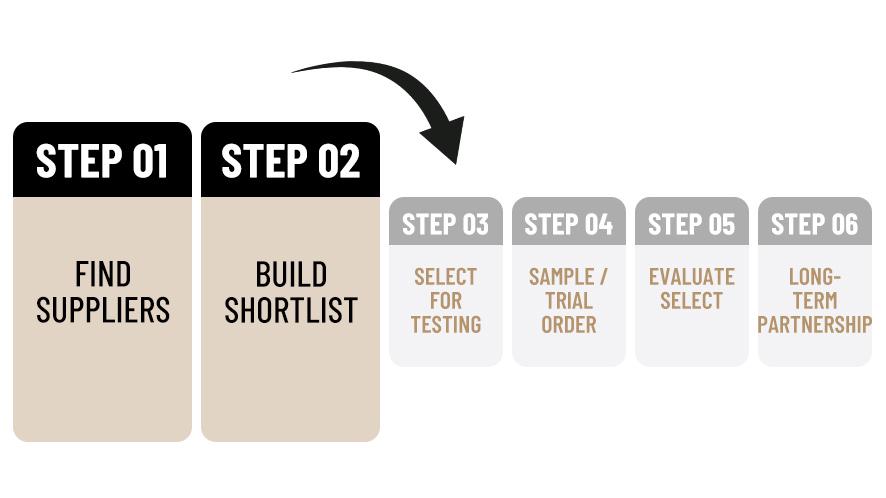
Once you’ve narrowed your search to several suppliers that meet your basic requirements, you’ve finished the Find Suppliers→ Build a Shortlist stage.
Now the questions change.
You no longer need to ask:
“Where can I find more suppliers?”
You need to ask:
“Which of these suppliers is the right fit for my business?”
That’s where you start comparing product quality, customization, pricing, MOQ, production capacity, QC, lead times, communication, and other factors that affect the relationship over time.