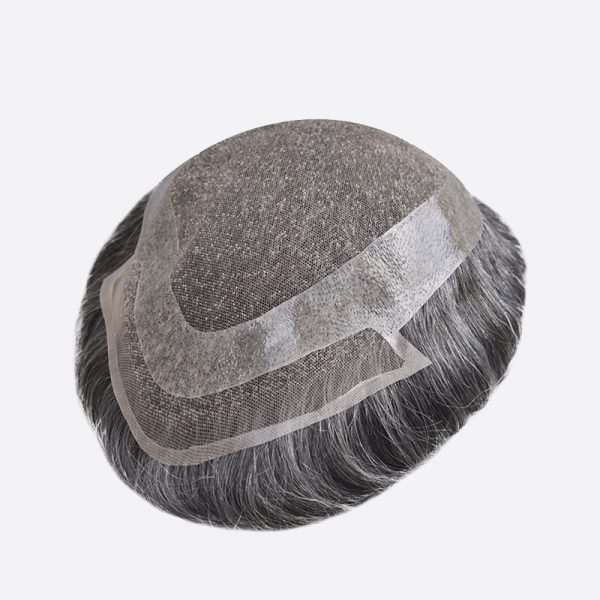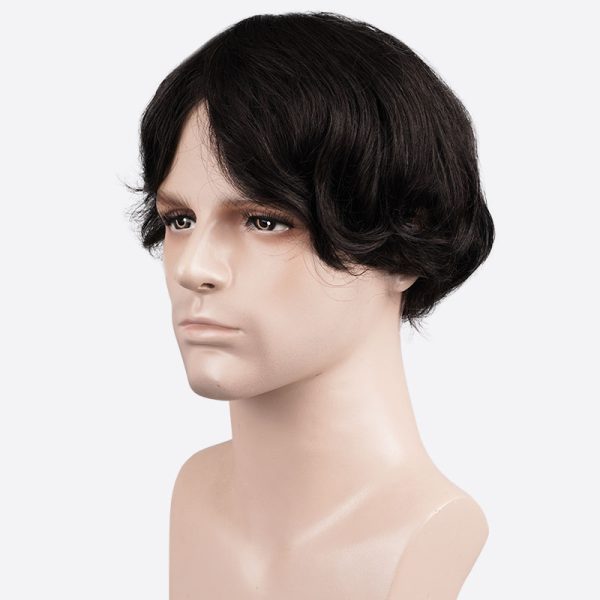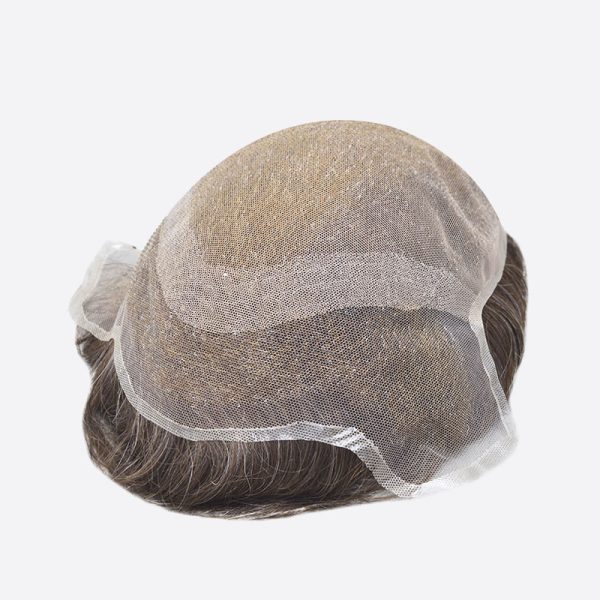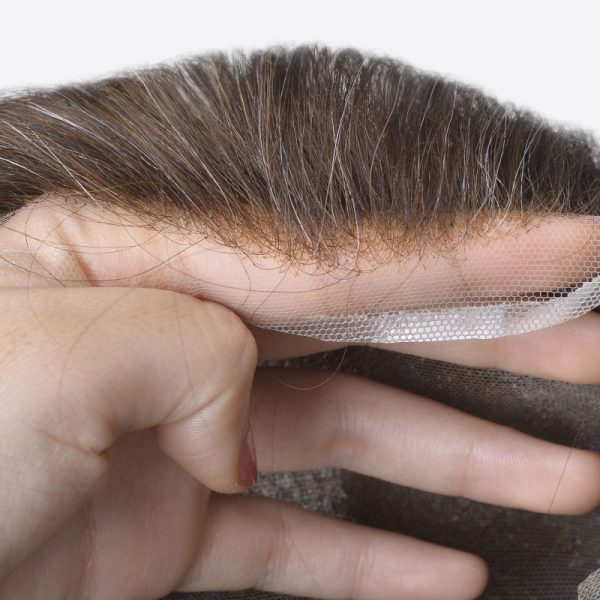











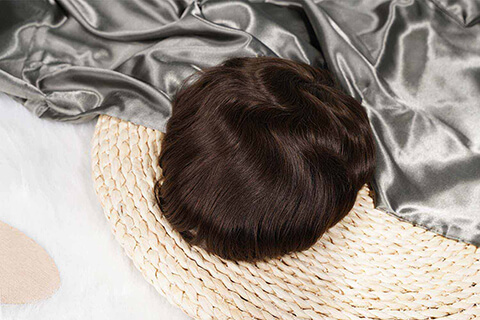
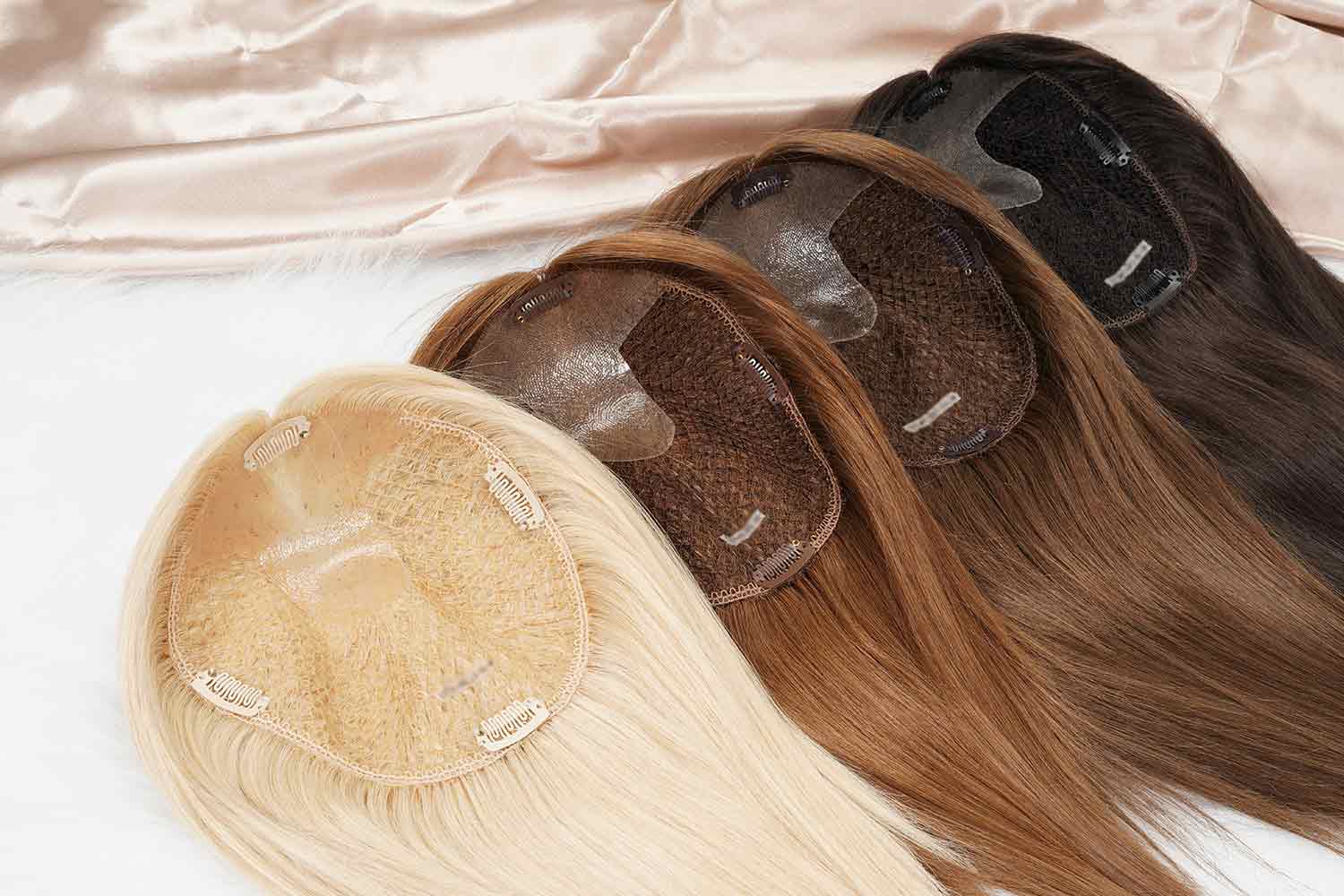


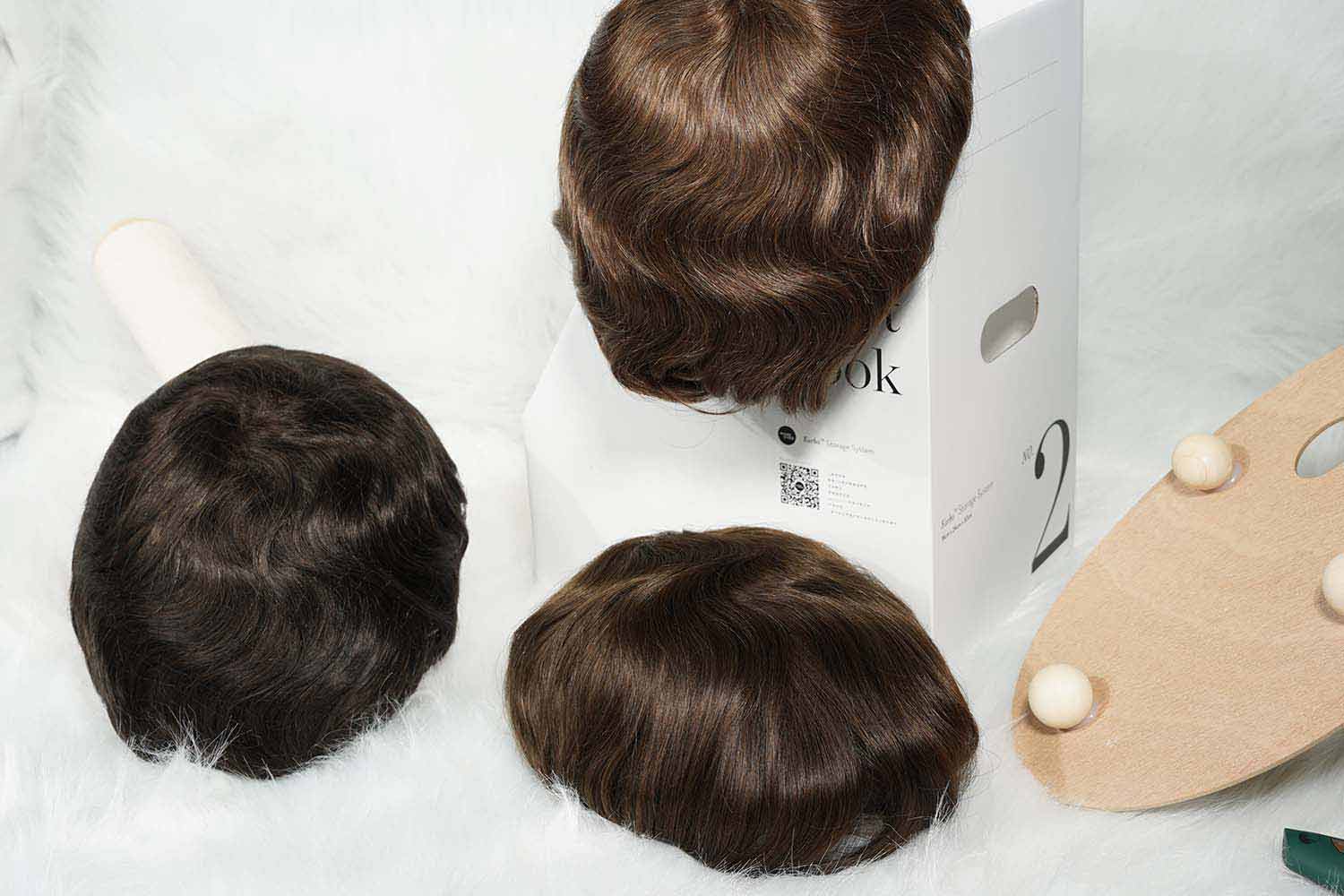


Lace and skin/poly are two of the most common base options in men’s hair systems, but they work quite differently.
Lace base is known for its breathability and lightweight feel, while skin/poly base provides a smooth surface that works well for adhesive attachment and cleanup. The better option depends on how the system will be worn, maintained, and styled.
Key Takeaways
-
Lace offers better airflow and a lighter feel.
-
Skin/poly provides a smooth base that works well for adhesive attachment and easier cleanup.
-
Skin thickness matters. A 0.02 mm ultra-thin skin system will perform very differently from a thicker injection system.
-
Hybrid bases can combine lace and skin/poly when one material alone doesn’t meet all the requirements.
Lace vs. Skin Hair Systems: Quick Answer
| Comparison Factor | Lace Base | Skin/Poly Base |
| Breathability | Excellent | Low |
| Natural Appearance | Very natural | Depends on thickness; ultra-thin skin can look very natural |
| Comfort | Lightweight and airy | Smooth and flush, but may feel hot or stuffy for some wearers |
| Scalp Sensitivity | Often better for heat/occlusion sensitivity, but the mesh or knots may irritate some wearers | May be better for mesh/friction sensitivity, but lower airflow may increase heat for some wearers; some skin bases have antimicrobial properties |
| Durability | Generally less durable; depends on lace types | Generally more durable (except for ultra-thin skin); heavily depends on thickness |
| Attachment | Works with tape or glue, but glue can seep through the mesh | Works well with tape or glue; generally easier cleanup |
| Styling Flexibility | More freedom in ventilation direction and knot selection | Depends on ventilation method: injected hair follows a set direction, while V-loop allows more styling flexibility |
| Cleanup | Requires more care | Generally easier |
| Cost | Slightly higher when other specifications are the same | Slightly lower when other specifications are the same |
What Is a Lace Hair System?
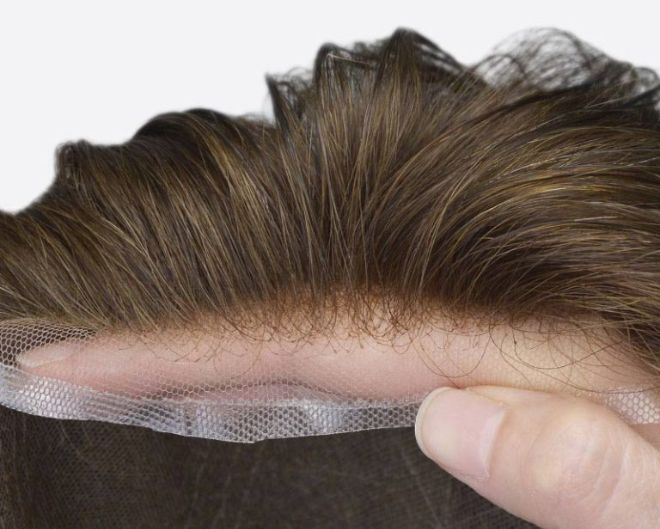
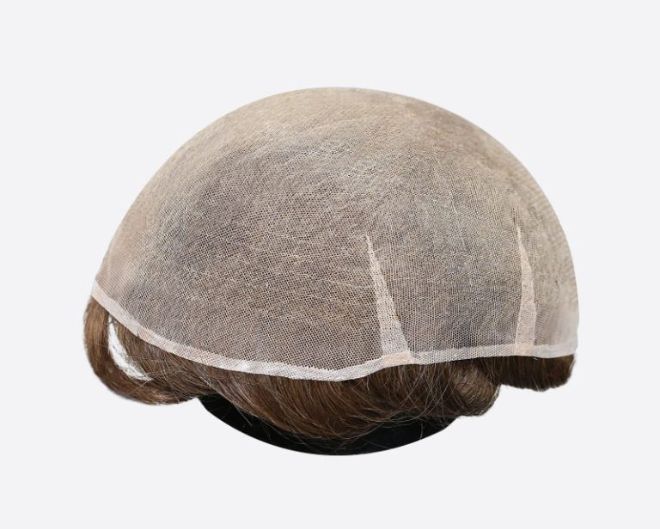
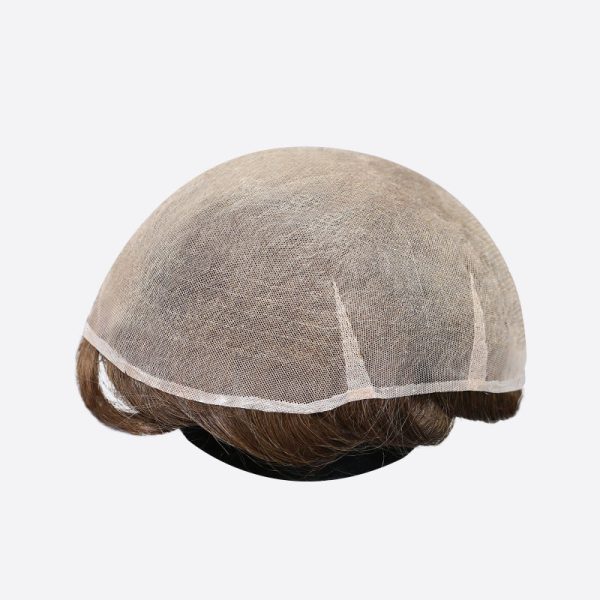
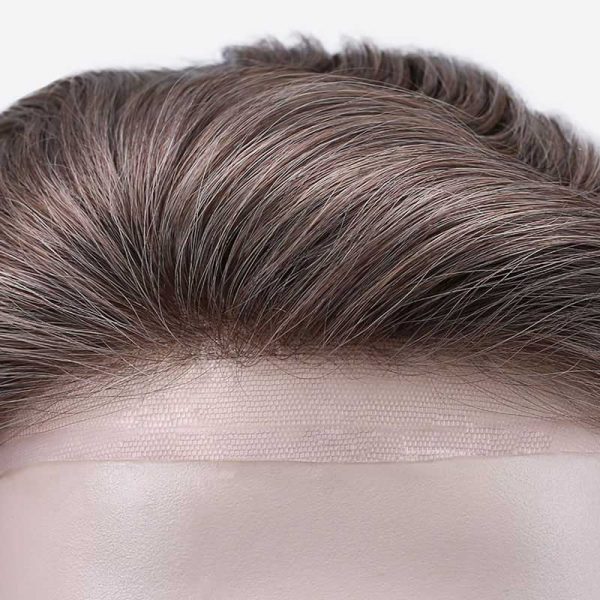
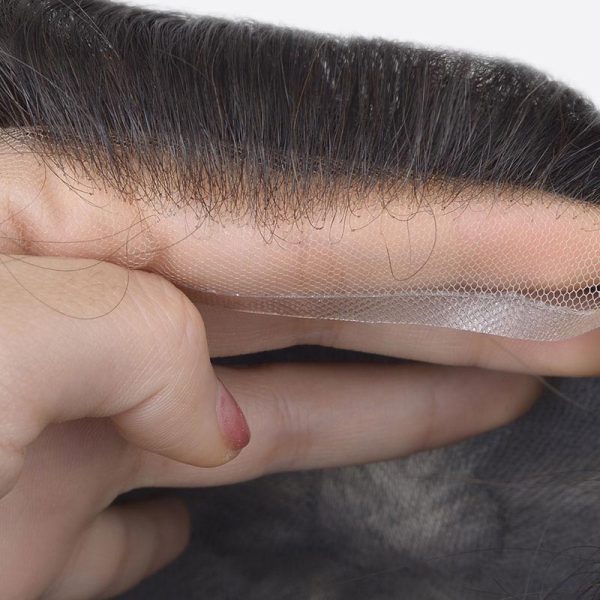
A lace hair systemuses a fine hexagonal mesh as its base. The hair is ventilated through the mesh, with the direction and density adjusted to create the desired look.
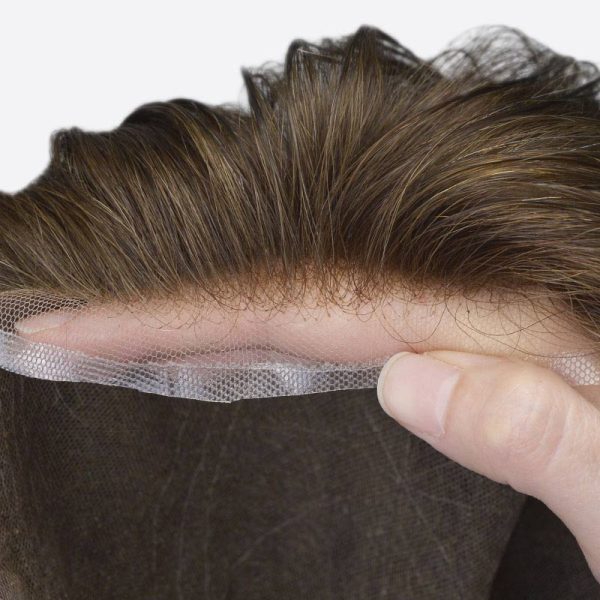
The open mesh is what gives lace its main advantage: airflow. It also lets the scalp show through the base, which is why fine lace can create such a natural look.
The trade-off is durability. Finer lace can give a more delicate, natural look, but it also needs more careful handling during attachment, removal, and cleaning.
French Lace vs. Swiss Lace: What’s the Difference?
Swiss lace is finer, softer, and more delicate than French lace. It creates a very lightweight base and a natural-looking finish, but it can tear more easily during attachment, removal, or cleaning.
French lace is slightly thicker and stronger, so it generally handles daily wear and maintenance better. It is fine enough to create a natural-looking hairline while still providing enough strength for regular wear and maintenance. This is why French lace is widely used in men’s hair system base construction.
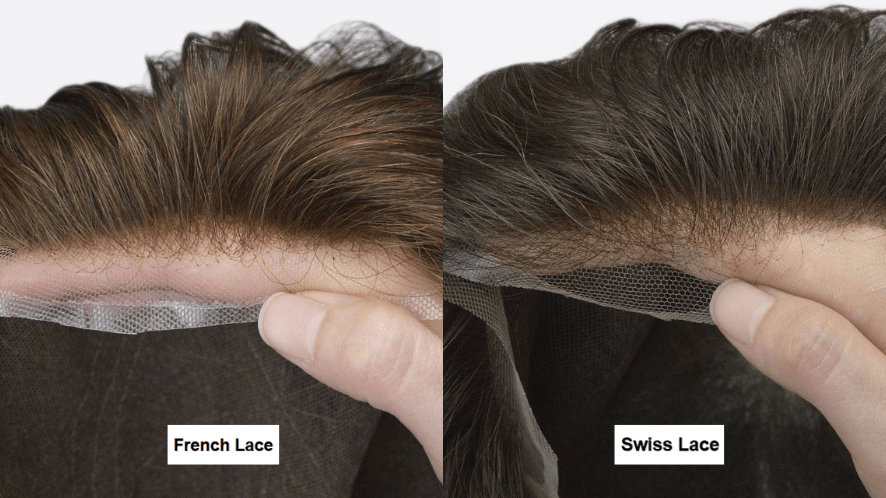
The main difference is simple: Swiss lace prioritizes fineness and a lightweight feel, while French lace offers more durability.
What Is a Skin/Poly Hair System?
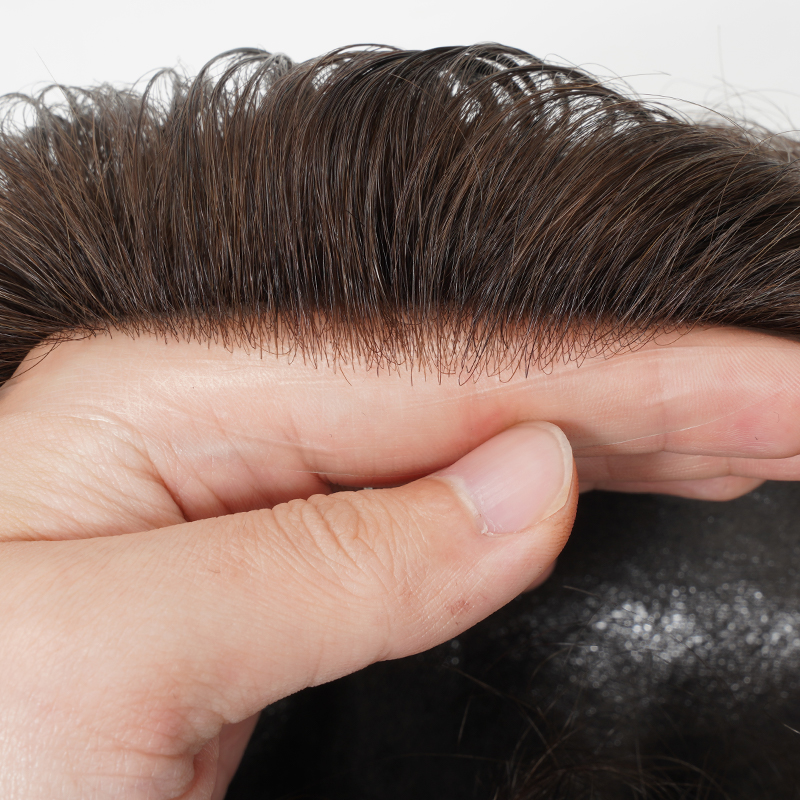
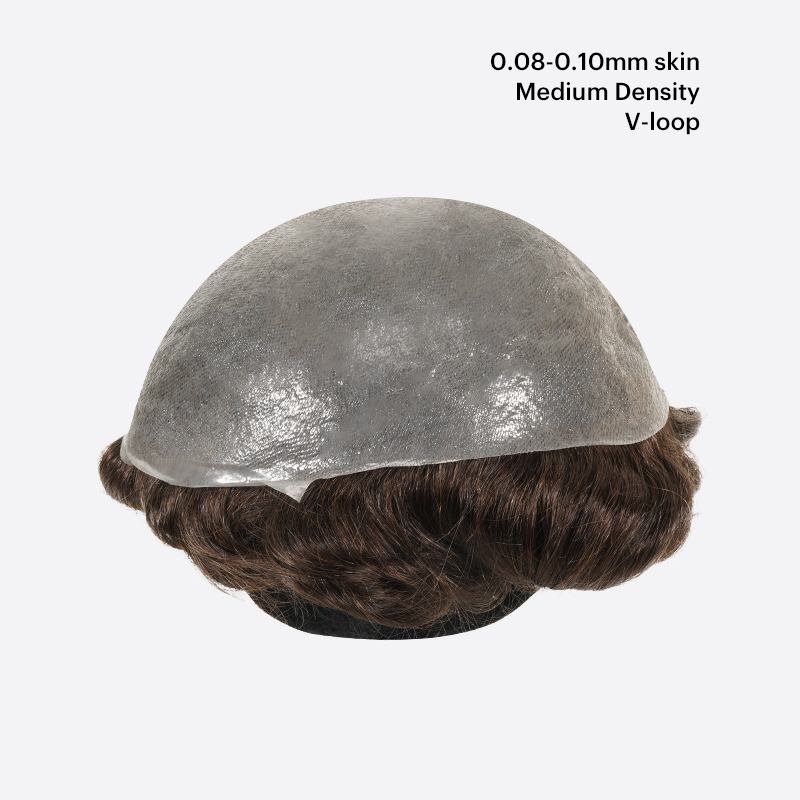
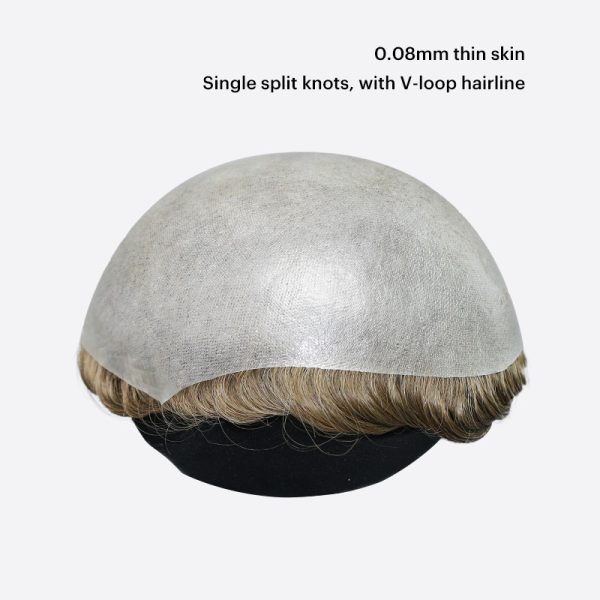
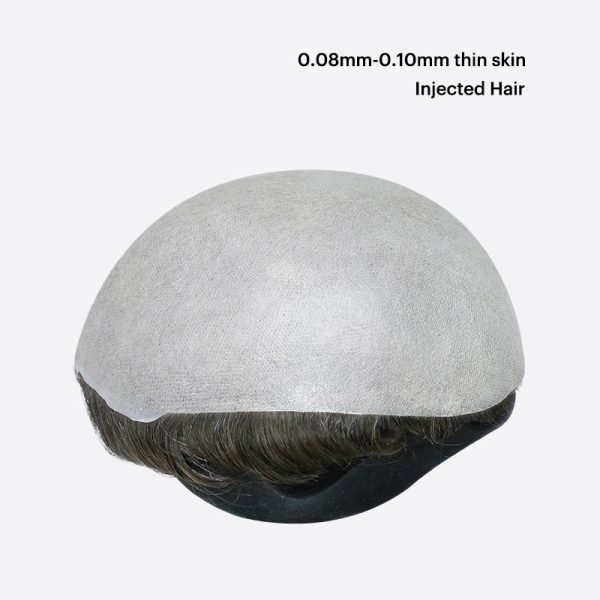
Skin, poly, and PU are terms you’ll commonly see for polyurethane-based hair system bases. Instead of an open mesh, skin/poly creates a smooth, closed surface.
That smooth surface works well with adhesive and makes cleanup easier. Different hair ventilation methods such as single split knots, V-loop, and injection, can also be used with skin/poly bases to create different looks and styling effects.
One thing to watch when sourcing skin systems: “skin” doesn’t tell you enough by itself. Thickness and construction can change how the system looks, feels, and wears.
Skin Thickness Matters More Than You Might Think
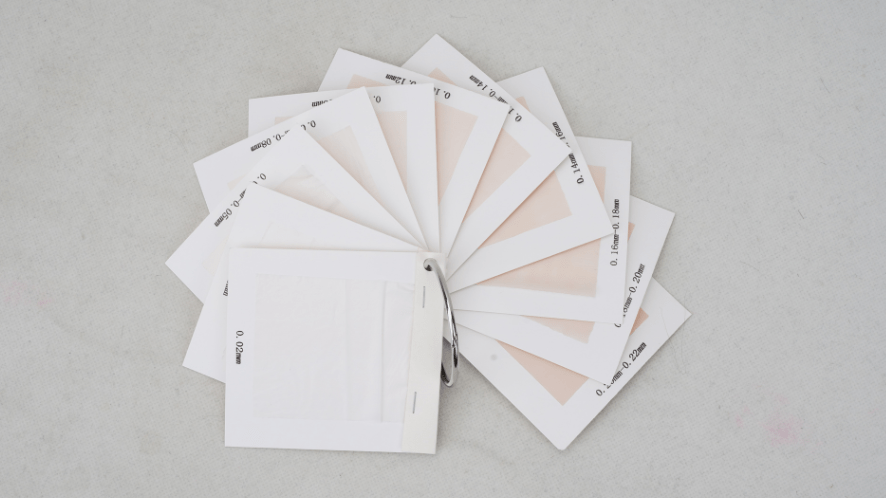
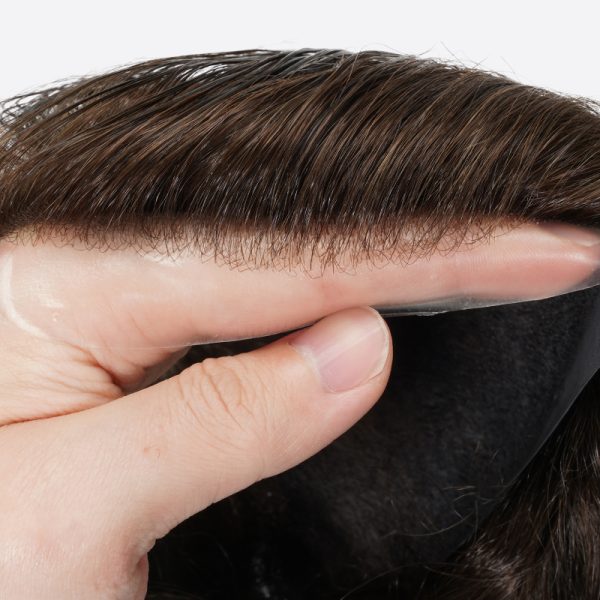
0.02–0.03 mm ultra-thin skin is designed to sit close to the scalp, giving a lightweight feel and a discreet look that can be as natural as lace. The trade-off is durability: ultra-thin skin is more delicate and needs more careful handling.
Thicker skin, such as 0.08 mm skin, generally offers better durability and is easier to handle. However, it is less discreet than ultra-thin skin and allows less airflow.
A 0.02 mm ultra-thin skin system and a 0.12 mm injection system are very different products, even though both may simply be described as “skin.” Thickness and construction affect how the system looks, feels, and performs.
What Is NPU, and How Is It Different From Poly?
NPU is another term you may come across when sourcing hair systems. It may look like skin/poly in pictures, but they are not the same thing.
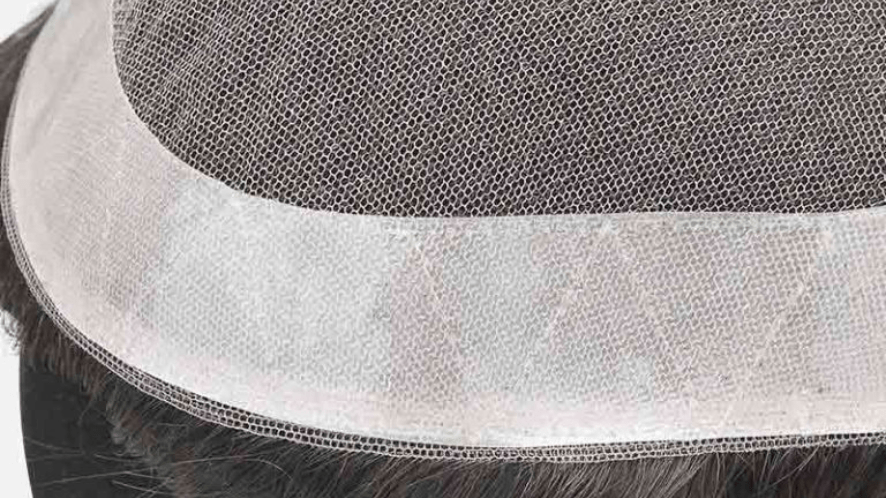
NPU stands for “Net Polyurethane.” A standard poly (skin) base is made from pure, transparent polyurethane, while NPU has an additional layer of fine netting or gauze embedded within the polyurethane.
So NPU is usually thicker and more resistant to tearing. The embedded netting helps reinforce the polyurethane and reduce the risk of tearing. This makes NPU particularly useful for perimeters where tapes or adhesives are frequently applied and removed.
Lace vs. Skin: Key Differences Compared
-
Breathability
Lace wins.
The open mesh lets air move through the base. Skin/poly doesn’t have the same open structure, so airflow is more limited.
If your client lives somewhere hot and humid, exercises regularly, or simply hates the feeling of a closed base, lace is usually the first option to look at.
-
Natural Appearance
Both lace and skin bases can achieve a very natural-looking appearance when combined with the right ventilation method and hair density.
Lace with bleached single split knots can create a very natural-looking hairline. Bleaching reduces the visibility of the knots, while the fine mesh allows the scalp to show through.
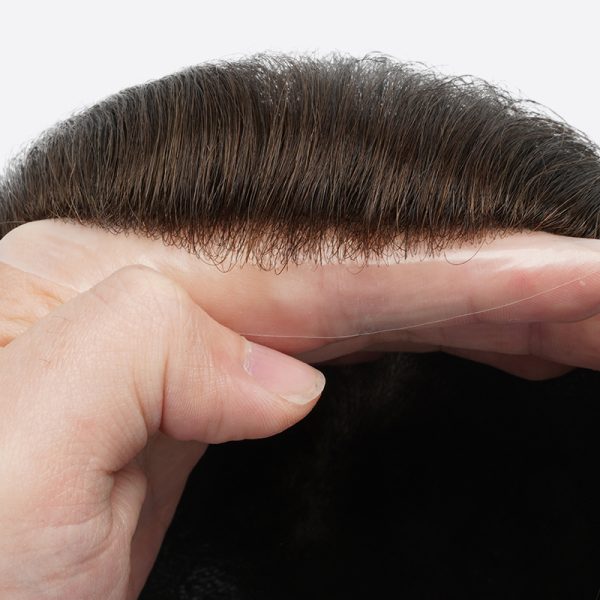
0.02–0.03 mm ultra-thin skin with V-looped hair can create a different kind of natural look. The semi-transparent skin sits close to the scalp, making the base less noticeable, while V-looped hair has no visible knots. When the skin is thin enough, the base and scalp can visually blend together.
For a hair-growth-from-the-scalp effect, injection skin has an advantage. Injection systems typically use thicker skin, usually around 0.10 mm or more, so they are not ideal when an extremely fine, exposed hairline is the priority. But because the hair is injected directly into the base, it can create a very convincing scalp-like appearance at the parting and throughout the hairstyle, making the hair look as if it is growing directly from the scalp.
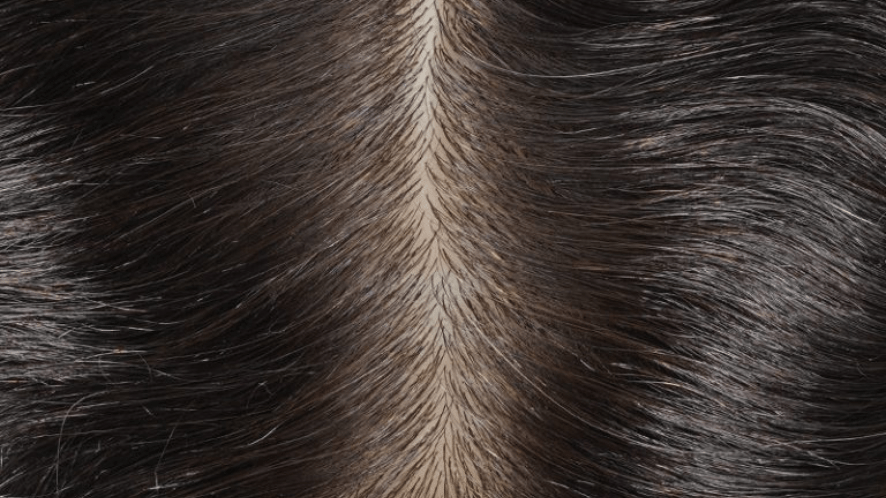
So if a client asks which base looks more natural, first ask what kind of natural look they’re after.
-
Comfort
Lace generally feels lighter and more breathable.
Skin/poly has a smooth surface, but the closed base can trap more heat, especially during exercise, long wear, or in hot and humid weather.
That said, comfort is highly individual. Some clients notice the extra heat from skin/poly, while others prefer its smooth feel over lace. Fine lace can also feel itchy or slightly irritating for some wearers.
The client’s previous experience with hair systems and personal preference can be just as important as the base material itself.
-
Scalp Sensitivity
Scalp sensitivity is not simply a matter of choosing lace or skin. Different clients may react to different parts of the system. There are four common sources of irritation:
-
Heat and sweat
-
Mesh friction
-
Hair or knots
-
Adhesives and tapes
Clients who get hot or sweaty easily may prefer lace because it allows more airflow. However, some clients find the lace mesh irritating against the scalp and prefer the smooth feel of skin/poly.
If redness or itching occurs mainly around the perimeter, the adhesive or tape may be the cause rather than the base itself.
The key is to identify what is actually causing the irritation before choosing a base.
-
Durability
Neither lace nor skin is automatically more durable.
For lace systems, the main factors are the type and fineness of the mesh.
With skin, thickness is the big one. Thicker skin generally holds up better than ultra-thin skin. Here is a simple reference:
|
Base Type
|
General lifespan reference
|
|
Swiss lace
|
1-2 months
|
|
French lace
|
2-3 months
|
|
0.02—0.03mm ultra thin skin
|
3–4 weeks
|
|
0.04–0.06mm Thin Skin
|
1–3 months
|
|
0.08–0.10mm Durable Skin
|
3–4 months
|
|
0.12–0.16mm Injection Skin
|
2–3 months
|
Actual lifespan varies significantly with wear frequency, attachment method, maintenance, and handling. The ranges above are general industry references rather than guarantees.
-
Attachment
Skin wins.
Its smooth surface gives adhesive a clean surface to work with, which is one reason skin/poly is popular for secure attachment.
Lace can also be securely attached, but the process is a little different. Tape can be applied to the lace, while liquid adhesive can seep through the mesh if too much is used or it is applied incorrectly.
-
Styling
Styling flexibility depends heavily on how the hair is ventilated.
Lace systems can offer more styling flexibility because their open mesh allows the hair to be ventilated in different directions and with different knot types.
Injection skin is different. The hair direction is built into the construction, so it tends to follow a set direction.
A skin hair system with V-looped hair generally offers more natural movement and styling flexibility than injection.
Start with the hairstyle the client wants. Then choose the ventilation method and base construction that can actually create it.
-
Cleanup & Maintenance
Skin wins.
Its smooth surface makes adhesive cleanup easier and more straightforward than with lace.
Lace requires a gentler touch, especially with finer mesh. Be particularly careful when removing tape from Swiss lace, as the fine mesh can be easily damaged.
-
Cost & Business Considerations
When all other specifications are the same, lace is generally slightly more expensive than skin/poly.
For salons and other hair businesses, however, custom orders often offer better profit margins, so the higher unit cost of lace may be less important when the system is sold as part of a customized service.
For salons, clinics, and distributors, don’t look at unit price alone. Look at the whole picture: purchase cost, expected lifespan, maintenance, replacement frequency, and service time.
When Is Lace the Better Choice for a Client?
Lace is often worth considering when your client:
-
Prioritizes airflow and a cooler feel
-
Lives in a hot or humid climate
-
Exercises or sweats heavily and wants moisture to escape more easily
-
Prefers a lightweight base
-
Wants to expose the hairline and prioritizes a soft, low-shine transition
-
Wants more flexibility with hair direction or styling
An oily scalp alone is not a reason to choose lace. Oil can weaken adhesion with either lace or skin/poly. However, if an oily scalp is combined with heat, sweating, or moisture-retention concerns, lace or a lace-top hybrid may be worth considering. The attachment method and maintenance schedule should be planned at the same time.
When Is Skin the Better Choice for a Client?
Skin/poly may make more sense when your client:
-
Wants a smooth, close-to-scalp feel
-
Prioritizes easier cleanup, especially when using glue
-
Wants a knotless, scalp-like root effect from V-loop or injected hair
-
Wants a short, controlled hairstyle that works well with flat-injected hair
-
Is willing to trade some breathability for easier attachment and maintenance
When recommending a skin/poly system, ask about the client’s hairstyle, hairline exposure, climate, sweating habits, scalp sensitivity, adhesive preference, maintenance routine, and durability expectations. These details can help determine the right base thickness and ventilation method.
What About Combining Lace and Skin?
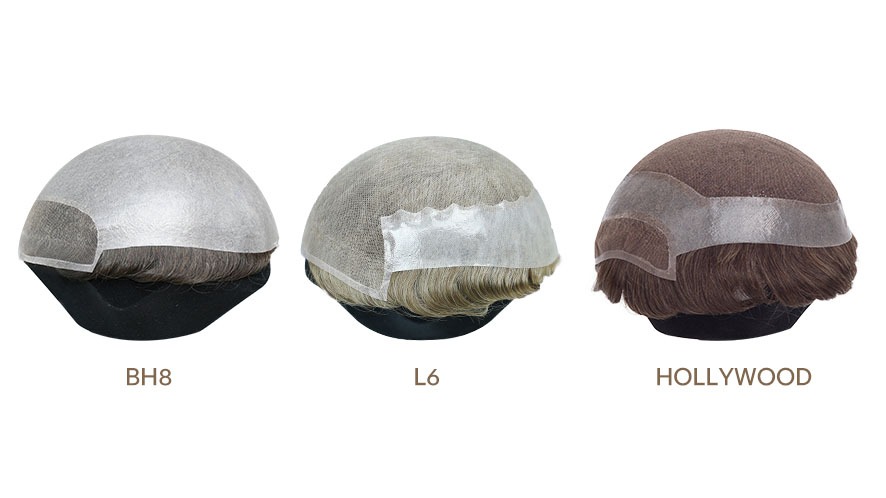
You don’t have to use one material across the entire base.
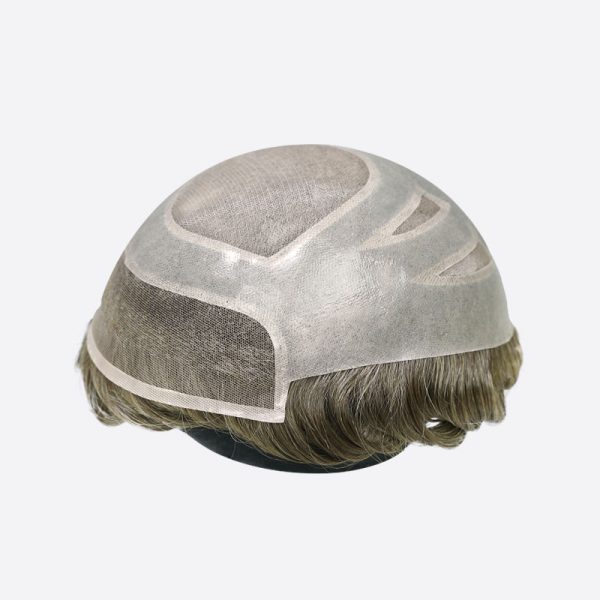
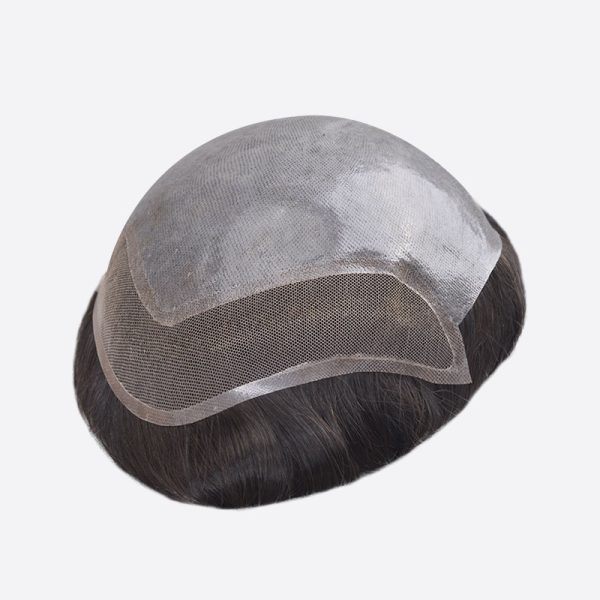
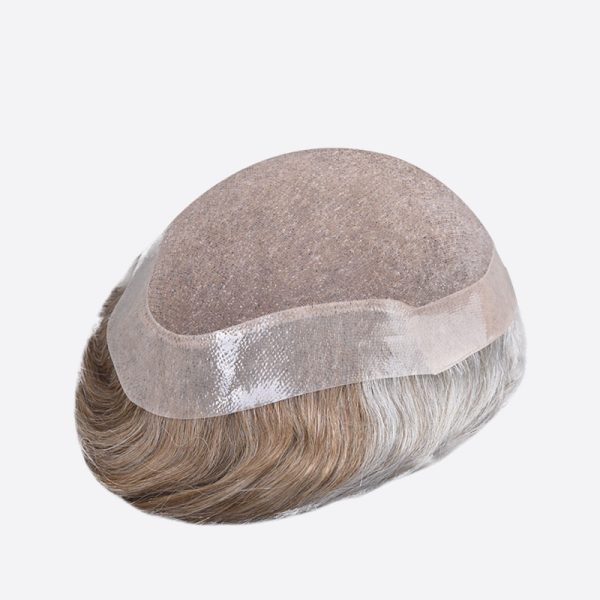
A hybrid hair system can, for example, use lace at the front hairline and top, with poly around the sides and back. This gives the front and top more breathability and a natural-looking hairline, while the poly perimeter provides a smooth surface for adhesive attachment and easier cleanup.
For salons and distributors, hybrid systems can be useful when a client wants to balance different needs.
A Client Consultation Checklist: How to Choose the Right Base
Before recommending a base, ask:
-
How active are you, and how much do you usually sweat?
-
What is the climate like where you live?
-
Do you have a sensitive scalp or any history of irritation from mesh, adhesives, or closed bases?
-
How important is the front hairline, and do you plan to expose it?
-
What hairstyle do you normally wear?
-
Do you prefer tape, liquid adhesive, or a remove-at-night routine?
-
How often are you willing to remove and clean the system?
-
What matters most to you: breathability, natural appearance, durability, or easy maintenance?
-
How long would you like one system to last, and what replacement schedule are you comfortable with?
-
Do you need a specific density, hair direction, base size, hairline design, or other customization?
The answers usually make the choice much clearer. If breathability is the priority, look at lace. If attachment and easy cleanup matter more, skin may make more sense. If the requirements pull in different directions, consider a hybrid.
Final Thoughts
There is no universal winner between lace and skin. The right base depends on the client’s priorities, hairstyle, maintenance routine, and how they actually wear the system.
For suppliers, choosing a base means looking beyond the material itself. Construction, thickness, ventilation, attachment, and customization all affect how a system performs.
With 20+ years of experience in men’s hair systems, Bono Hair produces and supplies lace, skin, hybrid, and customized systems for salons, distributors, and other hair businesses.
Have a specific requirement? Contact Bono Hair to discuss your project.