
















For salon owners, the front hairline is often where a client’s opinion forms first. A men’s hair system can have the right color, a comfortable base, and a good overall cut, but if the front looks too dense, too straight, too visible, or poorly blended, the whole result can feel off.
In men’s hair systems, the hairline can shape how confident a client feels when he walks out of the salon and how comfortable he feels in daily life after that. It also affects how much he trusts your recommendations, whether he comes back for his next unit, and whether he tells other people about your service.
Creating a natural hairline is never about one single feature. In this article, we will go through all the details you need to know about creating the most natural hairline for men’s hair systems.
Key Takeaways
-
A natural hairline can make a big difference in how convincing a men’s hair system looks.
-
The front hairline looks more realistic when the base, hair color, ventilation, density, hairline shape, and salon cutting and fitting work well together.
-
Both lace front and ultra thin skin can create a natural effect, but the better choice depends on the client’s needs and the hairstyle.
-
Small details, such as bleached knots, lighter front density, and a less uniform front edge make the hairline look more natural.
-
Good results come not only from the system itself, but also from the way the salon cuts, places, and finishes it.
Why the Hairline Matters So Much in Men’s Hair Systems

The hairline frames the face. It affects the overall proportion and balance of the wearer’s features. People notice it during face-to-face conversations, under bright office lighting, in natural outdoor sunlight, when the wind blows, or even when someone is standing at a different angle.
That is why wearers tend to be highly sensitive about the front hairline. A hair system may feel comfortable and look fine from a distance, but if the front edge catches the eye up close, the result can lose credibility in a minute. This is especially true today, as many modern men’s hairstyles—like pompadours, quiffs, and slicked-back looks—require the front hair to be pushed up and away from the forehead. You can’t hide a thick, bulky front edge or a dense, unnatural-looking front under a heavy fringe if the client wants a brushed-back style.
When you provide a system with an undetectable front, you offer your clients peace of mind. They do not have to worry about people staring at their forehead or asking questions about their hair. From a salon business perspective, nailing the front hairline of men’s hair replacement systems means stronger client trust and more convincing transformations. The better the hairline, the easier it is to build a solid reputation in the hair replacement industry.
What Creates a Truly Natural Hairline?
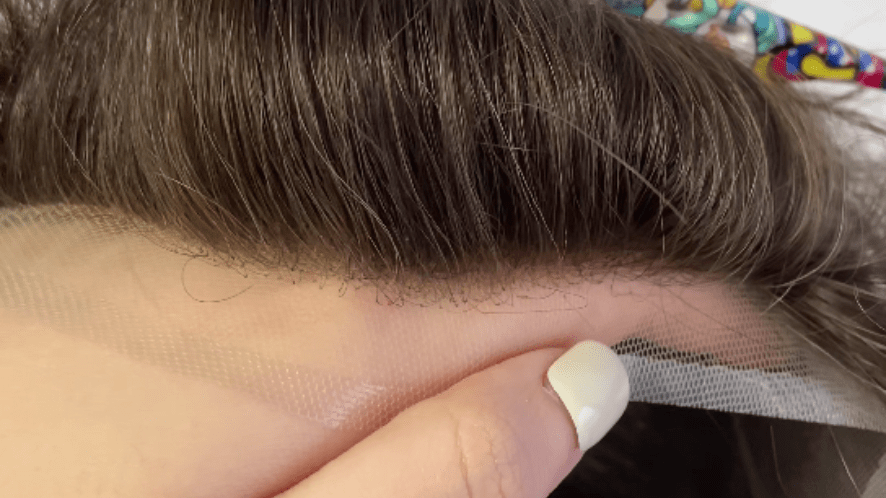
Many new stylists ask us if there is a single “secret” to achieving an invisible front. The reality is that a natural-looking hairline does not come from one specific trick. It is the result of several detailed manufacturing choices and salon techniques working together.
Realism is built step by step. The front base material matters. The ventilation method matters too. Root visibility, color work, density, shape, and hair direction all play a part. Then there is customization, along with the salon’s own cutting and finishing work.
Key Factor #1: Choose the Right Base Material at the Front
The front base creates the starting point for hairline realism. If the base is too visible or too thick for the client’s needs, it becomes harder to create a soft and natural front, no matter how well the rest of the system is made. So choosing the right front base is the foundation for hairline realism.
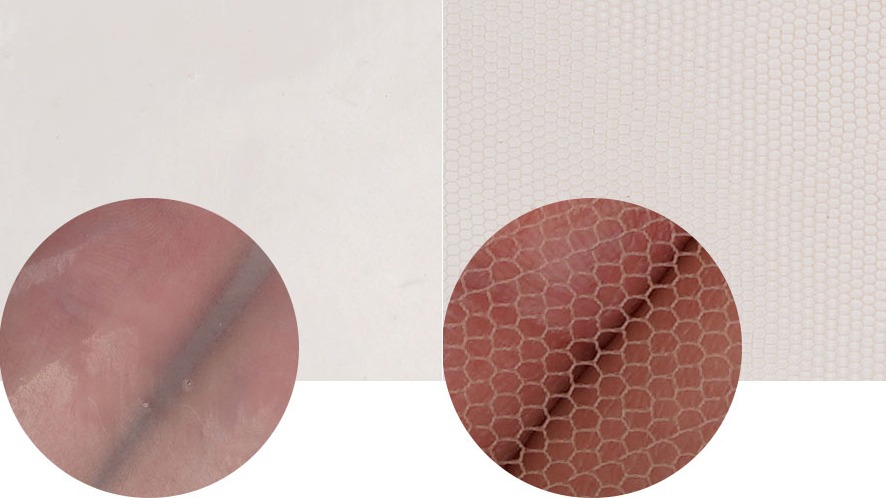
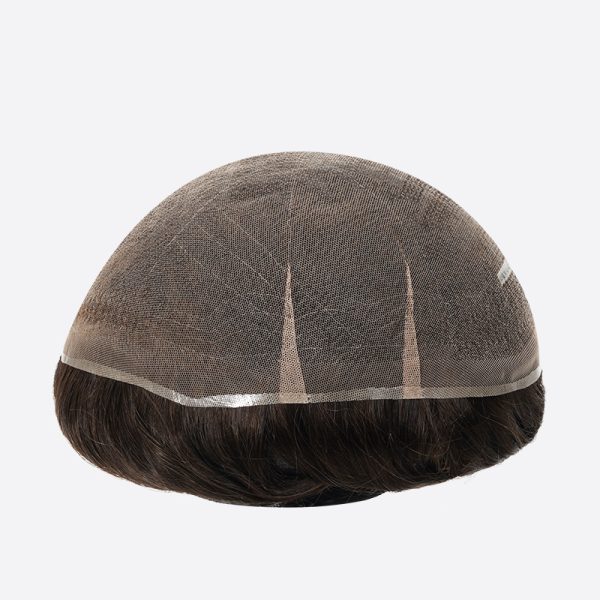
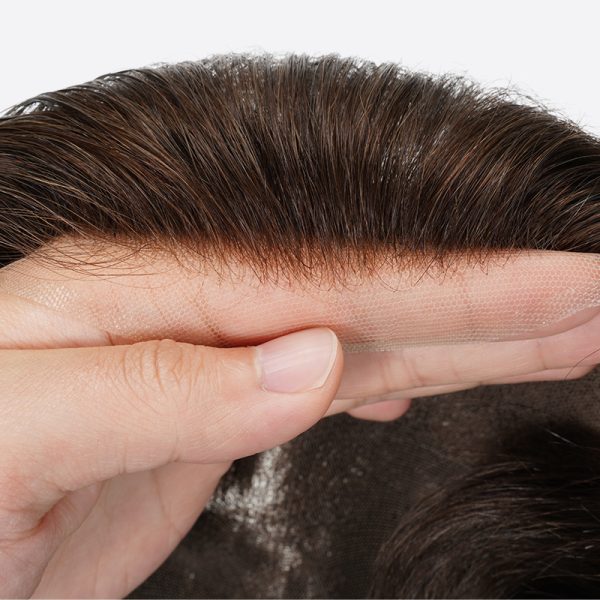
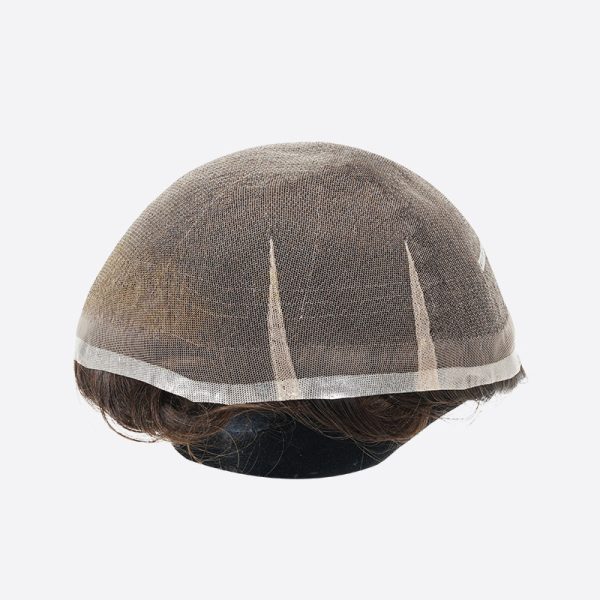
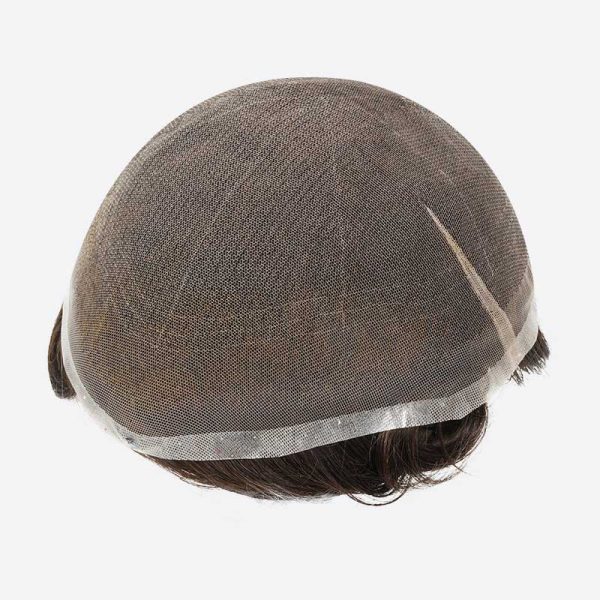
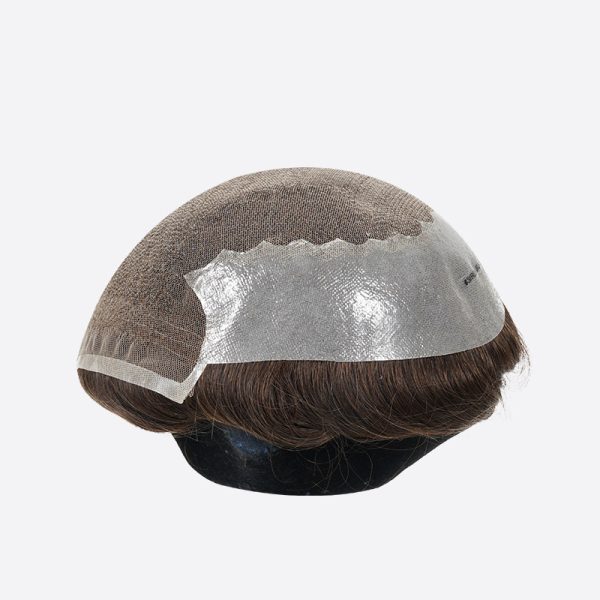
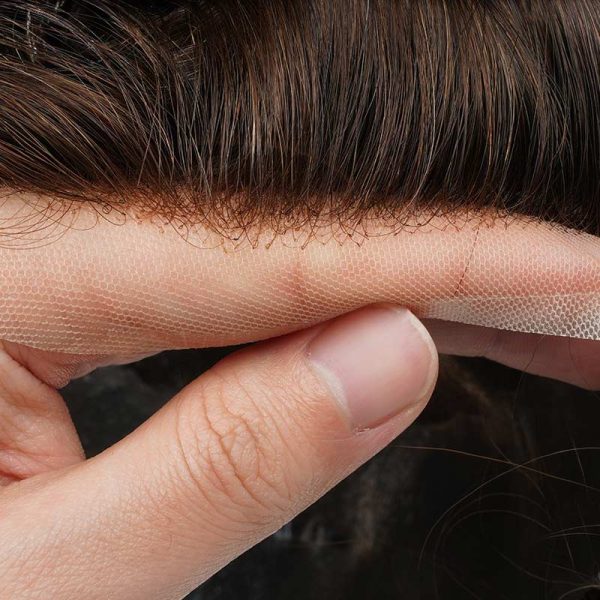
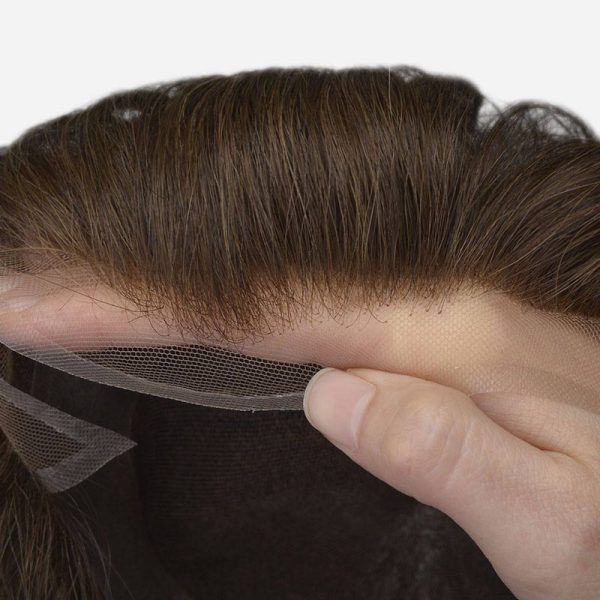
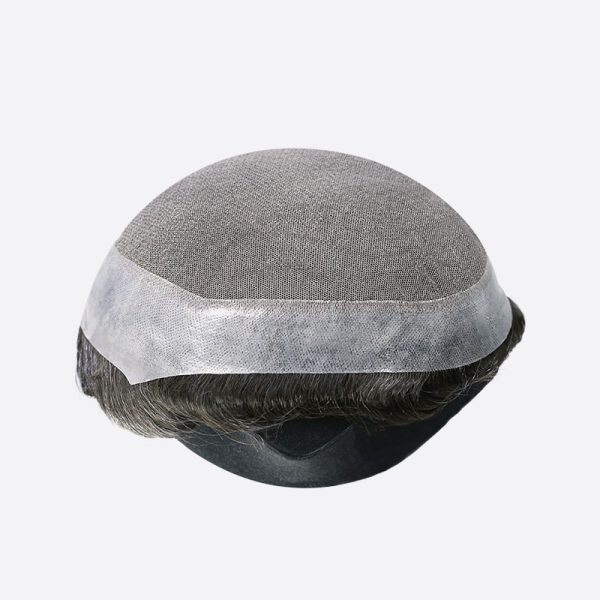
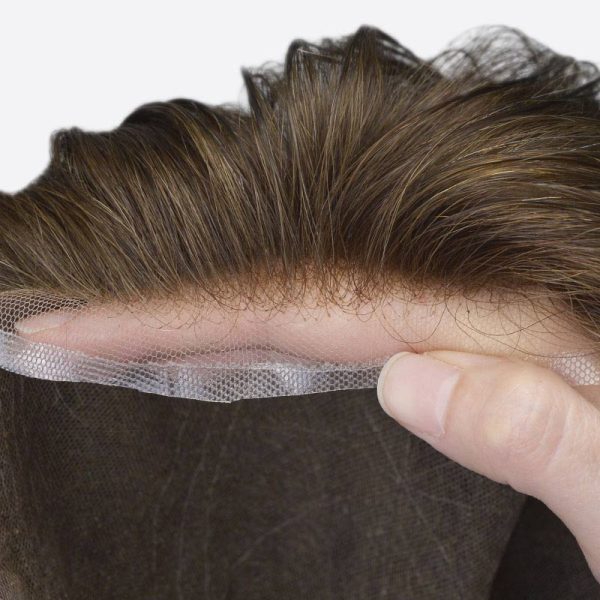
For lace front designs, French lace and Swiss lace are two of the most common choices. Both can create a light, natural-looking edge that blends well at the hairline.
-
French lace is usually a practical option when a client wants a balance between natural appearance and durability. And to be honest, it is usually enough for daily wear.
-
Swiss lace is thinner and has a finer mesh, so it can create an even less visible front, but it is also more delicate and may not be the best fit for every client or service routine. It is often used for special occasions, photo shoots, or clients who prioritize a completely undetectable look above all else.
Example: Bono Hair French lace men’s hair system classic model—BH2
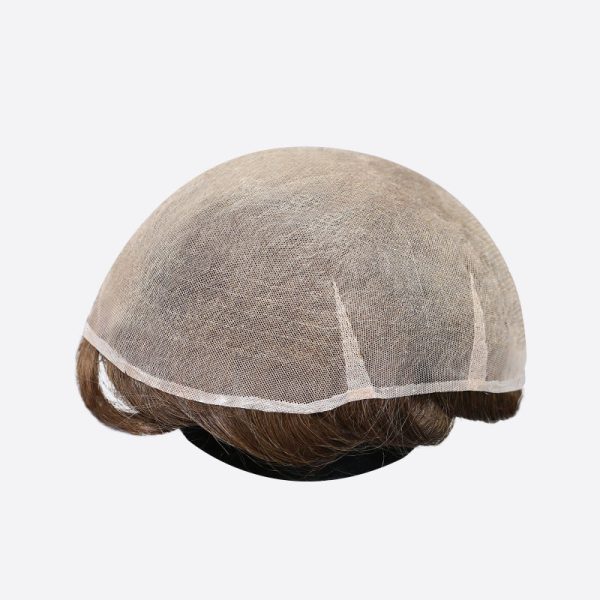
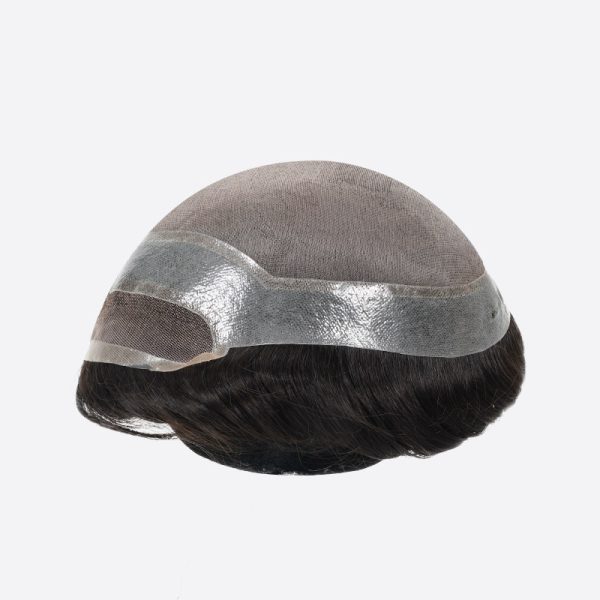
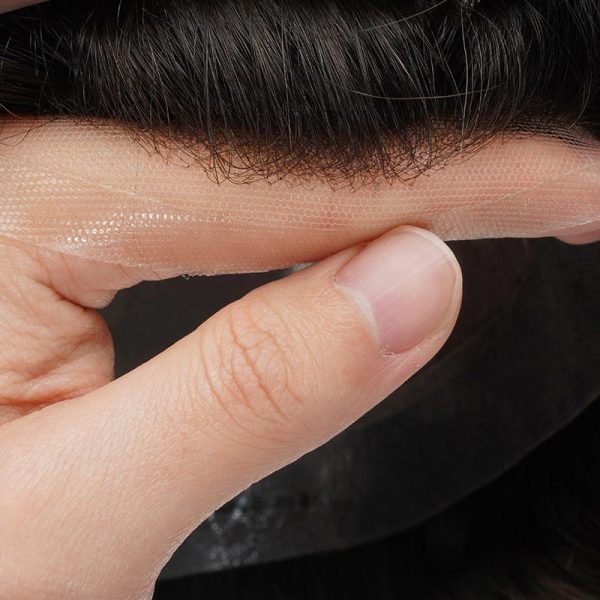
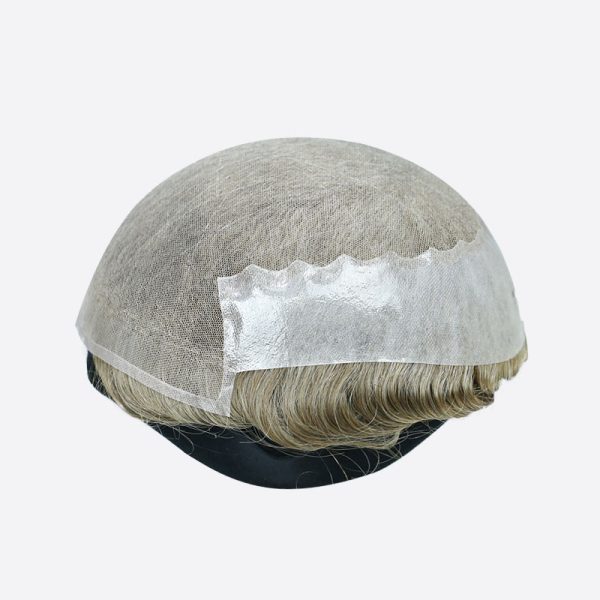
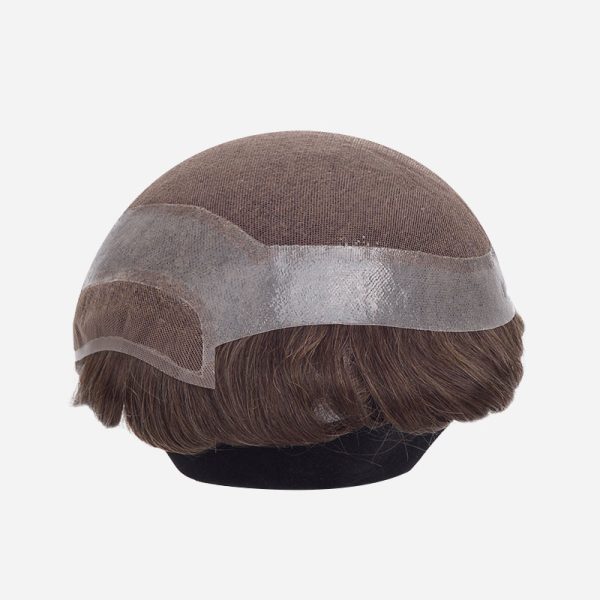
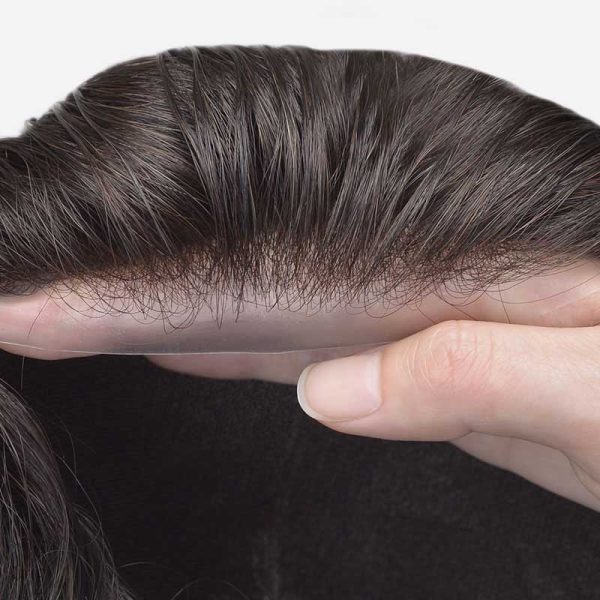
Ultra thin skin (0.02-0.03mm) is another strong option. Instead of relying on a mesh structure like lace, it creates a scalp-like look that many clients and stylists like, especially when the goal is a clean, modern finish. For some wearers, an ultra thin skin front also makes attachment and cleanup easier.
Example: Bono Hair Ultra Thin Skin men’s hair system classic model—BH3
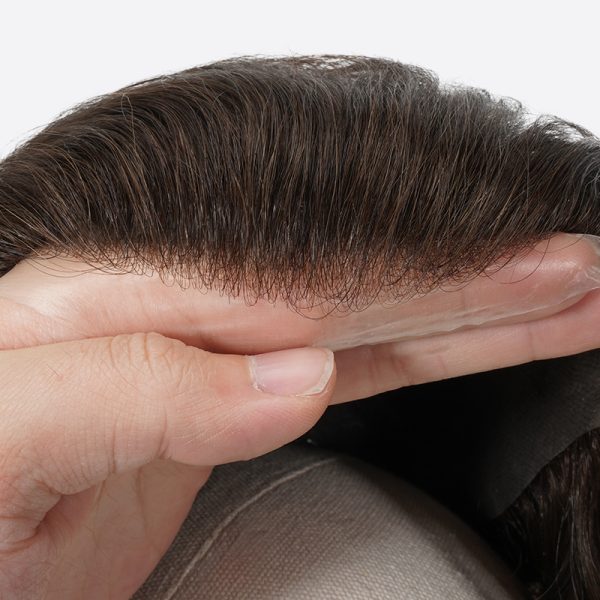
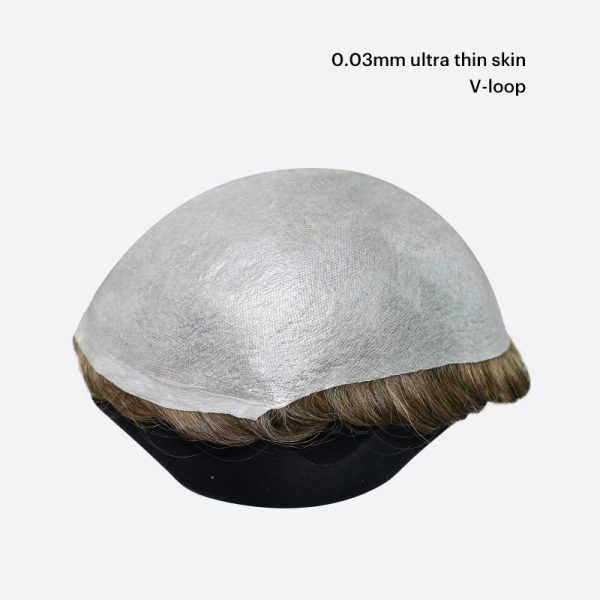
In practical salon terms, the choice depends on the client. If breathability and a broken-up, undetectable front are the priority, lace front designs are often a strong option. If the client prefers a sleek scalp-like natural look and easier cleanup, ultra thin skin may be a better fit. The best front material is not the same for everyone.
Key Factor #2: Match the Base with the Right Ventilation Technique
The base alone is not enough. Even a good front material can look unnatural if the wrong ventilation method is used.
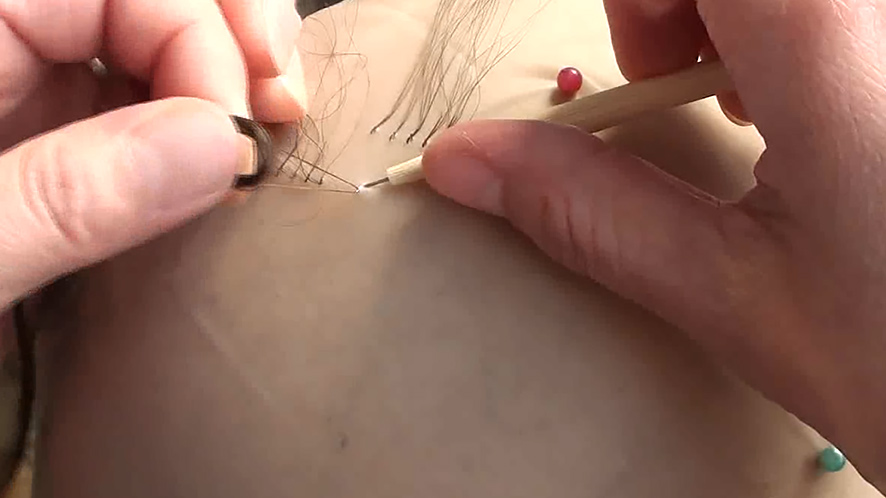
On Lace Fronts:
Single split knots are widely used to create a softer and less noticeable front hairline. Because the knot structure is smaller and lighter than heavier knotting methods, the front tends to look less bulky. That helps reduce the visual buildup that can make a hairline look too obvious.
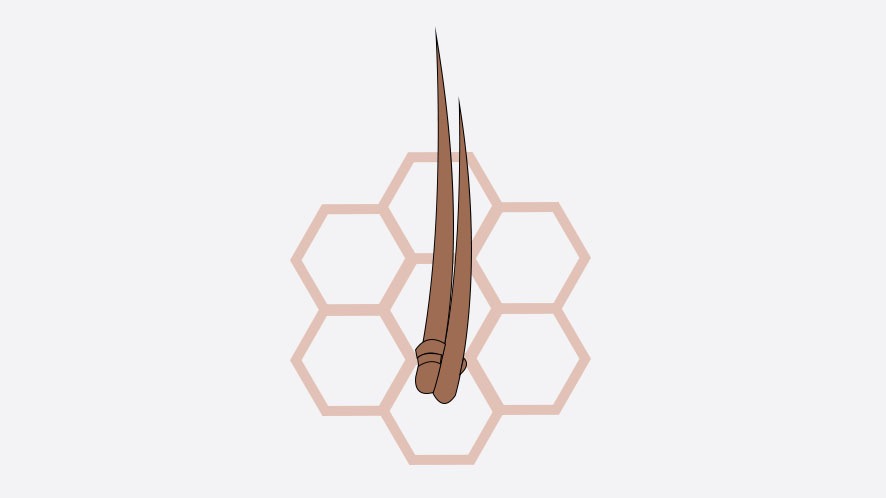
For Skin Fronts:
V-looped hair is one of the most effective options. Since the hair is looped through the skin rather than tied with visible knots, it can create the impression that hair is growing directly out of the scalp. That is one reason skin systems are often chosen for clients who want a clean, natural-looking front.
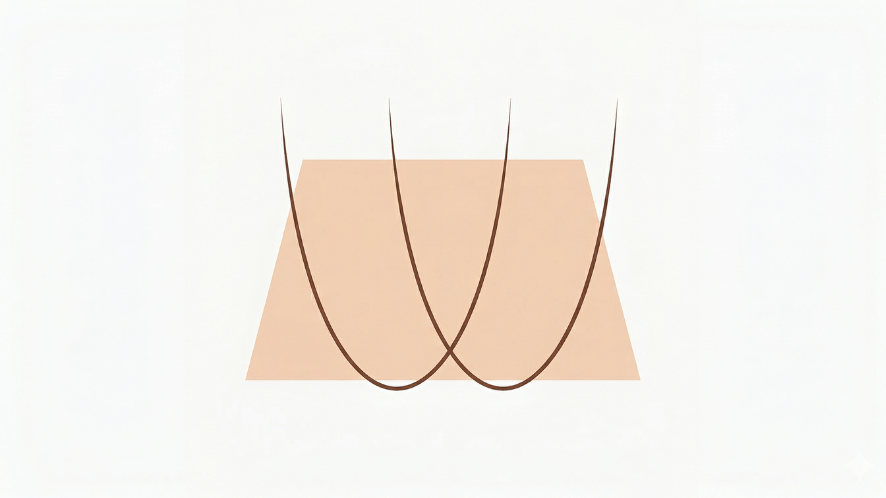
Factory Secret—Handling a Thick Base:
Sometimes clients prioritize durability and choose a thicker base, such as a double-layer lace (Lace Folded), but still want the front hairline to remain as undetectable as possible. That’s where the Under Hair technique comes in. This involves knotting 2 to 3 lines of hair on the reverse side of the base to cover the edge. When the hair is brushed backward, these hidden strands conceal the base edge, creating a seamless, natural-looking front hairline.
For salon owners, the key point is simple: base material and ventilation should be chosen together. A natural hairline usually comes from the right combination, not from one feature alone.
Key Factor #3: Root and Color Details Also Affect Hairline Realism
Even with the right front base and a good ventilation method, the hairline can still look unnatural if root and color details are not handled carefully.
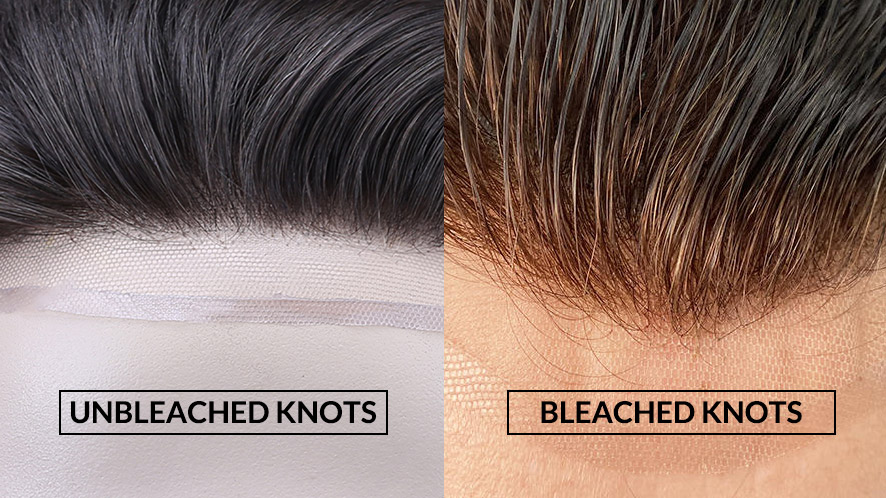
Bleached Knots:
One of the most important details on lace systems is bleached knots. Without bleaching, knots can remain dark and visible, especially on lighter skin tones or at the very front hairline where visibility is highest. Bleached knots help reduce that dark dot effect, making the hair appear less tied-on and more natural at the root.
Dye After (Hidden Knots / Fake Bleached Knots):
For darker colors like #1 and #1A, traditional bleaching of knots isn’t feasible. Instead, a Dye After method is used: lighter-colored hair is knotted onto the base first, then dyed darker while leaving the roots and knots untouched. This preserves the soft, slightly visible roots effect—similar to bleached knots—so the front hairline looks natural even with deep shades.
This is why salon owners should not think about color only in terms of matching the client’s overall hair shade. The front hairline needs to look believable at close range. Root appearance, knot visibility, and final tone all play a part in that.
Key Factor #4: Front Density Should Never Be Too Heavy
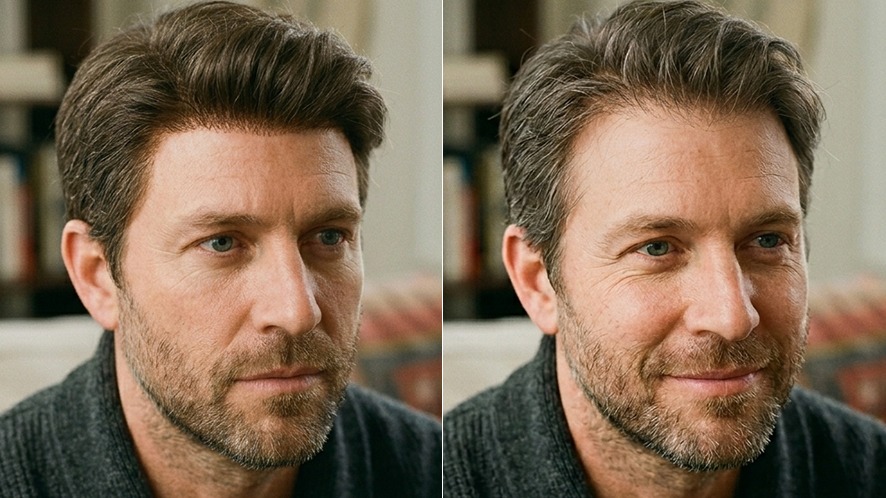
Experienced hair system wearers often thin out the very front of their units themselves to create a more natural-looking hairline. This is usually because some systems don’t account for graduated density mapping during manufacturing.
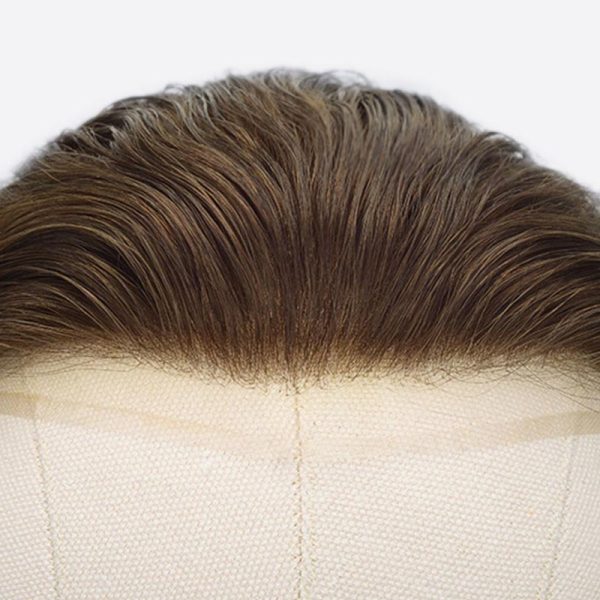
In real life, natural hairlines are usually softer at the very front. Hair does not normally start with a thick wall of hair and then stays uniform all the way back. The front should begin lighter, then gradually become fuller behind it. This transition helps the hairline look more realistic and less manufactured. It also gives salon stylists more flexibility when shaping and blending the front during the final cut-in.
A good density design should also consider the client, not just the product. Age, hairstyle, and overall look all play a role. For example, a younger client with thicker side hair may need a denser front, while an older client might benefit from a softer, more mature appearance. The most natural result is one that complements the client’s own features.
Key Factor #5: A Natural Hairline Should Not Be Perfectly Straight
Take a close look at a natural human hairline. It is almost never perfectly straight. There are always slight recessions, baby hairs, and uneven patches. When a hairpiece is manufactured with a rigid, ruler-straight front edge, it immediately draws unwanted attention.
This is where zigzag track design can help. In simple terms, it breaks the front line slightly instead of letting it run in one straight, obvious path. This breaks up the solid line, softens the front edge, and prevents that artificial “helmet” look.
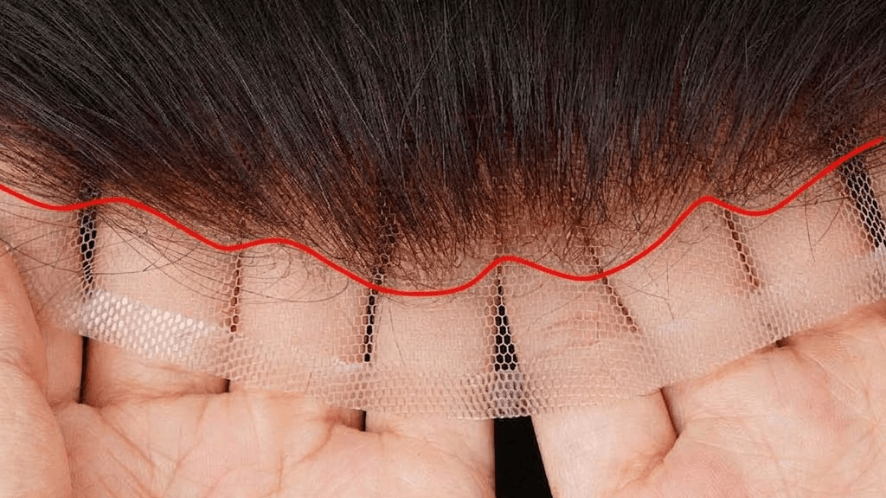
For salon owners, this detail is easy to overlook on paper, but it can make a visible difference in the finished result, especially on exposed styles.
The Most Natural Hairline Is Always Personalized
There’s no single hairline that works for every client. Stock hair systems cover most cases, but if a client has a unique hairline or specific styling needs, a custom hair system is often necessary. Customization can include front contour, density, color, gray percentage, hair direction, hairstyle, age, and facial features to create a tailored front hairline.
As a 20+ year factory, we often get custom orders with clear styling instructions. Here’s an example: a client wanted the hair brushed left and back. If knotted directly that way, the hair would lie too flat and easily expose the lace edge. So we found a solution:
-
First, we added extra density at the front and right temple.
-
Then, we knot the right temple hair to the right (opposite the brushing direction) to lift and cover the edge.
The result: when brushed left and back, the hair lifts naturally and hides the base edge, creating a realistic, wearable hairline. Customization like this helps salons deliver results that work in daily life, not just in the chair.
Salon Application Also Affects the Final Result
Even the best-made system still depends on proper salon work. A natural hairline does not come only from manufacturing. It also depends on what happens in the chair.
Positioning the Hairline:
A natural look requires precise front hairline positioning. A common rule of thumb is placing the system about four fingers above the eyebrows, but you will naturally need to adjust this based on their age, head shape, and facial structure. If it is placed too low, the forehead looks cramped and artificial.
Cutting the Front Edge:
When trimming the excess lace or poly at the front, precision is key. Remove just enough material so it doesn’t show on the forehead, but leave a tiny margin in front of the hairline.
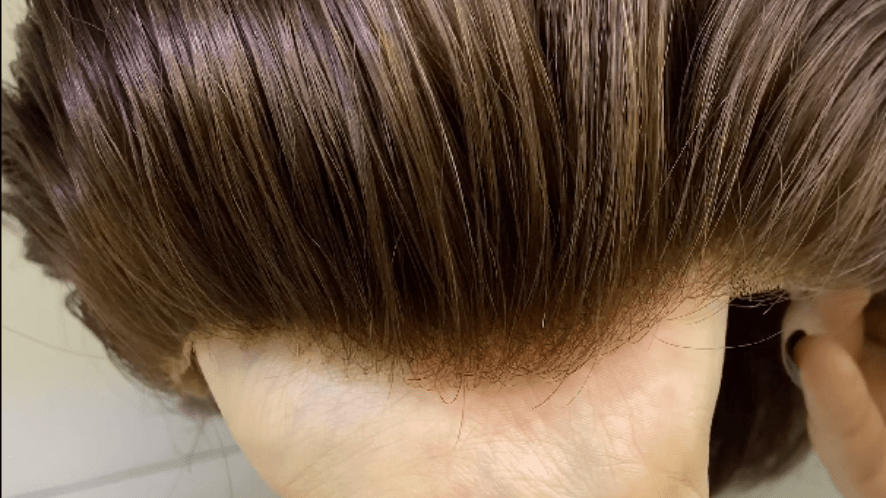
A common and costly mistake is cutting too far back, right into the hair roots. This can damage the ventilation, cause shedding, and leave a frayed, uneven edge that’s hard to hide. Take your time, use sharp tools, and follow the system’s natural contour carefully.
Blending and Adhesives:
Blending the system into the client’s own hair is what makes it look natural. While proper thinning and texturizing are a big part of this, the physical application is just as critical.
Use only enough glue or tape for a secure hold—too much can seep through, create shine, or leave a thick residue line. Once the adhesive is tacky, press the front edge evenly into the scalp to flatten the base, remove shadows, and create a seamless finish.
Common Hairline Related Mistakes Salons Should Avoid
Even experienced hair professionals occasionally run into issues. Keeping an eye out for these common missteps can save you from an unnatural result:
-
Choosing a thick, stiff front base for a client who wants a slicked-back style.
-
Ordering or leaving too much front density, creating a heavy, solid wall of hair.
-
Skipping root details, like leaving dark knots unbleached on a lace front.
-
Cutting and trimming the base in a way that leaves the front edge too blunt or perfectly straight.
-
Poor positioning during application, usually placing the hairline too low on the forehead.
-
Using too much adhesive, which can shine through thin bases and reveal the edge.
The goal is not to avoid every small imperfection. It is to understand which details have the biggest visual impact and control them well.
Conclusion
Creating an invisible, highly realistic front hairline is not about magic. It is about executing many small, deliberate details correctly. From the base material and the ventilation technique, to graduated density and bleached knots, every element plays a necessary role.
For salons, consistently delivering these high-end results requires a reliable manufacturing partner. Working with a hair piece supplier that truly understands front base design, ventilation techniques, density control, and color detailing takes a lot of guesswork out of your daily operations.
At Bono Hair, our goal is to handle the complex manufacturing details so that you can focus on what you do best: styling, fitting, and restoring your clients’ confidence. When you have a steady supply of well-crafted, natural-looking units, growing your salon business becomes a much smoother process.