












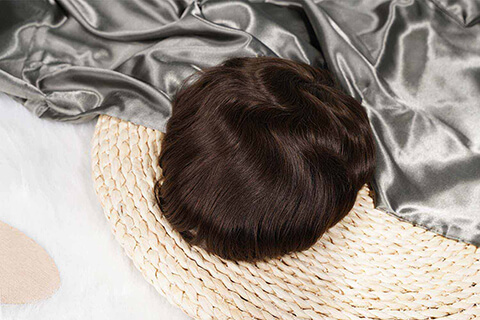





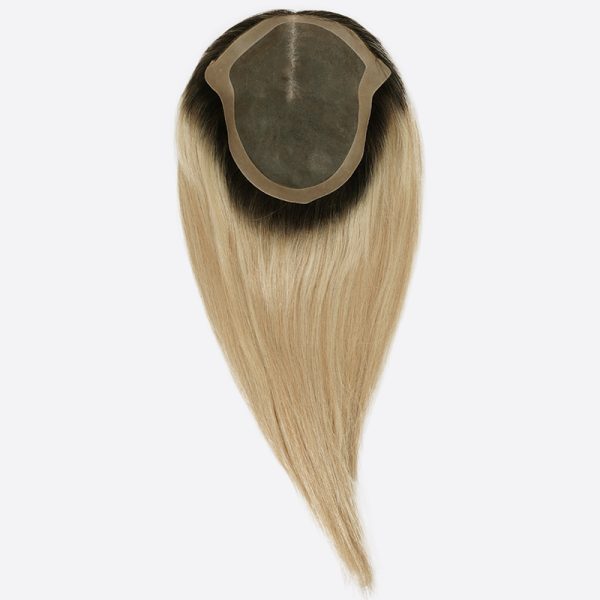
Got a client in your chair dealing with thinning hair? A hair topper isn’t just a quick fix. It changes everything. When you find the exact right piece, you get to watch your clients’ confidence come back to life right in front of the mirror. It’s the best feeling.
To make that confidence stick, picking the right hair topper is where it all starts. But before we get into the technical stuff, focus on what they actually need—both practically and emotionally.
Key Takeaways
-
Start by really listening to your client — it’s about how they feel, not just what they see in the mirror.
-
Be honest about what a topper can do — it’s for coverage and volume, not a total makeover.
-
Measure carefully — a good fit makes all the difference.
-
Pick the right base: silk, lace, or mono — think comfort, lifestyle, and realism.
-
Human hair blends like magic; synthetic cost less but is less natural.
-
Nail the color, density, and length — that’s what makes it look seamless.
The “Why”: Understanding the Client’s Journey Before the Consultation
Sitting in the salon chair takes big courage. You’ve probably noticed how nervous a new client looks. When a lady experiences hair loss, she’s not just looking for more volume; what she really wants is to feel like herself again — someone who can laugh and talk with ease, without worrying about how her hair looks. So, your consultation has to start long before you grab a tape measure or pick out a color. Understanding the emotional weight she carries is the real secret to a successful visit.
Acknowledging the Emotional Impact
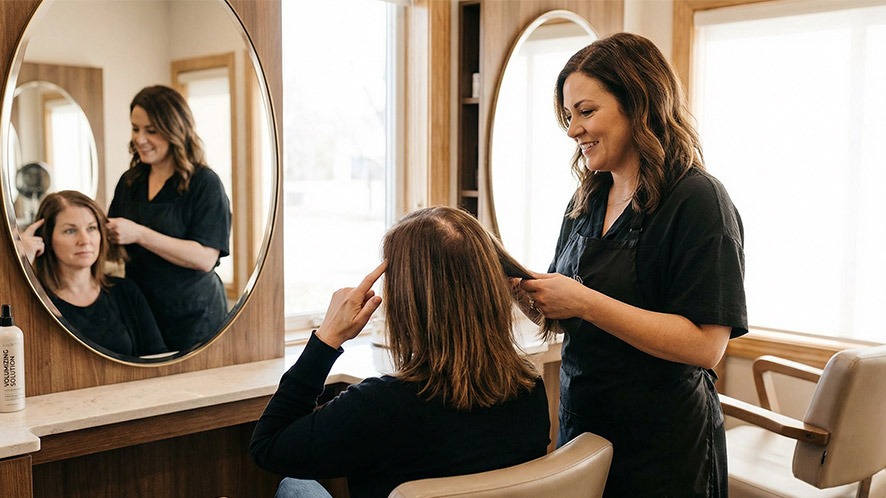
Thinning hair brings high levels of anxiety and deep vulnerability. It’s terrifying. Lots of women actually hide their struggles for years before finally asking a stylist for help. Just walking through your salon doors is a huge step.
As a professional, your supportive advice matters just as much as your technical skills. Instead of rushing them into a purchase, just listen to their story. Validate those tough feelings. Let them know a great solution is out there. Once clients feel truly heard, you’ll see their defensive walls come down.
Setting Realistic Expectations and Goals
Honesty builds long-term trust. You have to clearly explain what a hair piece can and cannot achieve. Hair toppers for women are great for adding density and covering specific areas of thinning hair. But they don’t completely overhaul someone’s natural style. So if a client is hoping for a total image change, she may need more than just a small topper.
In this case, you need to guide your client toward realistic goals. Show how a hair topper actually blends with her existing biological hair to enhance the current look, rather than completely replacing it.
Now that your client’s expectations are set, let’s get to the practical part—the step you need to take to chose the best hair topper for your client.
Step 1: How to Measure for a Hair Topper for Perfect Coverage
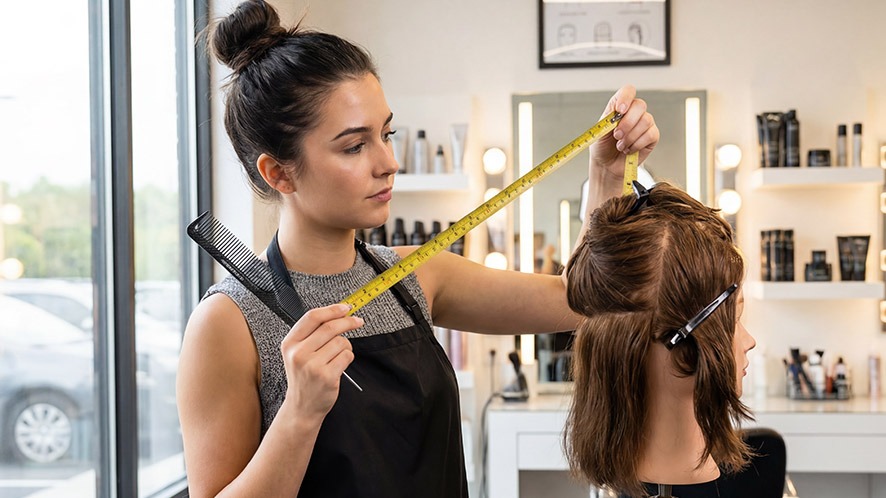
Measure for a hair topper all comes down to finding the exact area of hair loss to determine the correct base size. A precise measurement prevents discomfort and ensures a seamless blend.
Identifying Your Client’s Stage of Hair Loss
Every client loses hair differently. You have to pinpoint the exact hair loss stage before doing anything else. Is the thinning hair isolated to the front hairline? Does it spread wide across the crown? Or does it mainly follow their natural parting?
Finding this specific coverage area is your true starting point. You might want to take a good look at the scalp under good lighting, using a comb to separate the client’s hair to clearly map out the weakest zones.
Thinning Area Measurement Guide
-
Identify the Thinning Perimeter
Start by parting the hair to find the exact boundaries of the thinning area, and then use your fingers to feel where the hair density starts to drop off. This is your baseline.
-
Get the Raw Measurements
Grab a soft measuring tape and measure the length (front-to-back) and width (side-to-side) of that thinning zone.
Pro Note: Always measure from the very start of the thinning (where the hair density starts to drop off), not just the “bald” spot.
Write those numbers down. Yes, it is that simple.
Turn Measurements into the Right Base Size: Apply the “Golden Rule” (+1 Inch)
This is the most critical step for hair health. Add 1 full inch to both your length and width measurements.
-
Why? Because clips can’t anchor onto weak, thinning hair. That extra inch means the clips can attach securely to dense, healthy hair just outside the coverage zone.
-
The Goal: Preventstraction alopecia and guarantees a secure fit for any clip-in piece you apply.
For example, if your raw measurement was 3”X4”, your order size is 4”X5”. If your raw measurement was 4”X4”, adding that extra inch brings your order size to 5”x5”.
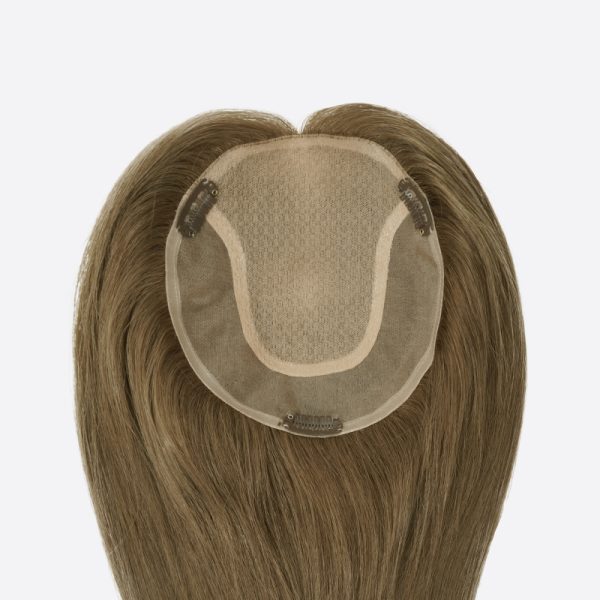
Pro Note: The “Plus 1” Rule is only for clip-in toppers. If your client needs a glue-on application, don’t add that extra inch, because glue-on toppers need an exact match.
Clip-in Hair Topper Size v.s. Glue-on Hair Topper Size (Quick Comparison)
| Method | Sizing Strategy | Why? |
| Clips | Add 1 Inch | Needs strong hair to anchor the clips. |
| Glue | Exact Size | Needs clear scalp to bond; avoids pulling hair. |
So, this is how you get your numbers. Next step is about materials.
Step 2: Decoding Hair Toppers: Base Design and Hair Fiber
Here comes the fun part: picking the actual materials. Every hair topper breaks down into two main components: the base design and the hair fiber. Pick the right combo, your client will stay comfortable while the topper lasts longer and looks natural.
What Are the Differences Between Silk, Lace, and Monofilament Bases?
Base choice depends on your client’s scalp sensitivity, lifestyle or preference, and budget. You’re generally looking at three options: silk, lace, and monofilament. Each comes with its own pros and cons when it comes to realism, breathability, and durability.
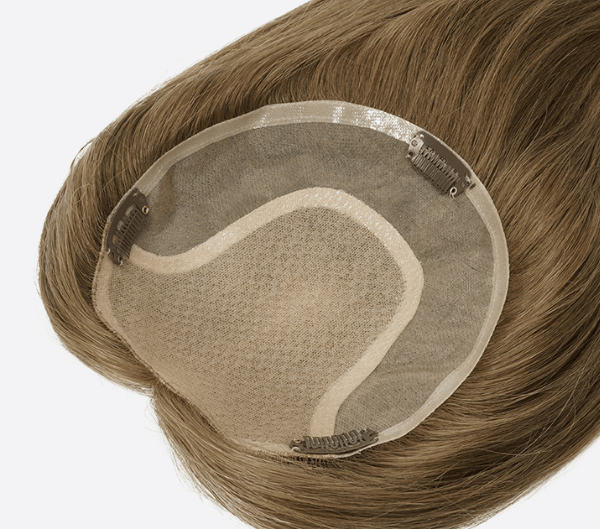
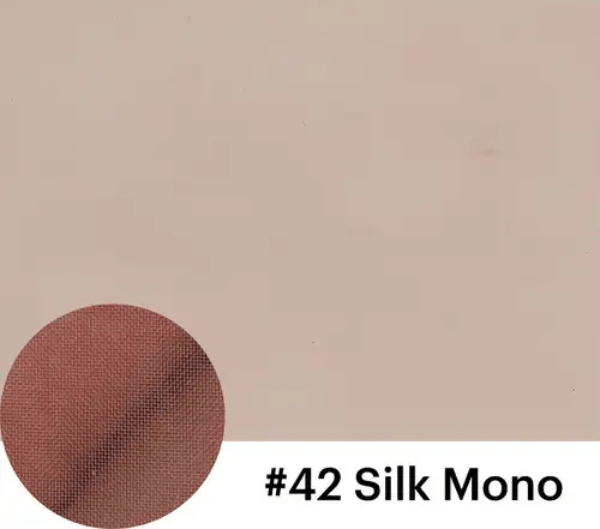
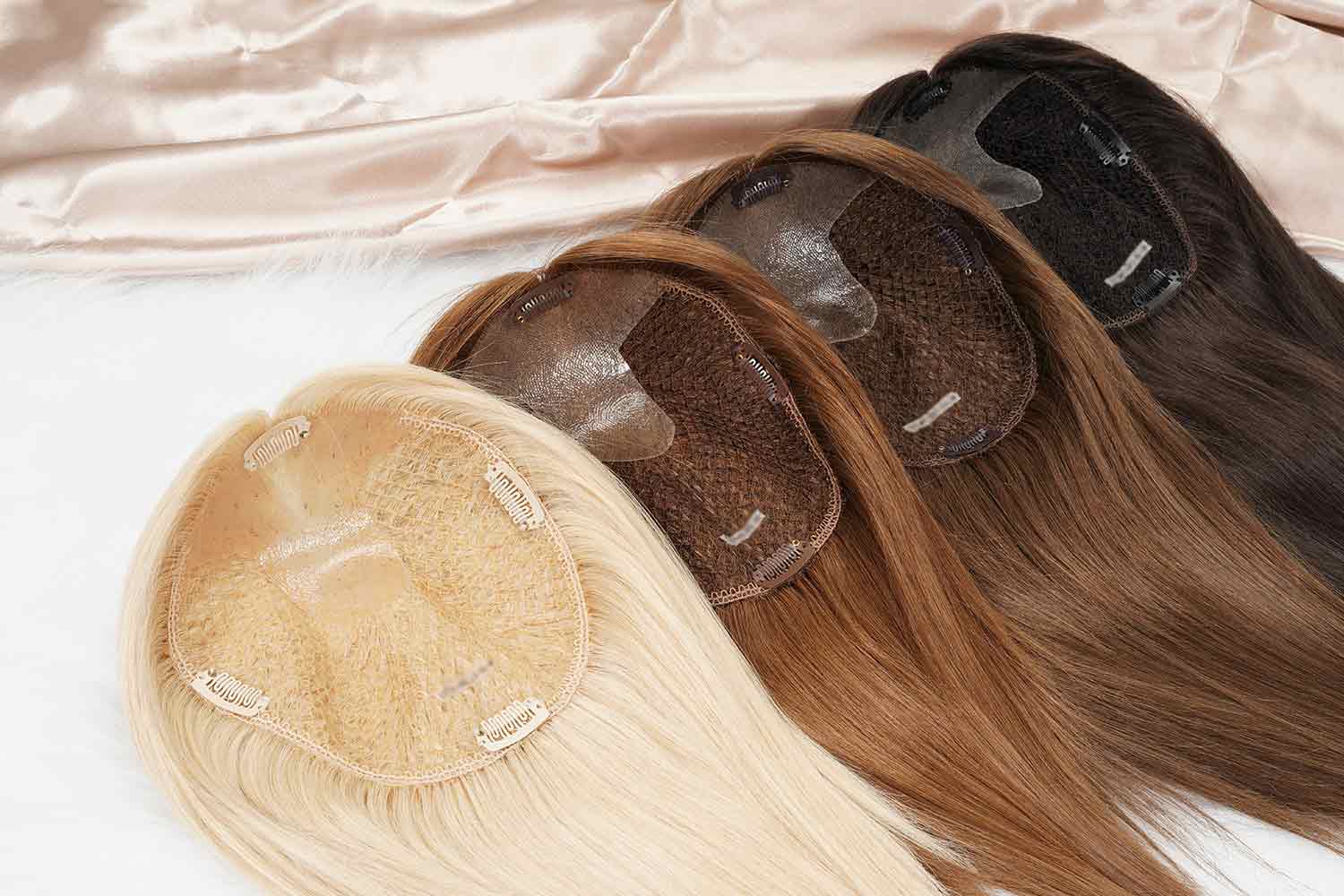
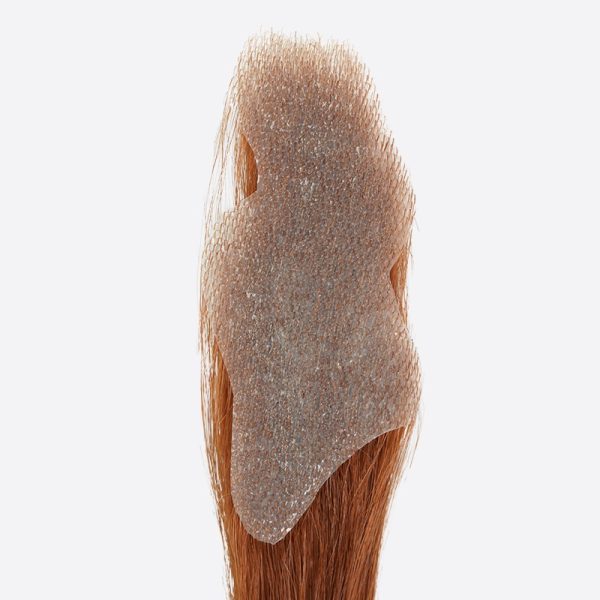
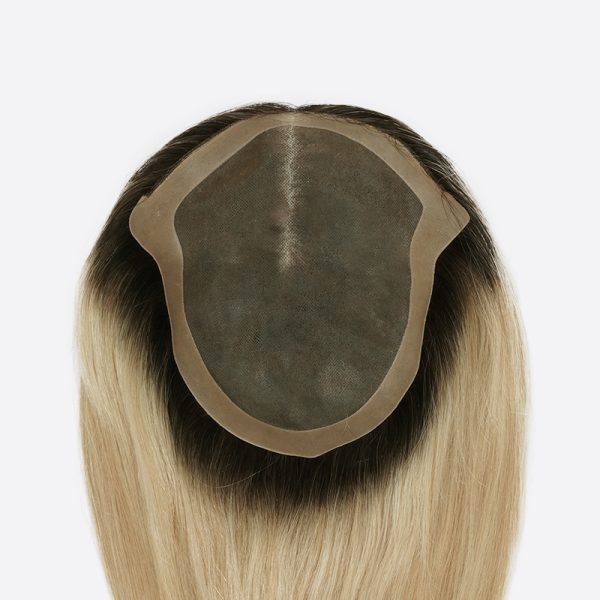
When a client wants the most realistic scalp effect, recommend a silk base. It uses a multi-layer design that completely hides all the hair knots. So it looks exactly like natural hair growing right out of a human scalp. For clients who are highly sensitive about visibility, the silk base delivers strong psychological comfort. The downside? Those extra layers trap heat, so it is not suitable for clients with an active lifestyle such as gym-goers or outdoor workers.
Lace Base
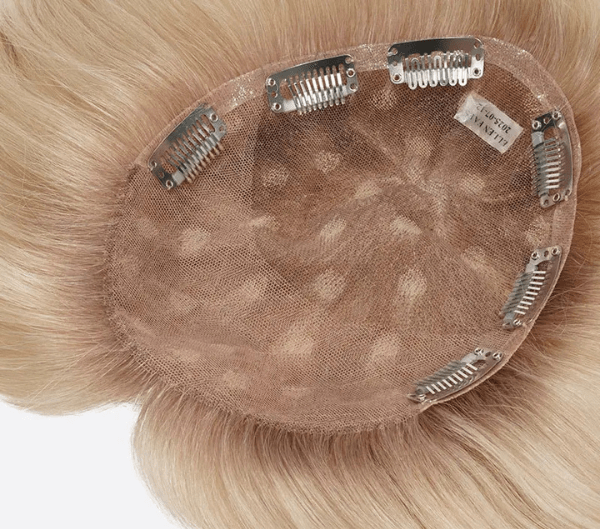
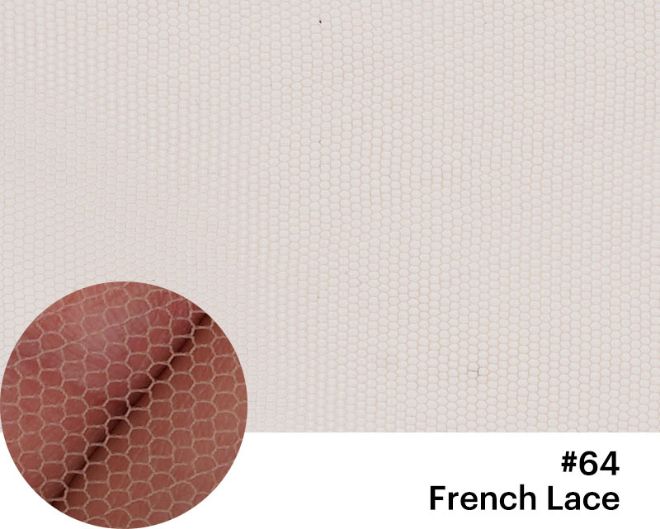
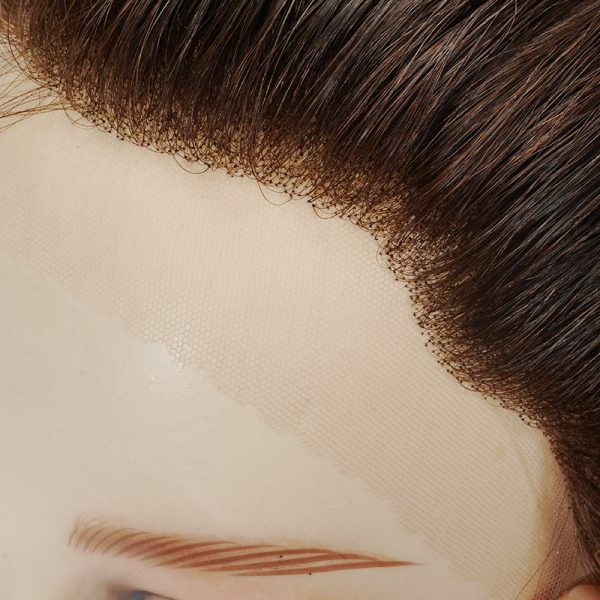
If maximum breathability is your client’s top concern, go with a lace base. It’s lightweight and allows maximum airflow among all three. Besides, it creates an undetected, natural-looking hairline. And the cons—they are rather fragile. Because the mesh is so delicate, it can tear more easily than other materials, meaning shorter lifespan and more frequent replacements, which is the reason that you shouldn’t recommend them to clients who value durability the most.
Monofilament Base
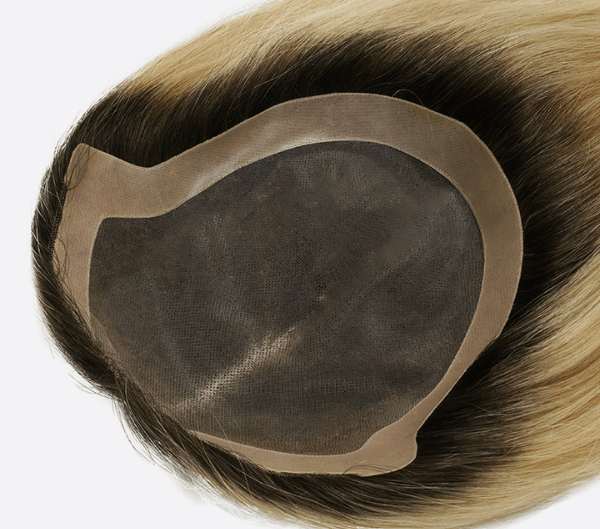
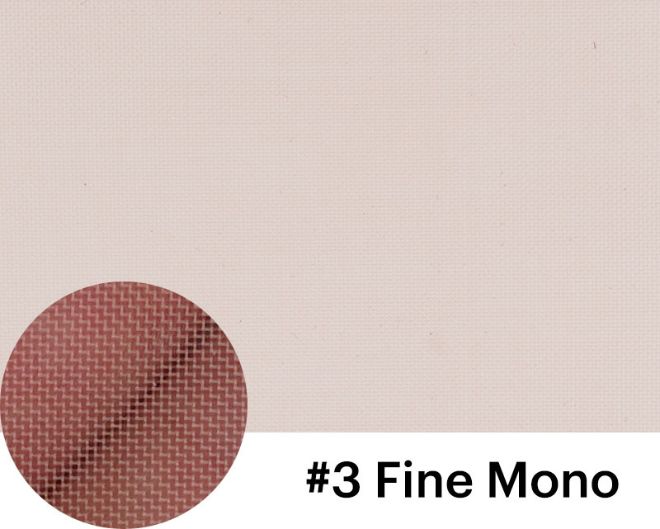
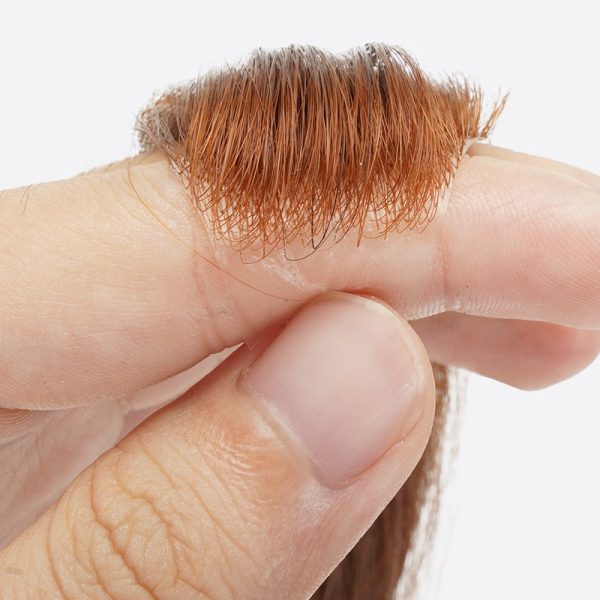
Then you have the workhorse: the monofilament base (mono). This one hits that sweet spot between durability and realism. It gives good airflow and holds up to daily wear way better than lace. You can consider it to be tough lace, just slightly less invisible and not as soft.
Here’s a quick cheat sheet for your client consultations:
| Base Type | Strengths | Limitations |
| Silk | maximum scalp realism | reduced breathability → may retain heat |
| Lace | maximum breathability, most natural hairline, most lightweight | delicate structure → shorter lifespan |
| Monofilament | maximum durability, high breathability | slightly firmer texture → less comfort |
Which Hair Fiber is Best: Synthetic vs. Human Hair?
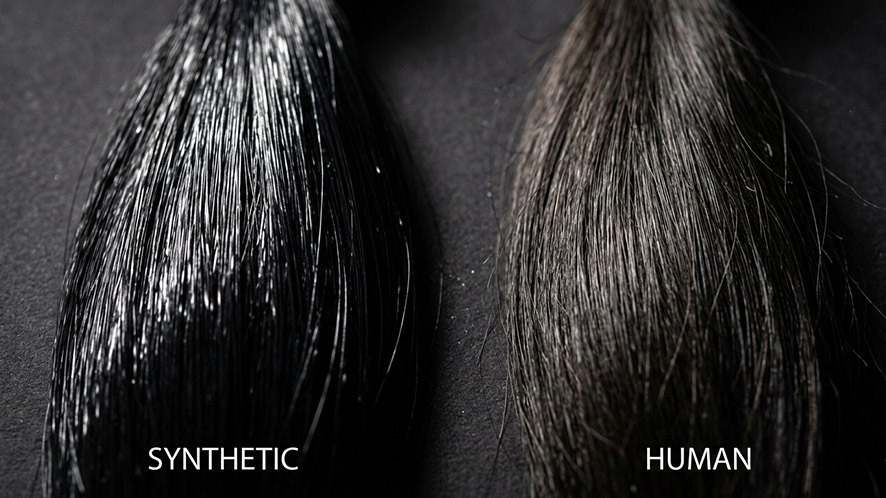
Synthetic Hair
Synthetic toppers are budget-friendly and easy to maintain. They are cheaper than human hair, and they tend to go back to their original shape after washing. It is really a time saver for people who don’t have enough time for daily styling.
But there are limitations.
Most synthetic hair cannot tolerate heat, so it can rarely be styled with hot tools like flat or curling irons, and it is also easily damaged by dyeing chemicals. And of course, there is this one major weakness synthetic toppers have: they do not blend that naturally with the wearer’s original hair as human hair toppers do, because:
-
Unnatural shine: Synthetic fibers are often too smooth—they reflect light with a plastic-like sheen;
-
Stiff movement: Synthetic hair is too light and bouncy; it lacks the natural weight and sway of human hair, making it move as a “single block” rather than individual strands;
-
Too perfect: Real human hair has natural imperfections, tiny flyaways, and varying textures. Synthetic hair is too uniform.
Human Hair
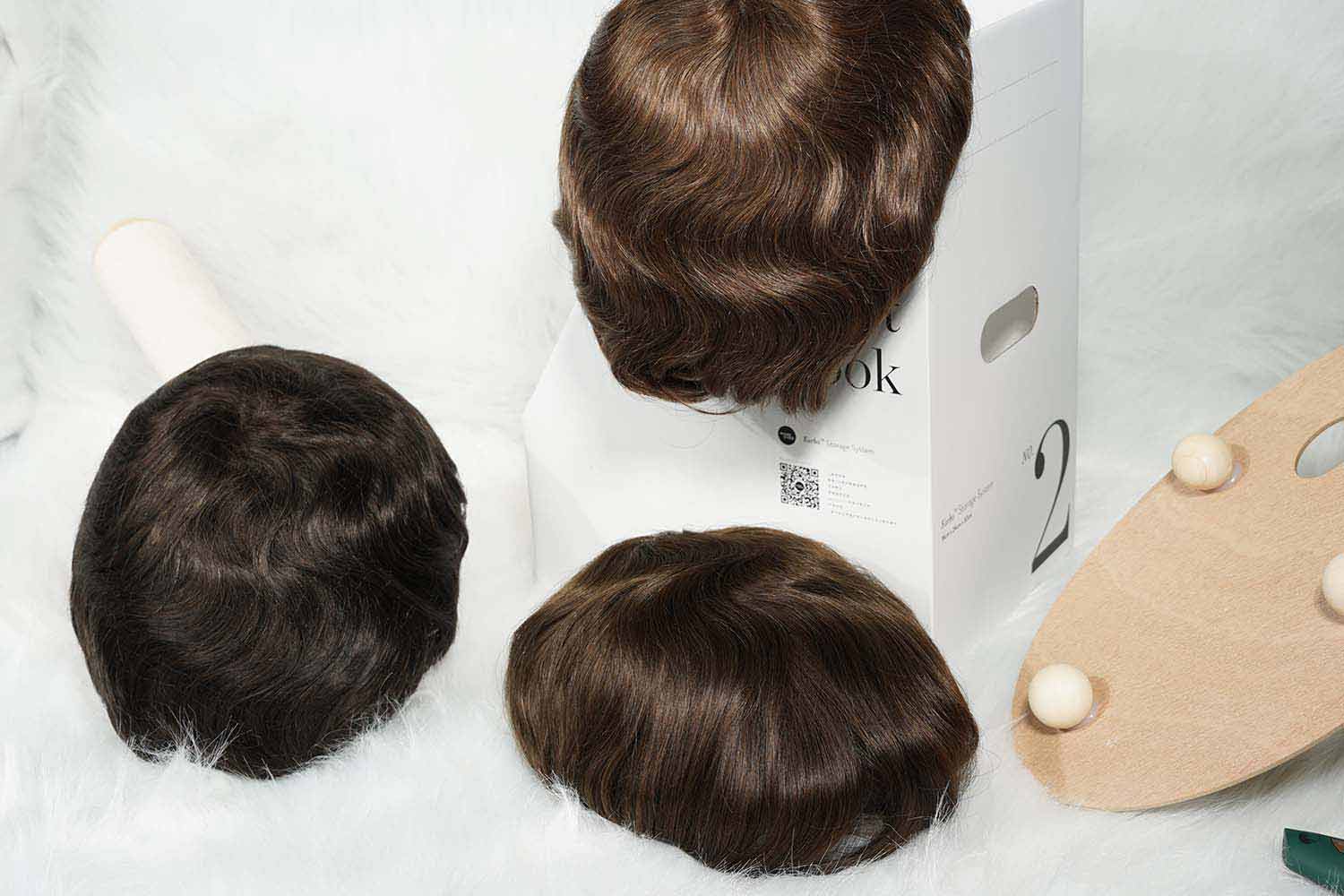
Real human hair toppers do not have all the flaws we mentioned above with synthetic toppers. They are extremely natural; they can be dyed, curled, or straightened; and most importantly, with the right color and density, they can seamlessly blend with the wearer’s own hair.
Limitations of human hair toppers are obvious, too — they cost more and require more maintenance.
The human hair on a topper cannot get natural oils from the scalp, so the hair may become dry, frizzy, and tangle easily over time. That’s why human hair toppers need regular maintenance to make sure they stay in good condition.
So, how to choose between synthetic and human hair?
Synthetic hair in high quality can still look good for full wigs because the difference may be less noticeable when the entire head is covered. But the thing is, for people who want to cover a spot or add some volume while keeping their own hair as much as possible, blending is everything. This is why most clients investing in a topper — especially women dealing with thinning at the crown — tend to prefer human hair. Their primary goal is integration, not just coverage.
If your client decides to go for a synthetic topper, make sure she understands both the benefits and the blending limitations and set a realistic expectation of the final effect.
Step 3: How to Match a Hair Topper to Your Hair for a Seamless Blend
The goal is for the client’s biological hair and the hair topper to become one. It takes practice. This only happens when you make the right decisions for three specifications: hair color, density, and length.
Finding the Perfect Color Match
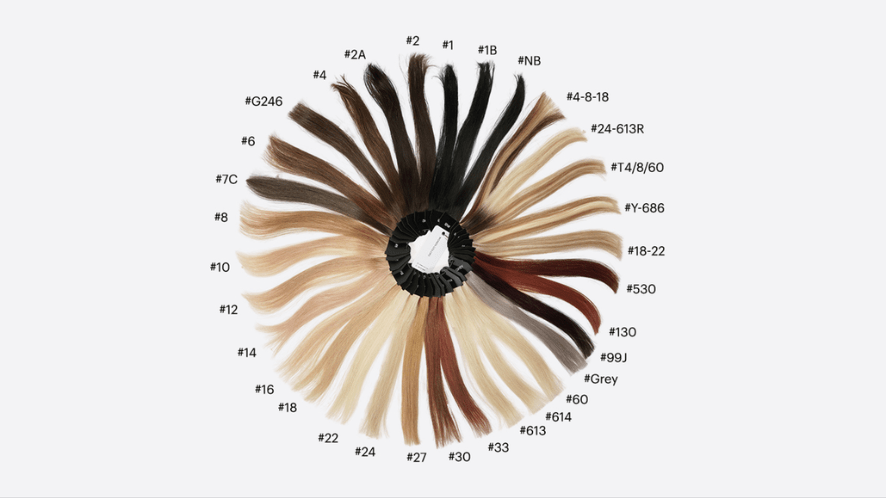
When it comes to color match, you’re the bridge between your clients and the hair topper manufacturer. To get the perfect match, you need to do two things right:
-
Make sure you know exactly what your client’s hair color is. You can make a rough judgment from their photos, but when it comes to the final decision, always meet face-to-face with your clients and check the color by yourself.
-
Make sure the manufacturer understands exactly what color you want. Things often go wrong in this step because in most cases you can’t go to the factory to check the color. And it is risky to choose a color by name because #1A may vary slightly from factory to factory.
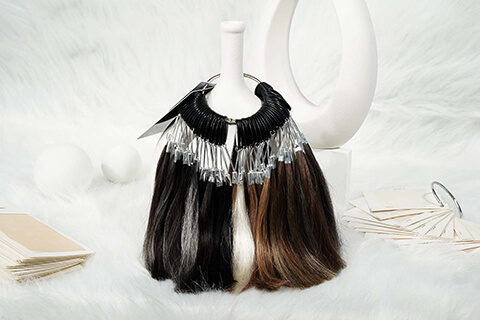
- The easiest way to make this right is to use the manufacturer’s phsical color ring. Hold it in your hand and compare the colors directly to your client’s hair.
- If you don’t have the manufacturer’s color ring, send a hair sample from your client to them, especially for custom orders.
As long as the color reference is fully aligned, you can stop worrying about the color match.
Pro note: Try not to use a photo for hair color matches. Photos can be helpful, but lighting and camera settings may affect color accuracy, which could result in slight differences in the final result.
Secret to a Natural Blend: Hair Density and Length
Color catches the eye first.
Density and length decide whether the topper truly “melts” into your client’s natural hair. If the density or length is off, even the perfect color will still look separate.
The Density
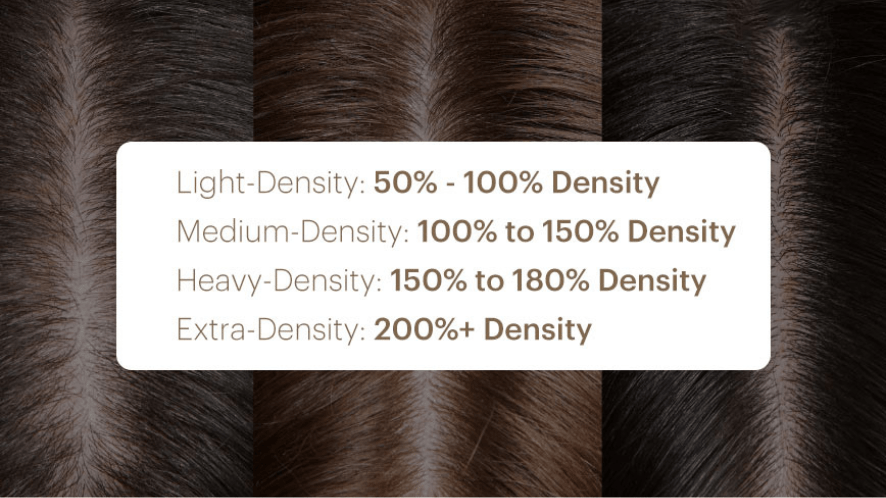
Hair toppers are used for adding volume, but sometimes clients get a bit “greedy”. They may want far more hair than they actually need. When this happens, it’s your job to remind them that the goal is to blend, and the most beautiful result is natural.
A well-balanced density will:
-
Blend naturally at the edges
-
Avoid the “helmet look” (where the top is too bulky)
-
Feel light and comfortable for daily wear
Pro Note: Always consider the hair type. A 110% density topper made of Indian hair can look thicker than a 100% topper made of fine, European-grade hair. When you help a client to pick the density of a hair topper, match the texture as much as the density.
The Length
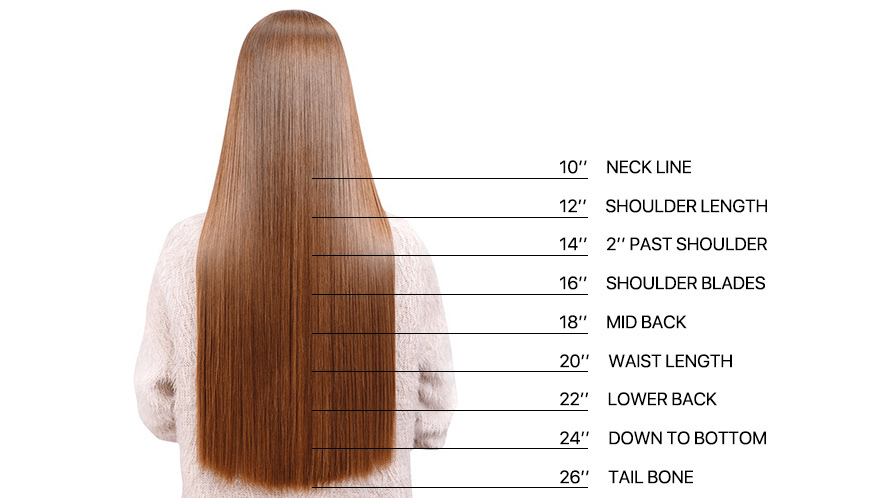
Length affects how easily you can sculpt and refine the final look. And it is rather easy to choose.
Normally, you can suggest your client choose a topper that is 2-3 inches longer than their own hair, so you will have the room to trim, layer, and style the topper to create a seamless transition. Just don’t forget: cut and blend after securing the topper.
This is where your professional skill truly shows. A well-layered topper should not sit on top of the hair — it should fall and move together with it.
A Checklist for Common First-Timer Hair Topper Mistakes to Avoid
We constantly see new stylists make the same mistakes, leading to discomfort or obvious, poorly blended hair toppers. If you’re just starting to work with hair toppers, go through this list and prepare yourself before serving your first client.
Mistake #1: Order the Wrong Base Size
Failing to leave at least 1 inch of healthy hair around the perimeter for clip-in hair toppers can lead to poor attachment and discomfort. Always measure carefully and allow enough anchoring space.
Mistake #2: Choose the “Best” Base Material While Overlooking the Client’s Lifestyle
There is no universally “best” base. Lace, silk, mono, pu, fish net — each serves a different purpose. For each and every client, a tailored solution is the best. Always put your client’s daily routine, maintenance habits, and comfort expectations into consideration.
Mistake #3: Select Hair Color Based Only on Photos
Lighting, filters, and camera settings can easily distort tone. Relying only on pictures increases the risk of a mismatch.
Mistake #4: Overestimate Hair Density
Overestimating density is one of the most common beginner mistakes. A topper that is too thick can sit heavily on the crown and create an unnatural “hat-like” appearance.
Mistake #5: Order the Exact Same Length as the Client’s Hair
Matching the exact length leaves you no room for trimming or blending. Always allow extra length so you can refine the final look.
Conlusion
Choosing the right hair topper isn’t just about picking a base or a hair color. It’s also about understanding your client’s needs and making sure the topper blends naturally with their own hair. From measuring the base size to selecting the hair density, every step counts to create comfort and confidence.
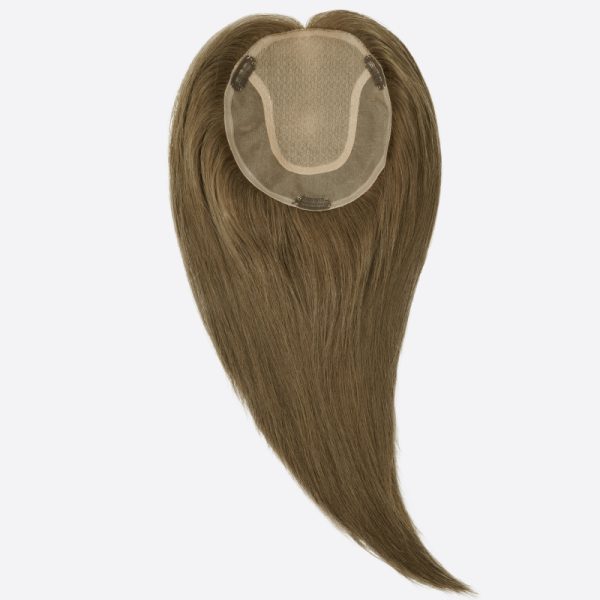
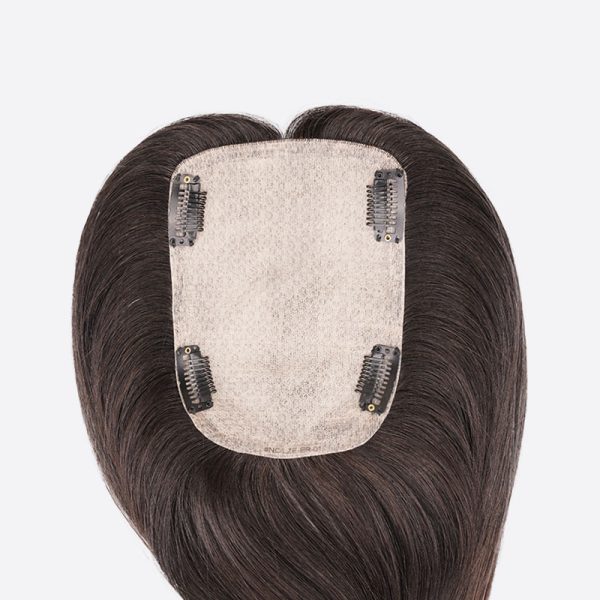
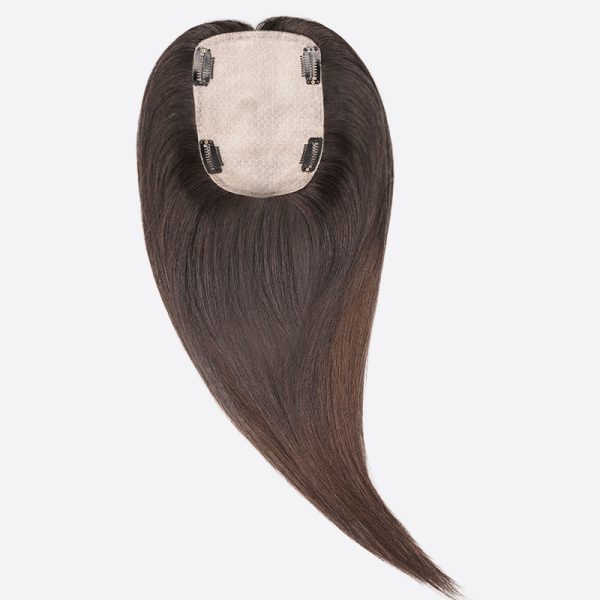
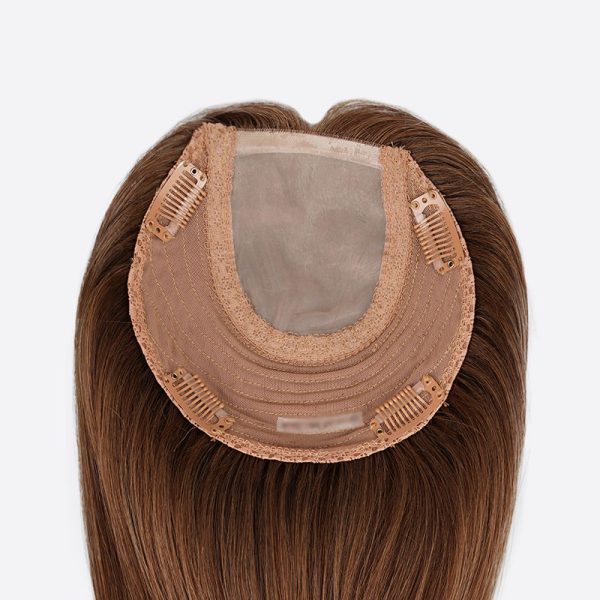
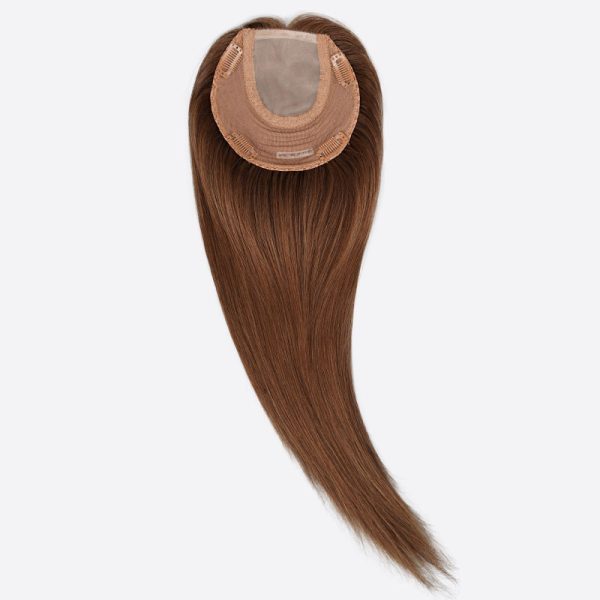
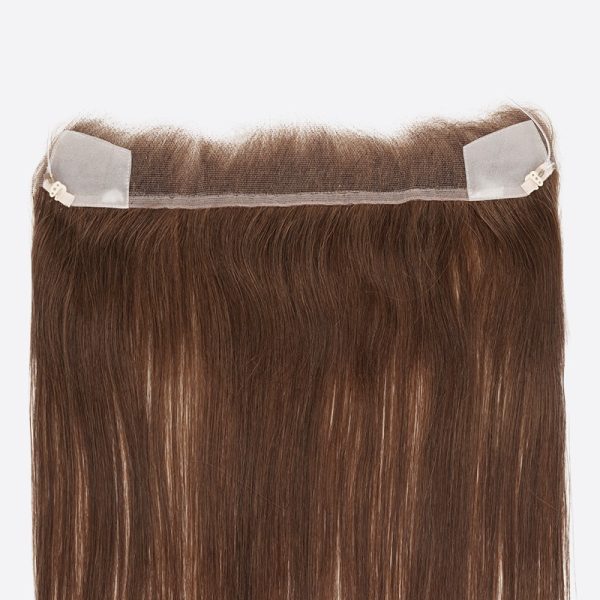
If you are looking for reliable, high-quality hair topper solutions, we’re here to support. Bono Hair manufactures high-quality human hair toppers for women, designed to blend seamlessly and keep your clients looking and feeling their best.


This guide is incredibly helpful! Choosing the right hair topper can be so overwhelming, but your tips on matching color and texture are spot on. I especially appreciate the advice on considering the client’s lifestyle and preferences. It’s great to see a focus on personalization in such an important aspect of hair styling. Thank you for sharing these insights; I can’t wait to apply them in my practice!
Thanks you for your comment. So glad it helped. Best of luck with your work — I’m sure your clients will love the results!